Grout is the quiet troublemaker of every home. It looks fine for months, then suddenly it's grey, dingy, and screaming for attention.
If you've ever stared at your bathroom floor wondering why it looks older than the house itself, you're not alone. This guide breaks down real, no-fluff Floor Tile Grout Cleaning methods that actually work without wrecking your tile in the process. Before you scrub, it pays to know how water damage affects flooring over time, since grout and moisture are closely linked, especially in humid rooms.
Think of this as the friend who's already tested every hack so you don't have to. No overpriced gadgets, no guesswork, just the stuff that actually gets grout looking new again.
Understanding Tile and Grout Materials
Grout is basically cement, sand, and water mixed into a paste that fills the gaps between tiles. It's porous by nature, which is exactly why it soaks up dirt so easily. Knowing what you're dealing with changes how you approach cleaning entirely.
Tile itself is the tougher, more forgiving half of the equation. Grout takes the hit first because it's softer and absorbs whatever spills, splashes, or foot traffic bring its way daily. That's the root of most staining problems.
Once you understand this relationship, Floor Tile Grout Cleaning stops feeling random. You start treating grout like the sponge it actually is, not just a line between tiles.
Types of Tile Flooring
Ceramic, porcelain, and natural stone are the three big players in most homes. Each one reacts differently to cleaning products, so a one-size-fits-all approach can backfire fast.
Ceramic and porcelain are fairly durable and can handle most standard cleaners without much drama. Natural stone, though, like marble or limestone, is a different story entirely. It's sensitive to acidic solutions such as vinegar or lemon juice, which can etch or dull the surface permanently if you're not careful.
Always check your tile type before grabbing a cleaner. A quick label check or manufacturer's note saves you from an expensive mistake.
Types of Grout
Sanded grout is common in wider gaps and holds up well against everyday wear. Unsanded grout suits narrower seams but stains a bit more easily over time.
Epoxy grout is the toughest of the three and resists moisture, stains, and mildew better than the others. It costs more, but it's practically maintenance-free once installed correctly.
Knowing your grout type helps you pick the right cleaning solution and avoid damaging it.
Gathering Necessary Tools and Supplies
You don't need a garage full of gear for this. A soft-bristled brush, an old toothbrush, a microfiber mop, and a spray bottle will cover most jobs. A steam mop is a solid upgrade if you clean grout often.
For solutions, keep it simple. Baking soda, white vinegar, warm water, and a pH-neutral cleaner handle almost every situation. Skip harsh bleach unless you're dealing with stubborn mold that nothing else touches.
Gloves and eye protection matter more than people think, especially with vinegar or bleach mixes. Ventilation helps too, since fumes build up fast in small bathrooms.
Good prep is half the battle in any Floor Tile Grout Cleaning routine. Once your tools are laid out, the actual scrubbing goes a lot faster.
Step-by-Step Floor Tile Grout Cleaning Process
Start by sweeping or vacuuming the floor to clear loose dirt and debris. Skipping this step just turns your cleaner into a muddy paste, which makes the whole job harder and messier than it needs to be.
Mix baking soda with water until it forms a thick paste, then spread it directly onto the grout lines. Let it sit for about ten to fifteen minutes so it can loosen embedded grime.
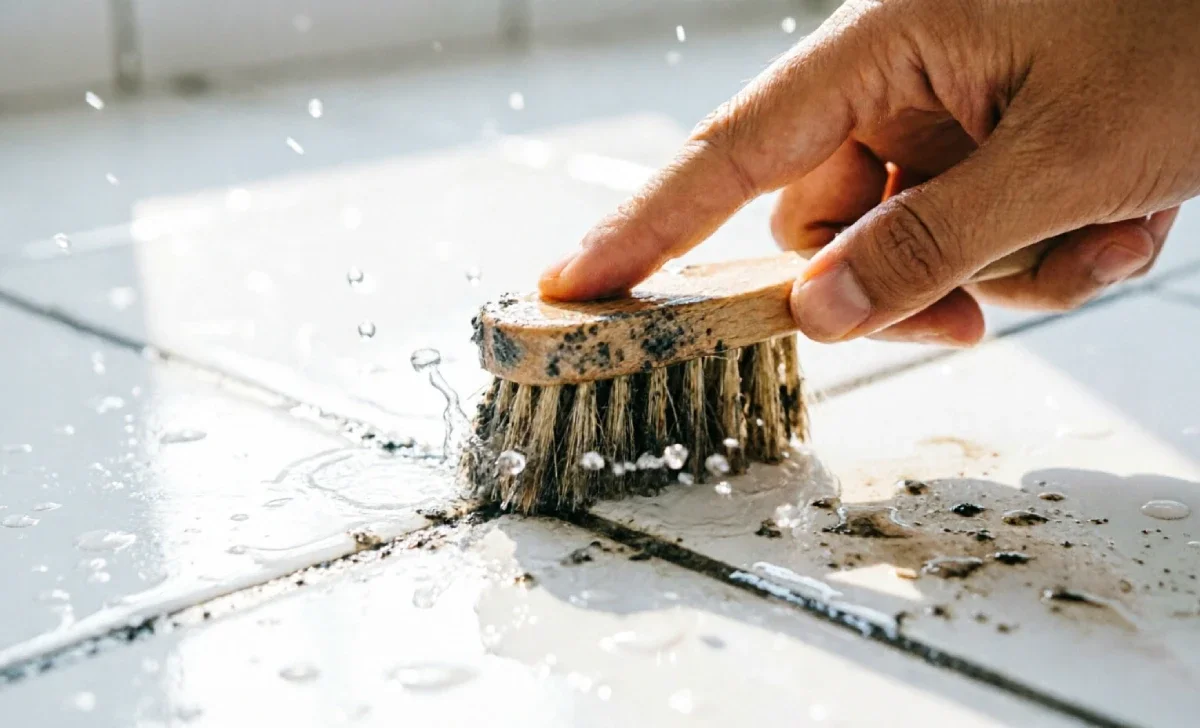
Scrub in small circles using your brush, focusing on one section at a time. Rinse thoroughly with clean water and a mop.
For deeper stains, a vinegar solution works as a strong follow-up. Mix equal parts vinegar and water, spray it on, then scrub again before rinsing well.
Steam cleaning is another great option, especially for larger areas. Homeowners looking for gentler alternatives sometimes also explore tips on protecting hardwood floors from scratches, since similar careful handling applies to tile edges near wood transitions.
Always dry the floor completely after cleaning. Leftover moisture invites mold and mildew right back in.
Cleaning Methods for Different Tile Types
Ceramic and porcelain tiles can handle vinegar solutions without much worry. Just avoid leaving acidic mixtures sitting for too long, since prolonged contact can wear down grout over time.
Natural stone needs gentler treatment. Stick with pH-neutral cleaners and skip vinegar or lemon-based mixes entirely, since acid reacts badly with stone surfaces and causes lasting damage.
Steam cleaning works beautifully across nearly every tile type. It uses heat and pressure instead of chemicals, making it a safer bet for natural stone floors.
Tips and Tricks for Cleaning Grout
Always patch test any new cleaner on a hidden section first. This saves you from discoloring an entire floor over one bad guess.
Old toothbrushes are genuinely the best tools for tight corners and edges. They're cheap, disposable, and get into spaces that bigger brushes simply can't reach.
Hydrogen peroxide can lift tough stains that vinegar struggles with. Apply it directly, let it sit, then scrub.
Prevention and Regular Maintenance
A weekly sweep and mop keep dirt from building up in the first place. Prevention is honestly the easiest form of Floor Tile Grout Cleaning you'll ever do.
Sealing your grout once it's fully cleaned adds a protective barrier against future stains. Most sealers last around one to two years before needing a fresh coat.
Wipe up spills quickly, especially in kitchens and bathrooms. The longer the liquid sits, the deeper it soaks into porous grout.
Frequently Asked Questions
How often should grout be cleaned?
Most homes do fine with a deep clean every one to three months, depending on foot traffic and moisture exposure in that specific area.
Is bleach safe for grout?
It works, but only in well-ventilated spaces and never mixed with vinegar or ammonia, since that combination creates dangerous fumes.
Can steam cleaning replace scrubbing?
Mostly yes, though heavily stained grout still benefits from a bit of manual scrubbing alongside the steam.
Wrapping It Up
Floor Tile Grout Cleaning doesn't have to be a dreaded weekend chore. With the right tools, the right solutions, and a little patience, your floors can look freshly installed again. If you're maintaining multiple flooring types throughout your home, this complete hardwood floor cleaning guide rounds out your routine nicely alongside your tile care habits.
Start small, tackle one room at a time, and build the habit into your regular cleaning rotation. Your grout, and your guests, will thank you.