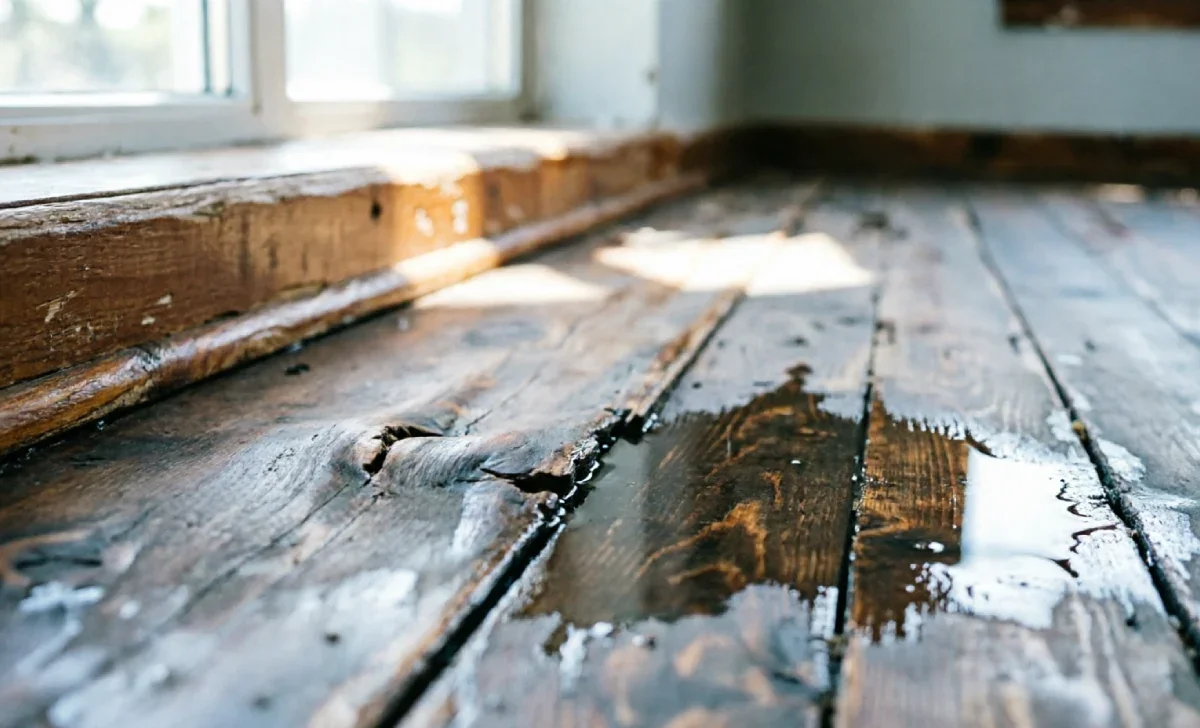
If water has gotten into your wood floor — from a burst pipe, a leaking appliance, or a flood — the first question on your mind is simple: is it ruined, or can it be saved? The honest answer depends on how fast you act, how much water got in, and what type of wood floor you have. If you're comparing hardwood vs engineered wood flooring as part of your repair or replacement decision, that difference actually matters here too, since engineered boards respond to water differently than solid hardwood.
This guide walks through what to do right now, how to tell if your floor is repairable, what professional repair actually involves, and what it's likely to cost.
What to Do in the First 24–48 Hours
Timing matters more than almost anything else in this process. According to IICRC and EPA guidance, mold can begin growing on wet materials within 24 to 48 hours once conditions stay damp. That short window is the difference between a floor you can refinish and one you have to tear out.
Here's what to do immediately:
- Stop the water source. Shut off the supply line, fix the leak, or stop the appliance causing the problem.
- Remove standing water. Use towels, a wet/dry vacuum, or a mop to get rid of pooled water fast.
- Move furniture and rugs off the wet area so air can reach the floor.
- Run fans and a dehumidifier. This speeds up drying and helps keep humidity below the level where mold starts to grow.
- Avoid direct heat like space heaters, which can set stains and cause boards to dry unevenly.
- Take photos before you clean up. You'll need this if you plan to file an insurance claim.
Assessing the Damage: Can Your Wood Floor Be Saved?
Once the standing water is gone, look closely at the boards. Different types of damage point to different outcomes.
Surface staining is usually the mildest form — the wood has darkened but hasn't swelled. This is often fixable with sanding and refinishing.
Cupping happens when the edges of a board rise higher than the center. It's an early sign of moisture imbalance and is frequently reversible once the floor dries out properly.
Buckling is more serious. Boards actually lift away from the subfloor, sometimes visibly separating from the ground. This almost always means replacement, not just refinishing.
Gapping shows up as the wood dries out and shrinks, leaving visible gaps between boards — sometimes appearing weeks after the initial incident.
A moisture meter takes the guesswork out of this. Flooring professionals generally aim for a moisture content of around 6–9% in hardwood floors; readings above roughly 12% are typically considered too wet to work with. If you don't own a meter, a professional reading is a worthwhile expense before deciding anything.
The type of water matters too. Clean water from a burst supply line (what professionals call Category 1) is the easiest to deal with. Grey water from appliances, and especially black water from sewage or flooding (Category 3), carry contamination risks that push the decision more firmly toward replacement, since drying alone doesn't address sanitation concerns.
As a general rule: boards dried within the first 48 hours have a meaningfully higher chance of being saved than boards left wet for several days. If your floor has been sitting in water for under two days, with no buckling and no contaminated water involved, repair is usually realistic. If it's been buckling, sitting in black water, or wet for a week or more, replacement is the more practical path.
How Professional Water Damage Restoration Works
A legitimate restoration company follows a fairly consistent process, and knowing what it looks like helps you vet a contractor properly.
First, they assess the damage and classify the water category, since that determines what can be dried in place versus what needs to be removed. Next comes extraction — pulling out any standing water with pumps or vacuums. Then structural drying begins: air movers and dehumidifiers work together to pull moisture out of the wood and the air around it, following what's known as psychrometric drying, which balances temperature, humidity, and airflow.
This drying phase isn't quick. Depending on how much water got in and how deep it traveled — under cabinets, into the subfloor — it can take anywhere from a few days to two weeks. Professionals monitor moisture levels with a meter throughout, and they won't move to sanding or refinishing until the wood reaches an acceptable reading. Rushing this step is one of the most common mistakes — a floor can look dry on the surface while still holding excess moisture underneath, leading to rippling or cupping that shows up months later.
Wood Flooring Water Damage Repair Costs
Costs vary a lot depending on what kind of repair is actually needed:
- Surface staining or re-coating: roughly $1–$3 per square foot
- Sanding and refinishing: roughly $2–$8 per square foot
- Cupping or warping repair: roughly $1–$8 per square foot
- Board replacement (section): roughly $7–$25 per square foot
- Mold remediation: roughly $10–$30 per square foot, or $500–$6,000 total depending on spread
- Subfloor repair: roughly $35–$80 per square foot
- Full floor replacement: often $5,000–$15,000 or more
What pushes costs higher: contaminated water, mold, hidden damage to the subfloor or joists, and difficulty matching existing wood species if you're only replacing a section rather than the whole floor.
DIY Repair vs. Hiring a Professional
Minor surface stains and small touch-ups after the floor has fully dried are reasonable DIY territory. Anything involving structural drying, mold, buckled boards, or subfloor damage is worth handing to a professional — both for safety and because getting the drying step wrong is expensive to fix later. When vetting a contractor, ask whether they're IICRC-certified and whether they'll provide written moisture readings throughout the job, not just a final "it's dry" assessment.
Does Insurance Cover Wood Floor Water Damage?
Standard homeowner's insurance typically covers sudden, accidental damage — a burst pipe, for example. It generally does not cover damage from a slow leak that went unnoticed or neglected, and flooding usually requires separate flood insurance. Document everything with photos before cleanup, keep contractor estimates, and confirm the specifics with your insurer, since policies vary.
Preventing Future Water Damage
Once your floor is repaired, a few habits go a long way: check appliance hoses and plumbing connections once a year, keep indoor humidity in a stable range, use rugs near sinks and entry points, and clean up spills right away rather than letting them sit. Kitchens are a common trouble spot since they combine water sources with high foot traffic — if you're planning a refresh after repairs, it's worth browsing ideas like dark flooring kitchen designs, which pair well with moisture-resistant finishes.
Key Takeaways
- Acting within 24–48 hours gives you the best chance of saving the floor.
- Moisture readings and water type matter more than how bad the floor looks on the surface.
- Repairs typically run $1–$25 per square foot; full replacement often costs $5,000–$15,000+.
- Insurance usually covers sudden damage, not neglect or flooding.
- Prevention — checking hoses, controlling humidity, cleaning up spills — is far cheaper than repair.
If you're weighing your options and considering a full replacement rather than a repair, it's also worth exploring alternative looks, including laminate flooring on walls ideas, which some homeowners use to redesign a space affected by repeated water exposure.
Getting a moisture reading and a professional opinion early is the single best step you can take — it turns a guessing game into a clear decision.