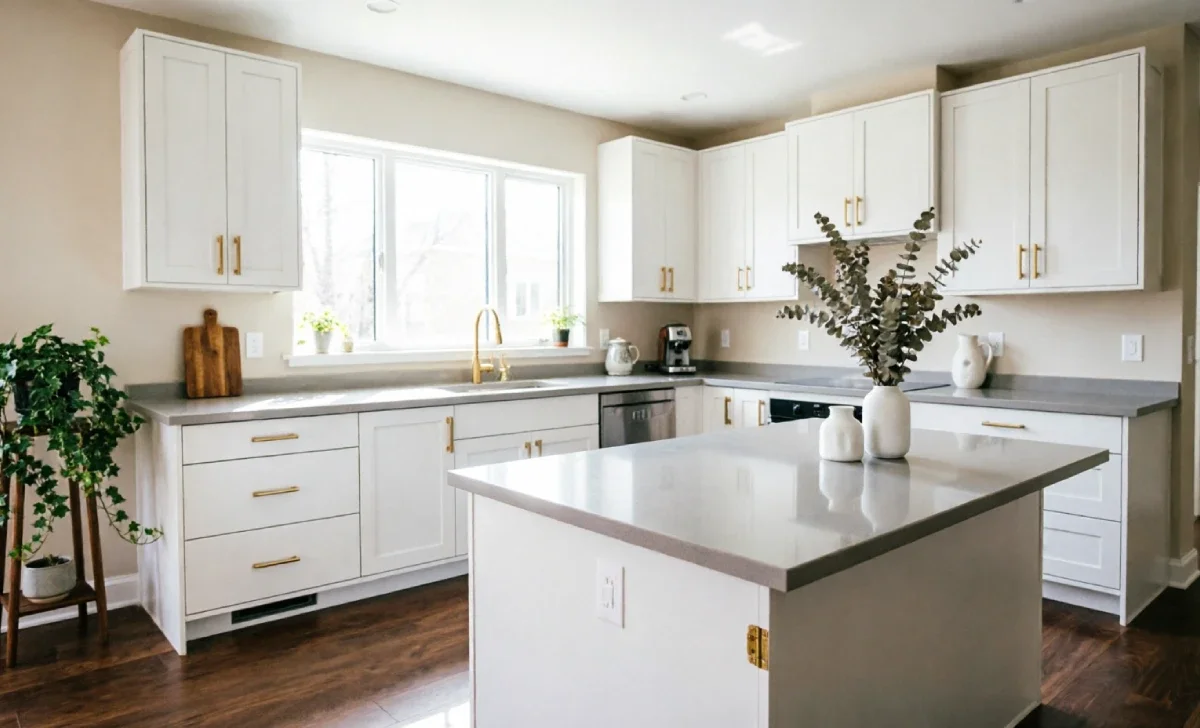
Dark floors have become one of the most requested looks in modern kitchen design, and it's easy to see why. A dark flooring kitchen creates a grounded, sophisticated feel that pairs beautifully with almost any cabinet color. But before you commit, it helps to know the full picture — not just the pretty photos, but the real trade-offs, costs, and upkeep involved. This guide walks through everything you need to decide with confidence, based on current 2026 material and pricing data.
What Counts as "Dark" Kitchen Flooring?
Dark flooring isn't limited to black. It covers a wide range of deep tones, including espresso, ebony, walnut, charcoal gray, deep navy, and even dark green. What ties them together isn't the color family but the value — how much light the surface reflects. A rich walnut floor and a matte black tile both qualify as "dark," even though they look nothing alike side by side. Knowing where your preferred shade falls on this scale helps you plan lighting and cabinet pairings more accurately later.
Pros of Dark Kitchen Floors
Dark floors offer several genuine design advantages, not just visual drama.
Visual contrast and a grounded look. A dark floor anchors the room, especially in open-concept layouts where the kitchen flows into a living or dining area. It gives the space a defined, intentional feel.
Hides certain types of dirt. Crumbs, coffee spills, and footprints tend to blend into dark surfaces better than they would on a light floor, which can reduce how often obvious stains stand out.
Pairs with almost any cabinet color. White, gray, navy, and even wood-tone cabinets all work with dark flooring, giving you more design flexibility than you might expect.
Cozy, formal feel in larger kitchens. In spacious or well-lit kitchens, dark floors create warmth and sophistication without feeling heavy.
Cons and Honest Trade-Offs
This is the part most gallery sites skip, but it matters just as much as the pros.
Shows dust, pet hair, and light debris. While dark floors hide crumbs well, they do the opposite with dust, flour, and pet hair — these show up clearly against a dark surface.
Can make small or dim kitchens feel tighter. Because dark surfaces absorb rather than reflect light, a small or low-light kitchen may feel more enclosed with dark flooring.
Scratches are more visible. When a dark finish gets scratched, the lighter wood underneath is exposed, creating a noticeable contrast line. A matte or satin finish minimizes this far better than a high-gloss finish.
Higher maintenance frequency, not necessarily greater difficulty. Dark floors don't require harder cleaning — they simply need more frequent attention to stay looking intentional rather than neglected.
Is a Dark Floor Right for Your Kitchen? A Simple Framework
Rather than a blanket recommendation, consider three factors together:
- Kitchen size: Small kitchens (under roughly 150 sq. ft.) generally do better with lighter floors, since dark surfaces can make the space feel more closed in. Larger kitchens (250+ sq. ft.) can carry dark flooring beautifully.
- Natural light: South-facing kitchens with large windows can handle dark floors without feeling gloomy. North-facing or window-limited kitchens benefit more from lighter tones.
- Household lifestyle: Homes with pets or young kids should expect more frequent sweeping and mopping. If that's a dealbreaker, a mid-tone floor often delivers most of the visual impact with far less upkeep.
Best Materials for Dark Kitchen Flooring
Not all dark flooring materials perform the same way in a kitchen environment.
Engineered hardwood is the most practical wood option for kitchens. Its cross-ply core resists the moisture-related warping that solid wood is prone to, while still offering the authentic look of walnut, stained oak, or hickory.
Solid hardwood looks stunning but is more vulnerable to spills, humidity, and moisture over time — it's a higher-maintenance choice for a kitchen specifically.
Luxury vinyl plank (LVP) has become the practical default for kitchens in 2026. It's 100% waterproof, mimics dark wood tones convincingly, and typically costs less than hardwood.
Porcelain and ceramic tile offer excellent durability and water resistance, including wood-look tile options that replicate the dark hardwood aesthetic without the maintenance concerns.
Natural stone, such as slate or dark granite, delivers a luxurious, one-of-a-kind look but requires periodic sealing to prevent staining.
| Material | Cost/sq ft (installed) | Water Resistance | Maintenance |
|---|---|---|---|
| LVP | $4–$9 | Excellent | Low |
| Engineered hardwood | $7–$14 | Good | Moderate |
| Solid hardwood | $10–$20 | Fair | Higher |
| Porcelain/ceramic tile | $8–$20+ | Excellent | Low |
| Natural stone | $14–$27 | Good (with sealing) | Moderate |
If you're comparing options across your whole home and not just the kitchen, this guide to the best home flooring options is a useful next step for weighing material choices room by room.
How Much Does Dark Kitchen Flooring Cost in 2026?
Pricing varies significantly by material. As of 2026 national averages, LVP runs about $4–$9 per square foot installed, engineered hardwood about $7–$14, solid hardwood about $10–$20, and porcelain tile about $8–$20 or more, depending on pattern complexity. For a typical 200 sq. ft. kitchen, that translates to roughly $800 for budget LVP up to $5,800+ for high-end tile or stone. Beyond material cost, factors like subfloor repair, old-floor removal, and labor complexity can add 15–30% to the total. Flooring updates typically recoup around 50–70% of the installation cost at resale, making it a reasonably sound investment when done thoughtfully.
What Colors Pair Well With Dark Kitchen Floors
The classic, safest pairing is a dark floor with light or white cabinets, which creates strong visual contrast and makes both elements stand out. Gray cabinets are a close second, offering a slightly softer, more contemporary contrast. Navy or dark cabinets can also work with a dark floor, but this dark-on-dark combination works best in larger, well-lit kitchens with varied textures — otherwise the room can feel flat. For countertops and backsplashes, lighter quartz or marble-look surfaces help balance the depth of a dark floor without competing with it.
How to Maintain Dark Kitchen Floors
A simple, consistent routine keeps dark floors looking intentional rather than neglected. Daily dry mopping or sweeping removes dust and debris before it accumulates visibly. Weekly damp mopping with a hardwood-appropriate cleaner handles grease and footprint residue — steam mops should be avoided on wood. Choosing a matte or satin finish over high-gloss makes a real difference in hiding minor scratches and everyday wear. Placing rugs or mats near the sink, stove, and refrigerator protects the highest-traffic zones and extends the life of the finish.
Frequently Asked Questions
Do dark floors make a kitchen look smaller?
They can, particularly in small or dimly lit kitchens, since dark surfaces absorb light rather than reflect it.
What color cabinets go with dark floors?
White, cream, and light gray cabinets create the most classic contrast, though navy and gray also work well.
Is dark flooring still in style in 2026?
Yes — the trend has shifted toward warmer tones like walnut and espresso with matte, textured finishes rather than cool, high-gloss black.
What's the most durable dark flooring for a kitchen?
Porcelain tile and waterproof LVP are generally the most durable and low-maintenance choices for kitchen use.
Key Takeaways
Dark flooring suits larger, well-lit kitchens more comfortably than small or dim ones. Engineered hardwood and waterproof LVP offer the best balance of style and practicality, and light-colored cabinets remain the most reliable pairing. Expect more frequent — not necessarily harder — cleaning, and budget roughly $4 to $20+ per square foot, depending on material.
Ultimately, there's no universal right answer. The best choice depends on your kitchen's size, light, and how your household actually lives in the space. Weigh the honest trade-offs alongside the style you love, and you'll end up with a floor that looks good for years, not just in photos.