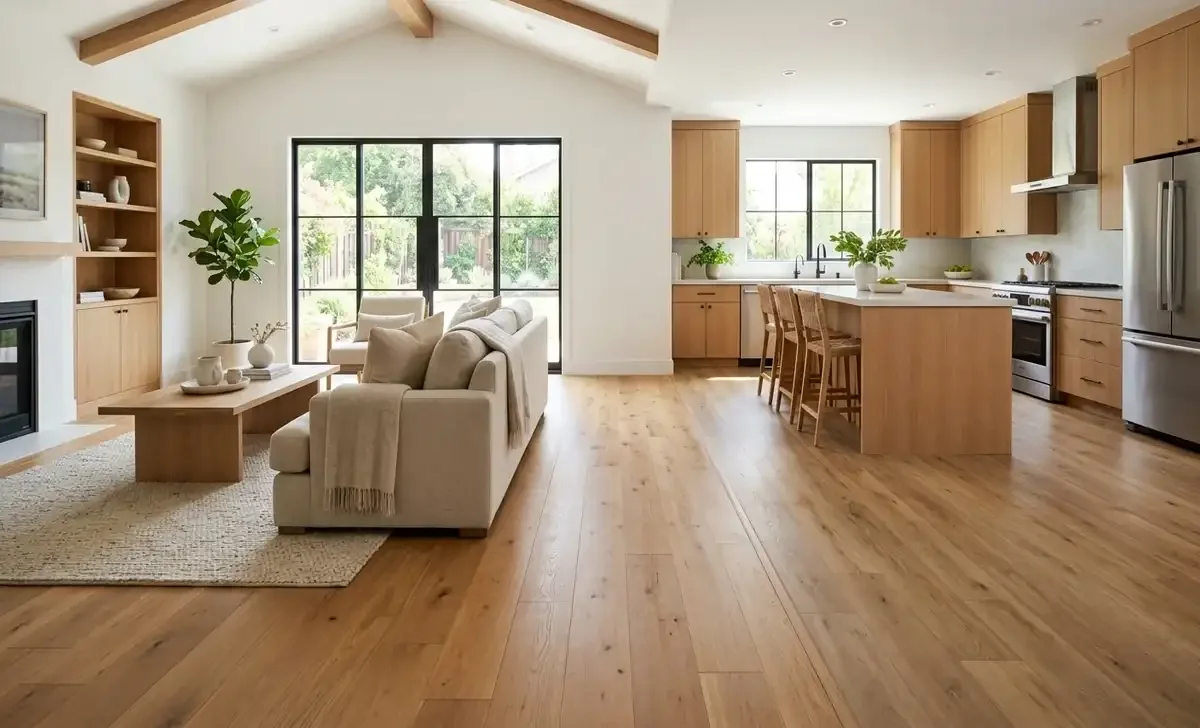
Walk into any flooring showroom today, and you'll find six or seven categories, each with dozens of sub-styles, cores, finishes, and price tiers. Luxury vinyl alone comes in SPC and WPC builds with wear layers ranging from budget to commercial-grade. Hardwood species, stains, and plank widths multiply the choices further. It's no surprise that "which flooring is best" has become one of the most-searched home renovation questions of the year.
The good news: the decision is more formulaic than it feels. Once you know how each material performs against a consistent set of criteria — durability, water resistance, maintenance, cost, and resale impact — the right choice for your specific room and lifestyle becomes obvious. That's what this guide is built to do: compare every major 2026 flooring option side by side, layer in this year's design trends, and hand you a clear decision path, room by room.
The 2026 Flooring Landscape: Trends & Top Contenders
The biggest shift shaping 2026 flooring is a move away from the cool grays that dominated the last decade toward warmer, natural tones. Designers and flooring brands alike are reporting a swing toward honey oak, walnut, chestnut, and "greige" (gray-beige) — colors that feel connected to real wood and stone rather than manufactured neutrals.
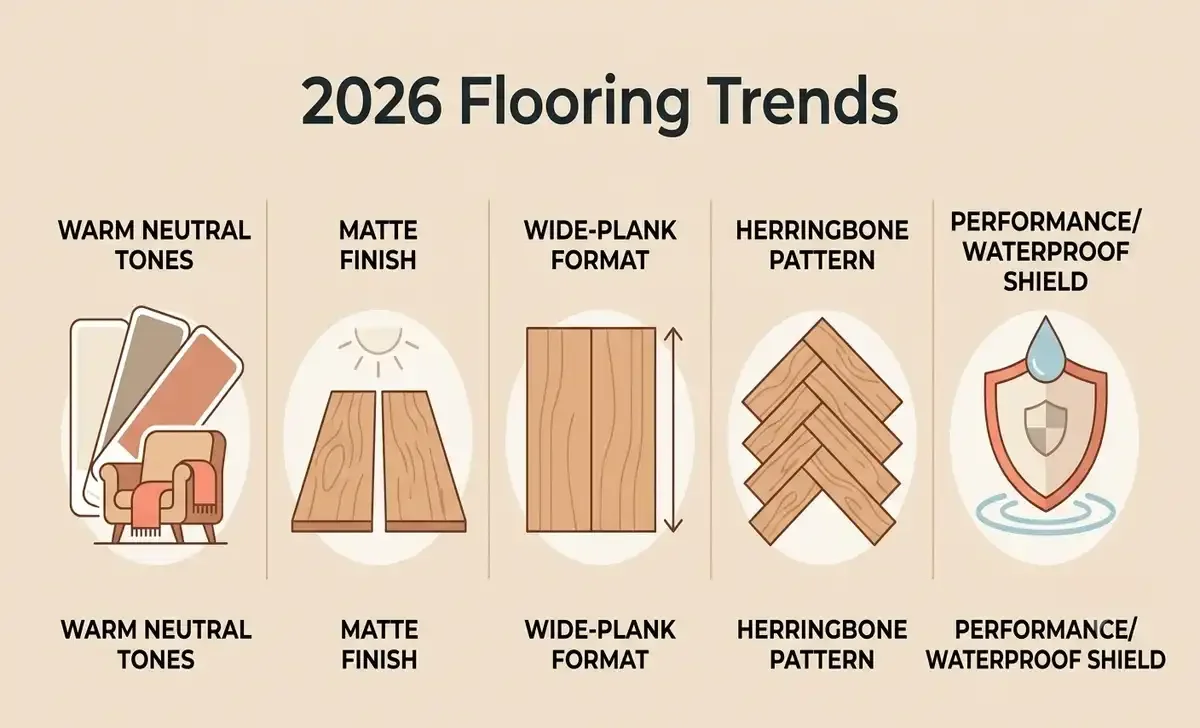
Top flooring trends for 2026:
- Warm neutrals over cool gray. Honey, caramel, amber, and mid-tone browns are replacing the ashy grays that were everywhere from 2015 to 2023.
- Matte and low-sheen finishes. High-gloss is out; matte surfaces hide scratches, dust, and footprints better — a practical win for busy households.
- Wide-plank formats. Boards in the 5–7"+ range (versus traditional 2¼" strip flooring) create a more open, contemporary look with fewer seams.
- Pattern-forward layouts. Herringbone and chevron are showing up well beyond luxury renovations, adding texture without overwhelming a room.
- Performance-first buying. Regardless of material, homeowners are prioritizing scratch resistance, waterproofing, and low maintenance as much as looks.
Against that backdrop, six material categories dominate 2026 home flooring decisions:
- Solid hardwood — the traditional, refinishable premium option.
- Engineered hardwood — real wood veneer over a stable core, more moisture-tolerant than solid wood.
- Luxury vinyl plank/tile (LVP/LVT) — waterproof, durable, and now the single most popular flooring category.
- Laminate — a budget-friendly, wood-look composite that isn't waterproof.
- Tile (porcelain/ceramic) — the standard for genuinely wet spaces.
- Carpet — still the comfort choice for bedrooms and quiet rooms.
Head-to-Head Comparison: Finding Your Match
Here's how the six major flooring categories stack up on the factors that matter most.
| Flooring Type | Durability / Lifespan | Water Resistance | Maintenance | Cost (Installed, per sq ft) | Installation | Best For |
|---|---|---|---|---|---|---|
| Solid Hardwood | Excellent — 50–100+ years, refinishable 4–6 times | Poor — warps with moisture | Moderate (sweep, periodic refinish) | $10–$20 | Professional (nail-down) | Living/dining rooms, resale value |
| Engineered Hardwood | Very good — 20–40 years, refinishable 1–2 times | Fair — more stable than solid, still not waterproof | Moderate | $7–$14 | Pro or advanced DIY (click or glue) | Living areas, homes with humidity swings |
| LVP/LVT | Very good — 10–25 years | Excellent — 100% waterproof cores (SPC/WPC) | Low (wipe clean) | $4–$9 | DIY-friendly (click-lock) | Kitchens, bathrooms, basements, pets & kids |
| Laminate | Good — 10–20 years | Poor — swells with standing water | Low | $3–$7 | DIY-friendly (click-lock) | Bedrooms, dry living areas, tight budgets |
| Tile (Porcelain/Ceramic) | Excellent — 25–50+ years | Excellent — fully waterproof | Low (grout needs occasional sealing) | $7–$20 | Professional | Bathrooms, entryways, wet climates |
| Carpet | Fair — 8–15 years | Poor | Moderate–High (vacuuming, deep cleaning) | $2–$5 | DIY-friendly or pro | Bedrooms, home offices, sound-sensitive rooms |
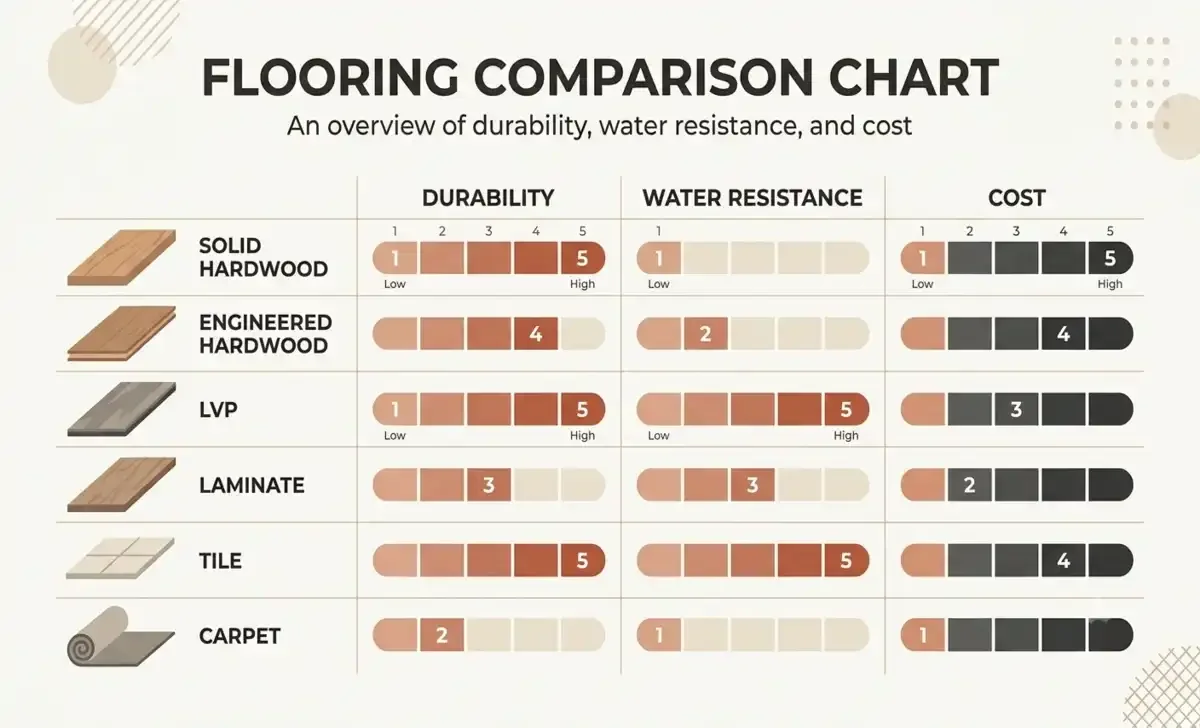
A few patterns jump out immediately. LVP is the only category that combines low cost, DIY-friendly installation, and full waterproofing — which explains why it's become the default recommendation for kitchens and bathrooms. Hardwood costs more up front, but it is the only option with a genuine 50-plus-year lifespan and multiple refinishing cycles, which is exactly why it still leads on resale value. Laminate and carpet sit at the budget end but come with real tradeoffs: laminate can't handle moisture, and carpet wears fastest in high-traffic homes.
Deep Dive: The Best Flooring Materials for 2026
Engineered Hardwood: The Modern Classic
Engineered hardwood is built from a real hardwood veneer bonded over layers of plywood or high-density fiberboard. That layered construction makes it significantly more dimensionally stable than solid wood — it resists the expanding and contracting that causes solid hardwood to gap or cup in humid climates or over radiant heat systems.
2026's trend lines favor engineered hardwood heavily: wide planks (5" and up), warm stains in honey oak and walnut, and matte or wire-brushed finishes that hide everyday wear. Because the top veneer is genuine wood, engineered floors deliver an authentic look and feel that most buyers can't distinguish from solid hardwood, which matters because at resale, engineered hardwood tracks closely behind solid hardwood in perceived value while costing meaningfully less.
Installed cost typically runs $7–$14 per square foot, and it can usually be refinished once or twice over its life, depending on veneer thickness. It works well in living rooms, dining rooms, and bedrooms, and — unlike solid hardwood — it can be installed over concrete slabs and in basements with the right underlayment. It still isn't waterproof, though, so kitchens and bathrooms remain a stretch.
Luxury Vinyl Plank (LVP): The Performance Powerhouse
If there's a single "winner" of 2026 flooring, it's LVP. Modern luxury vinyl plank is built around a rigid SPC (stone plastic composite) or a softer WPC (wood plastic composite) core, topped with a printed design layer and a protective wear layer — and it's genuinely 100% waterproof, not just water-resistant.
The number to watch when comparing products is the wear layer thickness, measured in mils. Budget planks start around 6–12 mil, while high-traffic, pet-friendly products run 20 mil or more; a thicker wear layer resists scratches and dents significantly longer. Photographic printing technology has also advanced enough that quality LVP is now genuinely difficult to distinguish from hardwood or stone at a glance, even underfoot.
Installed pricing generally runs $4–$9 per square foot, with click-lock systems that make it one of the more approachable DIY flooring projects. If indoor air quality is a concern, look for FloorScore or GreenGuard certifications — low-VOC options are now widely available and increasingly treated as a baseline expectation rather than a premium feature. Compared to laminate, LVP costs somewhat more but wins decisively on water resistance, which is why it has become the go-to for kitchens, bathrooms, mudrooms, and finished basements.
Laminate: The Budget-Friendly Workhorse
Laminate flooring uses a high-resolution photographic layer fused under a clear wear layer, sitting atop a dense fiberboard core. It's rated on an AC scale from AC1 (light residential use) to AC5 (heavy commercial), so checking the AC rating against your household's traffic level is worth the extra minute when shopping.
Laminate's core weakness hasn't changed: its fiberboard base swells and warps when exposed to standing water, which rules it out for kitchens, bathrooms, and basements. Where it still earns its place is dry, moderate-traffic rooms — bedrooms, home offices, dry-climate living rooms — where its $3–$7 per square foot installed cost undercuts nearly every other hard-surface option. It's also one of the easiest floors for a confident DIYer to install in a weekend.
Tile & Stone: The Moisture Masters
For rooms where water is a given — bathrooms, laundry rooms, entryways, and mudrooms — porcelain and ceramic tile remain the most reliable choice. Both are fully waterproof once properly installed and sealed, and porcelain in particular is dense enough to resist scratching, staining, and heavy wear for 25 to 50-plus years.
2026's tile trends lean into large-format tiles that minimize grout lines, along with bold patterned tile as a feature element in kitchens and bathrooms — a departure from the all-neutral tile schemes of recent years. Natural stone (marble, slate, travertine) delivers an even more premium look but comes with higher costs and more required maintenance, including periodic sealing.
The tradeoffs are real: tile installation is labor-intensive, and the most expensive to remove later, and tile itself is cold and hard underfoot — a genuine consideration for kitchens where people stand for long stretches. Installed cost runs $7–$20 per square foot, with intricate patterns and natural stone pushing toward the top of that range.
Carpet: The Comfort Comeback
Carpet has spent the last several years losing ground to hard-surface flooring, but 2026 is seeing a modest, more intentional comeback — specifically in bedrooms and secondary living spaces where comfort and sound absorption matter more than durability. The difference this time is the fiber technology: newer solution-dyed and PET-based carpets resist staining and fading far better than older nylon products, and they hold up to spot cleaning without the color loss that made older carpet a maintenance headache.
Carpet remains unmatched for underfoot warmth and noise dampening, which is exactly why it still makes sense in bedrooms, home theaters, and upstairs living areas in multi-level homes. It's also the cheapest flooring category to install, at roughly $2–$5 per square foot. The tradeoffs haven't disappeared, though: carpet traps allergens, shows wear in high-traffic zones faster than any hard-surface option, and — outside of bedrooms — it's increasingly viewed by buyers as a flooring type that needs replacing rather than an asset.
Sustainable & Specialty Options
A smaller but growing slice of buyers is looking beyond the six mainstream categories. Linoleum (not to be confused with vinyl) is made from linseed oil and natural fibers, is naturally antimicrobial, and holds up well in moderate-moisture spaces. Cork offers a cushioned, warm underfoot feel and decent water resistance, making it a niche fit for kitchens and home offices. Bamboo and hempwood are marketed as fast-renewing alternatives to traditional hardwood, with hardness and appearance that can rival oak, though bamboo's performance varies significantly by manufacturing quality. None of these options currently rival LVP or hardwood in mainstream adoption, but they're worth a look for homeowners prioritizing sustainability certifications above all else.
Room-by-Room Recommendations
- Kitchen: LVP or porcelain tile. Both handle spills and heavy foot traffic; LVP is more forgiving underfoot for long cooking sessions.
- Bathroom: Porcelain tile or waterproof LVP. Avoid laminate and solid hardwood entirely — both fail with sustained moisture exposure.
- Basement: LVP is the standard recommendation, especially over concrete slabs where moisture and temperature swings rule out solid hardwood.
- Living/Family Room: Engineered hardwood for warmth and resale value; LVP if the room sees heavy pet or kid traffic.
- Bedroom: Carpet for comfort, or laminate/engineered hardwood if you prefer a hard surface with warmth added via rugs.
- Entryway/Mudroom: Porcelain tile or heavy-wear-layer LVP — this is the room most exposed to dirt, water, and abrasion.
- Whole-Home / Open Concept: A single hard-surface material (engineered hardwood or LVP) run continuously creates visual flow and reads larger to buyers than mixed materials room to room.
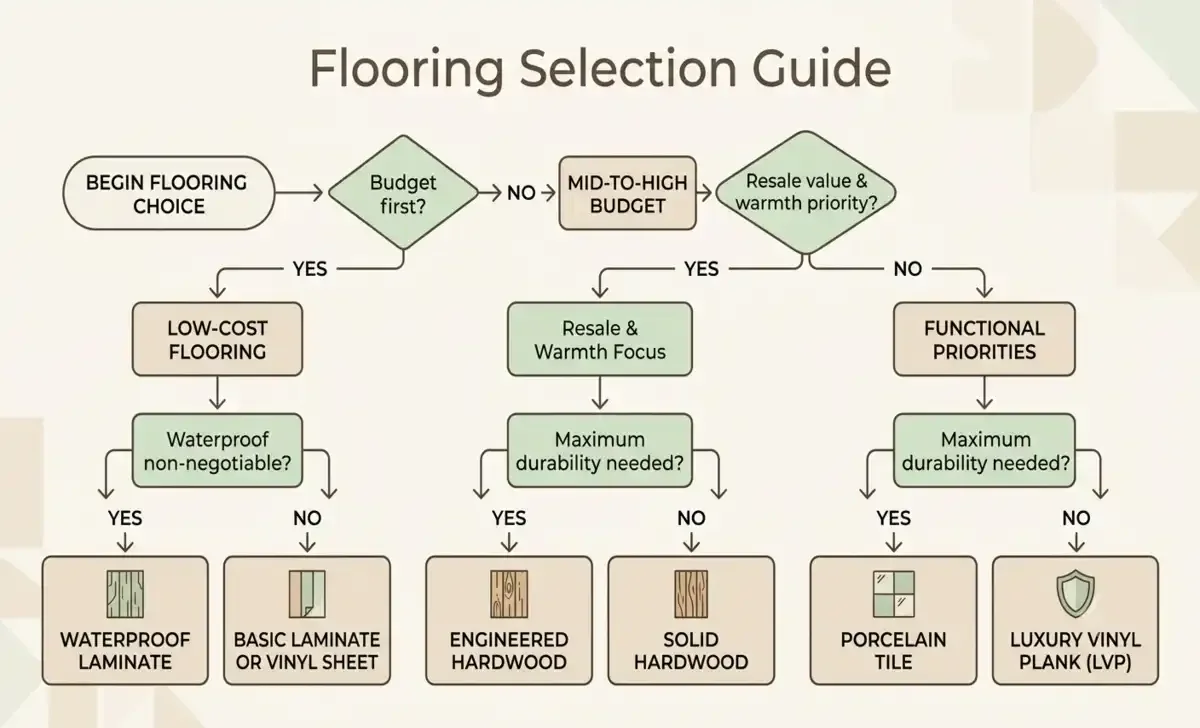
Making Your Decision: A Simple Flowchart
If you're still torn, work through these priorities in order:
- Is budget your top constraint? → Laminate for dry rooms, or entry-level LVP for wet-prone areas.
- Is waterproofing non-negotiable? → LVP or tile.
- Are resale value and warmth your top priority? → Engineered hardwood (or solid hardwood if budget allows).
- Do you need maximum durability for heavy daily use? → Tile, or a high-wear-layer (20 mil+) LVP.
2026 Flooring Cost & Value Analysis
Flooring costs vary by material, thickness/quality tier, and installation complexity, but current national averages give a solid planning baseline:
| Material Material | Material Only (per sq ft) | Fully Installed (per sq ft) |
|---|---|---|
| Carpet | $1–$3 | $2–$5 |
| Laminate | $1–$4 | $3–$7 |
| LVP/LVT | $2–$7 | $4–$9 |
| Engineered Hardwood | $4–$9 | $7–$14 |
| Solid Hardwood | $6–$12 | $10–$20 |
| Porcelain/Ceramic Tile | $3–$10 | $7–$20 |
For a typical 1,200-square-foot area, that translates to roughly $4,800–$10,800 for LVP, $8,400–$16,800 for engineered hardwood, and $2,400–$6,000 for carpet. Remember that these figures rarely include everything: old-floor removal ($1–$3/sq ft), subfloor prep, underlayment, and transition strips can add another 15–20% to a real-world budget.
On the value side, hardwood remains the standout. Industry cost-recovery data consistently shows new hardwood installation returning around 118% of its cost at resale, and refinishing existing hardwood returning roughly 147% — both well above the return on most other interior remodeling projects, including kitchen updates. LVP delivers a respectable but lower return, generally cited in the 50–80% range, though its much lower upfront cost often makes it the more practical choice for whole-home installs. Laminate, by contrast, rarely moves the needle on resale value and is frequently perceived by buyers as a budget material.
Final Checklist Before You Buy
- Get a professional measurement of the space, including waste allowance (typically 10%).
- Order samples and live with them for a few days under your home's actual lighting.
- Read the warranty carefully — check what's covered (wear layer, structural, water damage) and for how long.
- Plan for acclimation. Wood and laminate products typically need 24–72 hours in the room before installation.
- Vet your installer. Ask for references and confirm they carry insurance, especially for tile and hardwood.
- Don't skip underlayment. It affects sound, comfort, and — in below-grade spaces — moisture protection.
The Bottom Line
There's no single "best" flooring for 2026 — only the best flooring for your specific room, budget, and lifestyle. If performance and value are your priority, high-quality LVP is hard to beat. If resale value and long-term character matter most, engineered or solid hardwood remains the safer bet. And for genuinely wet rooms, tile is still the most dependable choice on the market.
Use the comparison table and flowchart above as your starting roadmap, order a few samples before committing, and invest in quality installation — a well-chosen, well-installed floor is one of the few home upgrades you'll genuinely enjoy every single day.
Frequently Asked Questions
What is the most durable flooring for 2026?
Porcelain tile and high-wear-layer LVP (20 mil or more) are the most durable options for daily wear, spills, and heavy traffic.
What flooring adds the most value to a home?
Hardwood — new installation and, even more so, refinishing existing hardwood — delivers the strongest resale return of any flooring type.
Is luxury vinyl plank still popular in 2026?
Yes. LVP remains the top-selling flooring category thanks to its combination of waterproofing, affordability, and increasingly realistic wood and stone visuals.
What color flooring is trending in 2026?
Warm neutrals are dominant — honey oak, walnut, chestnut, and greige have replaced the cool gray tones popular in the previous decade.
What's the best flooring for kitchens and bathrooms?
Waterproof LVP or porcelain tile. Both fully resist standing water; laminate and solid hardwood should be avoided in these rooms.