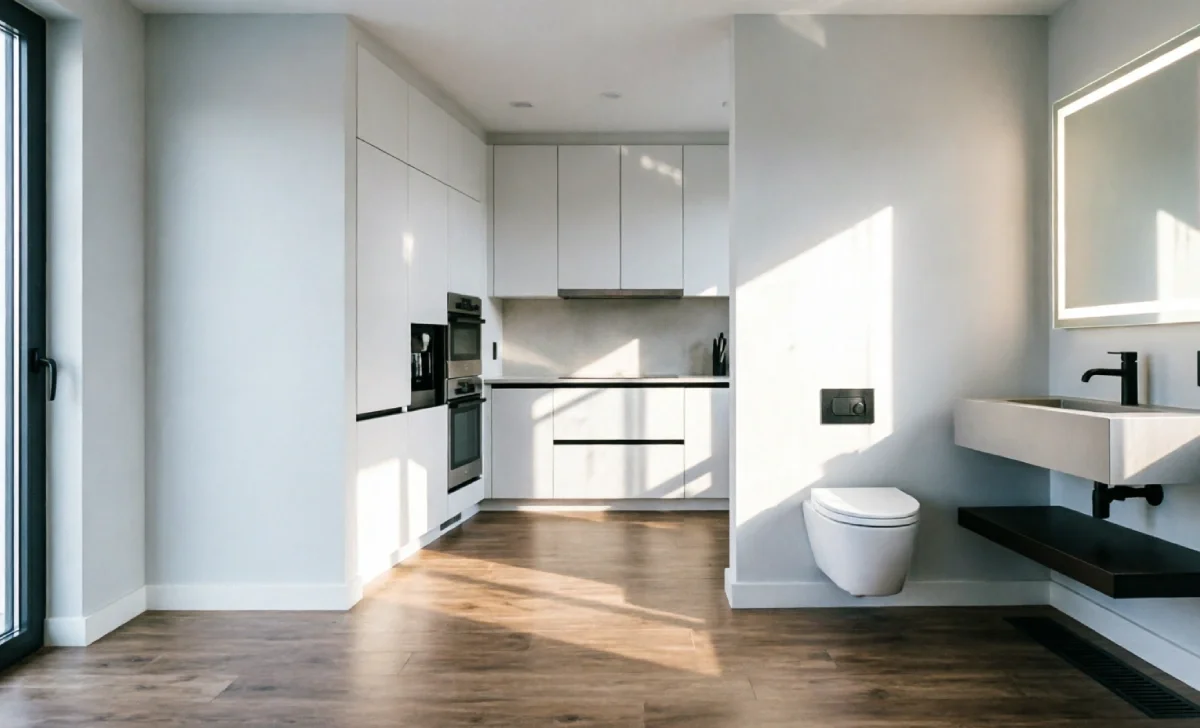
Picking flooring for a kitchen or bathroom isn't like picking flooring for a living room. Water, grease, dropped pans, steam — these rooms take a beating every single day. If you've ever dealt with grout that turned gray, you already know why the right material matters more here than almost anywhere else in the house. This guide breaks down the Best Kitchen Bathroom Flooring options so you can pick with confidence instead of guessing.
Why These Two Rooms Play by Different Rules
Kitchens deal with spills, dropped knives, and constant foot traffic. Bathrooms deal with standing water, humidity, and temperature swings from hot showers. Any flooring you choose has to survive both moisture and impact without warping or cracking.
That's the real test for the Best Kitchen Bathroom Flooring: can it take a hit and still shrug off water? A lot of flooring looks great in a showroom, but fails within a year once it meets real kitchen and bathroom conditions.
Luxury Vinyl: The Practical Favorite
Luxury vinyl plank has become the go-to answer for a reason. It's fully waterproof, comfortable underfoot, and handles dropped cookware better than most people expect. You get the look of wood or stone without the maintenance headache that comes with either.
Installation is beginner-friendly too. Most luxury vinyl comes in click-lock planks that don't require glue or professional tools. For renters or anyone testing out a DIY renovation, this is often the easiest entry point into the Best Kitchen Bathroom Flooring category.
Cost sits in the middle range, which makes it approachable for most budgets. It won't add the same resale bump as real hardwood, but it more than makes up for that with day-to-day durability.
Porcelain and Ceramic Tile: The Old Reliable
Tile has been the default bathroom choice for decades, and it earns that spot honestly. Porcelain in particular resists water almost completely, making it a safe pick for shower surrounds and wet floors alike. Ceramic costs less but chips more easily under heavy impact.
The one downside is grout. Grout lines trap grime and mildew if you don't stay on top of cleaning. Sealing your grout every year or two keeps tile looking sharp and keeps it firmly in the running among the Best Kitchen Bathroom Flooring picks for high-moisture rooms.
Tile also feels cold underfoot, especially in winter. Radiant floor heating solves that, though it adds to installation costs. Worth considering if you're doing a full bathroom remodel anyway.
Laminate Flooring: Budget-Friendly With Limits
Laminate gives you a wood-look floor at a fraction of the price. Modern water-resistant laminate has improved a lot, but it still isn't fully waterproof the way vinyl is. Standing water for long periods can cause swelling at the seams.
For kitchens with light spill risk, laminate can work fine. For bathrooms, it's a riskier bet unless you choose a specifically rated waterproof laminate line. Read the fine print before you commit, since not every laminate product handles moisture the same way.
Engineered Hardwood: Warmth With a Catch
Some homeowners want real wood warmth in the kitchen, and engineered hardwood delivers that look with slightly better moisture tolerance than solid hardwood. It's still wood at its core, so it's never fully waterproof. Bathrooms are generally not the place for it.
If you do go this route in a kitchen, staying ahead of scratches and surface wear matters more than with vinyl or tile. Felt pads under chairs and quick spill cleanup go a long way toward protecting the finish.
Solid hardwood should stay out of both rooms entirely. Even small amounts of standing water can cause cupping or permanent staining that no amount of refinishing fully corrects.
Comparing Your Options at a Glance
| Flooring Type | Water Resistance | Comfort Underfoot | Typical Cost | Best For |
|---|---|---|---|---|
| Luxury Vinyl | Excellent | High | Low–Mid | Kitchens & bathrooms alike |
| Porcelain Tile | Excellent | Low (cold) | Mid–High | Bathrooms, wet zones |
| Ceramic Tile | Good | Low | Low–Mid | Budget bathroom updates |
| Laminate | Fair | Medium | Low | Kitchens with light spill risk |
| Engineered Hardwood | Poor | Medium | Mid–High | Kitchens only, low moisture |
Common Mistakes People Make
The biggest mistake is choosing flooring based on looks alone and skipping the water-resistance rating entirely. A gorgeous floor that buckles after one flooded dishwasher isn't a win. Always check the manufacturer's moisture rating before buying.
Another common slip-up is ignoring subfloor prep. Even the best material fails early if it's installed over an uneven or damp subfloor. Budget time and money for proper subfloor leveling, especially in older homes.
Skipping samples is another one. Colors and finishes look different under kitchen lighting than they do in a store. Grab a few samples and look at them at home before finalizing your choice.
Maintenance Tips That Actually Matter
Daily sweeping keeps grit from scratching softer surfaces like vinyl and laminate. Weekly mopping with a pH-neutral cleaner works for nearly every material on this list without stripping finishes.
For tile, regular grout cleaning prevents the buildup that eventually turns light grout dark and patchy. A simple monthly scrub keeps it looking new for years.
Wipe up spills immediately in every room, no exceptions. This one habit does more to extend the life of your Best Kitchen Bathroom Flooring choice than any product or sealant ever will.
Choosing Based on Your Budget and Household
Tight budget with kids or pets in the house? Luxury vinyl handles scratches, spills, and noise better than anything else at its price point. It's the safest all-around pick for busy families.
Renovating an older home with character you want to preserve? Porcelain tile in a classic pattern keeps that vintage feel while giving you modern water resistance. It costs more upfront but rarely needs replacing.
Working with a small kitchen or a compact bathroom? Layout and material choice both affect how the space feels, and picking the right flooring for tight square footage can make a cramped room read as bigger than it is.
Planning to sell within a few years? Engineered hardwood in the kitchen and tile in the bathroom tend to appeal most to buyers, assuming your climate and moisture levels support wood in the first place.
What About Underfloor Heating and Slip Resistance?
Cold tile in winter is a real complaint, and underfloor heating solves it without changing the material you already picked. Most electric mat systems fit under both tile and vinyl, so you're not locked out of this option once flooring is chosen.
Slip resistance matters just as much as water resistance, especially in bathrooms with kids or older family members. Look for a slip rating on the box or product page rather than assuming a textured surface is automatically safe. Matte finishes generally grip better than high-gloss ones, even within the same material category.
How Installation Affects Long-Term Performance
Even top-tier materials underperform when installation cuts corners. Vinyl needs a flat, clean subfloor or seams can telegraph through the surface over time. Tile needs proper thin-set coverage, or hollow spots eventually crack under weight.
Hiring a professional adds cost but usually pays off through fewer callbacks and a longer-lasting floor. If you're set on DIY, watch a few installation videos specific to your exact product line before starting, since techniques vary between brands and plank types.
Frequently Asked Questions
What is the best flooring for kitchens?
Luxury vinyl plank generally wins for the combination of water resistance, comfort, and cost, though tile remains a strong runner-up.
Is vinyl better than tile?
Vinyl feels warmer and softer underfoot, while tile edges it out on long-term durability in wet conditions. Neither is objectively better across every situation.
Can hardwood be used in bathrooms?
It's not recommended. Even engineered hardwood struggles with the humidity and splash exposure that bathrooms produce daily.
Which flooring lasts the longest?
Porcelain tile typically outlasts every other option on this list when properly installed and sealed.
Conclusion
Choosing the Best Kitchen Bathroom Flooring comes down to matching material strengths to how your household actually lives. Weigh water exposure, budget, and daily wear before falling for a look that can't back it up. Get that part right, and the rest of the renovation gets a lot easier.