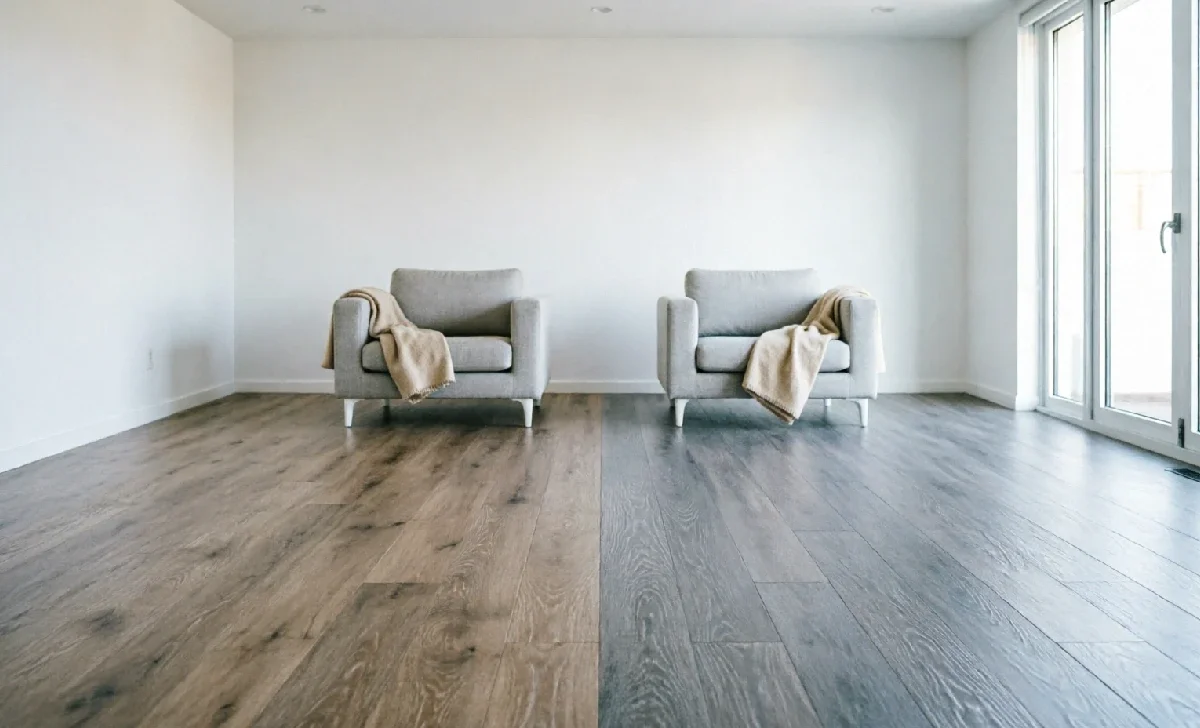
So you're standing in a flooring showroom, staring at two sample boards that look almost identical, and someone just told you they're completely different materials. Welcome to the laminate versus vinyl flooring debate — the one every homeowner eventually has to settle. Before you commit, get familiar with basics like tile flooring maintenance, because a lot of the same upkeep logic carries over here.
Here's the short version: laminate is wood-look flooring built on a wood-fiber core, while vinyl is plastic-based flooring built on PVC. That one difference shapes everything else — how they handle water, how long they last, and how much they cost you down the line.
Most people searching laminate versus vinyl flooring already know they want something durable and easy to clean. The real question is which material fits the specific room you're renovating, not which one wins on paper overall.
What Is Laminate Flooring, Really?
Laminate flooring uses a high-density fiberboard core topped with a printed image layer that mimics wood grain. A clear wear layer sits on top to protect against scratches and everyday scuffs.
Most laminate installs as a floating floor, meaning the planks click together without glue or nails. That makes it a solid pick for a weekend DIY project if you've got steady hands and a little patience.
The catch is water. Standard laminate swells and warps if it sits in standing water too long. Some newer water-resistant laminate lines have closed that gap, but they still aren't fully waterproof like vinyl.
What Is Vinyl Flooring, Really?
Vinyl flooring is made almost entirely from PVC, which makes it naturally waterproof from top to bottom. That's the biggest reason people lean toward vinyl for kitchens, bathrooms, and basements.
You'll usually see it sold as luxury vinyl plank or luxury vinyl tile, both designed to copy the look of hardwood or stone. The wear layer on top handles scratches, while the core underneath shrugs off moisture without a problem.
Vinyl also feels softer underfoot than laminate, since the material has a bit more give. If you're on your feet a lot in the kitchen, that difference is noticeable within the first week.
Laminate Versus Vinyl Flooring: Durability and Water Resistance
This is where the laminate versus vinyl flooring comparison gets real. Vinyl wins on water resistance, hands down — it's built for spills, splashes, and humid rooms. Laminate wins on scratch resistance in most cases, since its wear layer tends to be tougher against dragged furniture and pet claws.
| Factor | Laminate | Vinyl |
|---|---|---|
| Water resistance | Moderate to good (varies by product) | Excellent, fully waterproof cores available |
| Scratch resistance | Very good | Good |
| Best rooms | Living rooms, bedrooms, offices | Kitchens, bathrooms, basements |
| Feel underfoot | Firmer | Softer |
| Lifespan | 15–25 years | 10–20 years |
Neither option is flawless. Laminate can chip at the edges if something heavy drops on it, and vinyl can dent under sharp, concentrated weight like stiletto heels or furniture legs without pads.
Installation and Maintenance
Both types favor DIY installers, but vinyl edges ahead for beginners. Peel-and-stick vinyl tiles require almost no tools, while laminate needs precise cutting and a proper underlayment. If you want a full walkthrough, this guide on DIY vinyl flooring installation breaks down the process step by step.
Maintenance is simple for both. Sweep or vacuum regularly, then mop with a damp — not soaked — cloth. Avoid steam mops on laminate specifically, since trapped heat and moisture can damage the core over time.
Vinyl handles standing water for cleaning without complaint. Laminate needs a quicker wipe-up policy, especially in kitchens where spills happen without warning.
Comfort, Looks, and Lifespan
Appearance-wise, both flooring types have gotten remarkably convincing at mimicking real wood grain and texture. Laminate often edges out vinyl on realistic wood look, since its high-resolution printing technology has had longer to mature.
Comfort leans toward vinyl, thanks to its slightly cushioned feel, which matters if you're standing for long stretches. Laminate feels closer to real hardwood underfoot, firm and solid.
Lifespan depends heavily on installation quality and daily traffic. Laminate can outlast vinyl in low-moisture rooms, while vinyl often lasts longer in wet or high-traffic areas where laminate would eventually fail.
Cost and Value for Money
Vinyl and laminate sit in a similar price range, though vinyl often costs slightly less at the budget end. Premium versions of both — thicker cores, better wear layers — can run close to entry-level hardwood pricing.
Installation costs matter too. Since laminate needs more precise cutting and underlayment work, professional installation tends to cost more than a comparable vinyl job.
Think about long-term value, not just the sticker price. A waterproof floor that survives a flooded basement saves you replacement costs that a warped laminate floor would rack up instead.
Warranties tell a similar story. Vinyl products often carry longer moisture-related warranties, while laminate warranties focus more on wear and fading protection. Read the fine print before you buy either one.
Room-by-Room Picks
Kitchens and bathrooms call for vinyl, plain and simple, given how often water ends up on the floor. Basements are the same story — moisture from below makes vinyl the safer long-term choice.
Bedrooms, living rooms, and home offices are laminate territory. These rooms rarely deal with standing water, so laminate's firmer feel and realistic wood look can shine without the water-resistance tradeoff mattering much.
Laundry rooms and mudrooms lean vinyl too, for the same reason as kitchens. Anywhere shoes track in rain, snow, or mud deserves a waterproof floor underneath.
Rental properties often do best with vinyl across the board. It handles tenant turnover, spills, and inconsistent care better than laminate does over several years of wear.
Environmental Impact
Laminate generally uses more wood-based material, which some buyers see as a renewable-resource plus. Vinyl relies on PVC production, a process with a heavier chemical footprint during manufacturing.
Neither option is perfectly green, so if sustainability drives your decision, check for certifications like FloorScore or GREENGUARD on the specific product you're considering rather than assuming based on material type alone.
Making the Final Call
There's no single winner in the laminate versus vinyl flooring matchup — the right pick depends on the room, your budget, and how much water that space sees on a normal week. Wet rooms lean vinyl; dry, low-traffic rooms lean laminate.
Once your new floor is down, keeping the grout lines and seams clean matters more than most people expect. A quick look at grout cleaning tips can help you avoid buildup that dulls the whole room over time.
Whichever side of the laminate versus vinyl flooring debate you land on, measure your space, check the water exposure, and pick the material that actually fits how you live in that room.