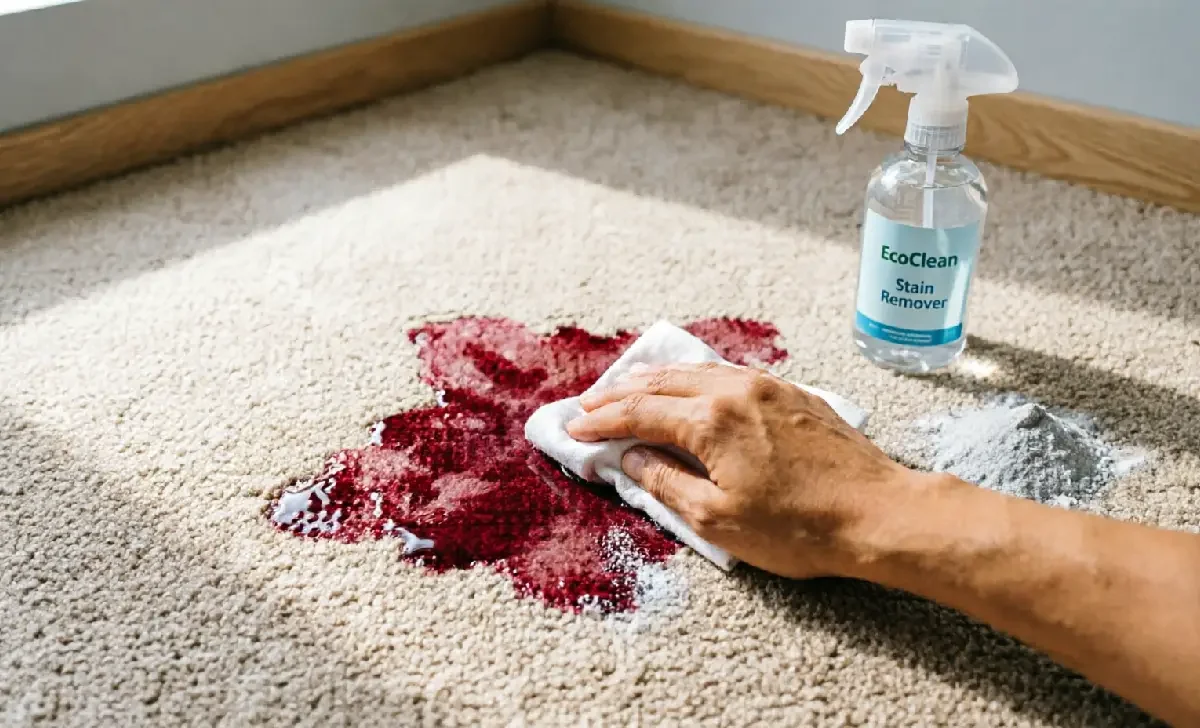
Spilled wine at your last hangout? Dog had a moment on the rug? You're not alone, and your carpet isn't ruined yet. The right carpet stain removal techniques can save you hundreds of pounds and keep your floors looking fresh for years. Of course, carpet isn't the only flooring that takes a beating — if you're weighing up whether carpet is even the right call for your space, this breakdown of laminate versus vinyl flooring is worth a read before you commit to anything new.
Why Speed Matters More Than the Product You Use
Here's the truth nobody tells you: the cleaner you grab matters less than how fast you grab it. Stains set in fast, sometimes within minutes, and every second you wait makes the job harder.
Fresh spills sit on top of carpet fibers. Give them time, and they sink deep, bonding with the material itself. That's when a five-minute fix turns into an hour-long battle.
Blot, don't rub. Rubbing pushes the stain deeper and frays the fibers, making the spot look worse than before you started.
Carpet Stain Removal Techniques for Everyday Spills
Different stains need different weapons. Coffee, wine, grease, and mud don't respond to the same cleaner, and using the wrong one can actually set the stain permanently.
Here's a quick reference for the most common offenders:
| Stain Type | Best First Response | Cleaning Solution |
|---|---|---|
| Coffee or tea | Blot immediately | Dish soap + warm water |
| Red wine | Blot, then cover with salt | White vinegar + baking soda |
| Pet urine | Blot, absorb excess liquid | Enzyme cleaner |
| Grease or oil | Scrape off solids first | Dish soap + baking soda paste |
| Mud | Let it dry, then vacuum | Mild detergent solution |
| Ink | Blot, never scrub | Rubbing alcohol |
Coffee and tea respond well to a mix of dish soap and warm water, applied gently with a clean cloth. Red wine needs a little more muscle, and a vinegar-baking soda combo usually gets the job done.
Pet stains are their own category entirely. Regular cleaners might lift the visible mark but leave the smell behind, which is why enzyme cleaners exist. They break down the proteins causing the odor, not just the color.
Grease stains laugh at water alone. Scrape off any solid residue first, then work in a baking soda paste before vacuuming it away. Mud is honestly the easiest one — let it dry completely, then vacuum before you even think about wet cleaning.
DIY Solutions vs Commercial Cleaners
Your kitchen cupboard already holds most of what you need. White vinegar, baking soda, and dish soap handle a huge range of spills without any special shopping trip.
That said, commercial cleaners earn their keep for tougher jobs. Enzyme-based pet stain removers, for instance, do things a vinegar solution simply can't manage.
Always test any solution on a hidden patch of carpet first. Some fibers react badly to certain chemicals, and colorfastness matters more than people realize.
If a stain keeps returning after multiple attempts, that's your cue to bring in the bigger guns. Steam cleaners and hot water extraction machines pull grime from deep within the fibers that surface cleaning misses.
When DIY Just Isn't Cutting It
Sometimes the carpet has had enough. Years of stains, wear, and traffic patterns eventually mean no cleaning technique — however good — is bringing that floor back.
If you're staring down a carpet that's more patchwork than pattern, it might be time to think past cleaning altogether. This guide on carpet removal and floor prep walks through what that process actually looks like, step by step.
Old carpet padding holds onto odors and allergens no amount of scrubbing will shift. At a certain point, replacement genuinely costs less than the ongoing frustration of chasing stains that keep coming back.
Preventing Stains Before They Happen
The best carpet stain removal techniques are the ones you never need. A little prevention goes a long way toward keeping your floors spotless.
Doormats at every entrance catch dirt and mud before they ever touch your carpet. It sounds basic, but it's one of the most effective habits you can build.
Stain-resistant sprays create a protective barrier on carpet fibers, giving you extra time to blot up spills before they set. Reapply every few months for the best results.
Vacuum weekly, even if nothing looks dirty. Trapped dust and grit wear down fibers over time, making carpet more prone to permanent staining down the line.
Set a "shoes off" rule at your front door. It feels small, but it dramatically cuts down on the mud, oil, and grime tracked in daily.
Choosing Materials That Fight Back Against Stains
Not all carpet fibers behave the same way when disaster strikes. Some flooring options are built with stain resistance baked right into the material itself.
If you're renovating and want fewer future headaches, it's worth looking at flooring engineered specifically to resist spills and daily wear. Options like Ndure Sierra Cypress flooring are designed with exactly that kind of durability in mind, cutting down on the constant stain battles.
Picking the right material upfront saves you from relearning these carpet stain removal techniques every single week.
Final Thoughts
Stains happen. What matters is how you respond, and now you've got a real toolkit for handling almost anything your carpet throws at you. Act fast, match the cleaner to the stain, and know when it's time to call in backup — whether that's a steam cleaner or a full carpet swap.