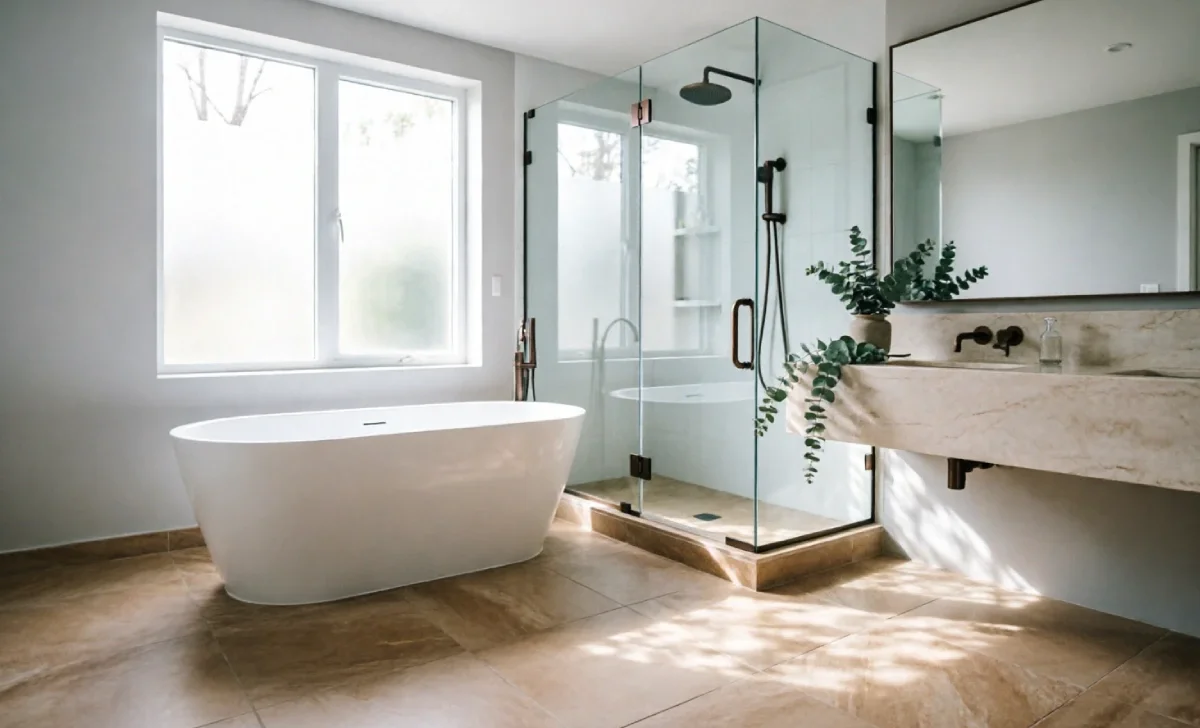
Bathrooms don't play by the same rules as the rest of the house. Standing water, constant humidity, wet bare feet, and frequent cleaning all put pressure on a floor that most other rooms never face. A material that looks fine in a living room can warp, crack, or turn dangerously slippery within months in a bathroom setting. That's why choosing the best flooring for bathrooms means weighing waterproofing, slip safety, and long-term durability far more heavily than style alone. Porcelain tile remains the strongest overall pick for most homes in 2026, thanks to its near-zero water absorption and long service life, but it isn't the only option worth considering. Waterproof luxury vinyl, sheet vinyl, natural stone, and a handful of other materials each solve for different budgets, comfort needs, and design goals.
What Makes the Best Bathroom Flooring?
1. Waterproofing & Moisture Resistance
There's a real difference between "waterproof" and "water-resistant," and manufacturers don't always make that distinction obvious. Waterproof flooring keeps moisture from penetrating the material itself, while water-resistant flooring merely slows it down. Seams, edges, and how the installer seals transitions matter just as much as the flooring material — a waterproof tile with poorly sealed grout lines can still let water reach the subfloor. Once moisture gets underneath, it can rot wood subfloors, encourage mold growth, and cause tiles or planks to lift over time.
2. Slip Resistance
Wet-slip performance deserves top billing when comparing bathroom flooring, since bathroom falls are among the most common household injuries. Matte and textured finishes generally outperform polished, glossy surfaces once water hits the floor. For tile specifically, look for a Dynamic Coefficient of Friction (DCOF) rating, with 0.42 commonly referenced as the benchmark for wet-area suitability. That said, no flooring is completely slip-proof — bath mats and careful cleaning habits still matter regardless of material.
3. Durability
A bathroom floor takes a beating: dropped bottles, foot traffic, cleaning chemicals, and constant humidity cycles. The right choice depends on household use — a family bathroom with kids needs tougher, more forgiving flooring than a rarely used guest half-bath.
4. Maintenance & Cleaning
Grout lines, sealing schedules, and how easily a surface wipes clean all affect the real cost of ownership. Some materials look premium but demand regular resealing or specialized cleaners to stay in good condition.
5. Comfort Underfoot
Tile and stone stay cold, especially first thing in the morning, while vinyl and cork feel noticeably warmer. Radiant floor heating under tile has become a popular workaround for homeowners who want the durability of tile without the cold-foot tradeoff.
Best Flooring for Bathrooms in 2026
1. Porcelain Tile — Best Overall
Porcelain remains the leading bathroom flooring choice because it combines very low water absorption with excellent durability. Matte, textured, and stone-look finishes have widened its design range considerably, making it suitable for primary bathrooms and long-term renovations alike. Pros: highly durable, low water absorption, wide design range. Cons: cold underfoot, can be pricier to install, hard surface if dropped items break
2. Ceramic Tile — Best Budget Tile Option
Ceramic differs from porcelain mainly in density and water absorption, making it slightly less robust but considerably more affordable. It still offers strong water resistance and plenty of design flexibility, and a slip-resistant textured finish makes it a sensible choice when porcelain's price tag doesn't fit the budget. Pros: affordable, wide style options, easy to source. Cons: slightly less durable than porcelain, can chip more easily
3. Waterproof Luxury Vinyl — Best for Comfort & Budget
LVP and rigid-core/SPC vinyl products offer a warmer, softer feel underfoot compared with tile, along with straightforward installation and low maintenance. The key is confirming a product is genuinely waterproof rather than simply water-resistant, since seams and edge details still need attention. Pros: comfortable, budget-friendly, easy DIY installation. Cons: lower resale perception than tile, quality varies widely by product
4. Sheet Vinyl — Best for a Nearly Seamless Waterproof Surface
Because it comes in large rolls, sheet vinyl reduces the number of seams where water could enter, making it a strong budget-friendly option for rentals, guest bathrooms, and cost-conscious remodels. Pros: minimal seams, inexpensive, comfortable. Cons: fewer premium design options, can look less upscale
5. Natural Stone — Best for a Luxury Bathroom
Marble, slate, and granite bring a unique, premium appearance that's hard to replicate with manufactured materials. Slip resistance depends heavily on the finish and texture chosen, and ongoing sealing is essential to protect the stone from moisture damage. Pros: luxurious appearance, unique character, long-lasting when maintained. Cons: high maintenance, requires regular sealing, higher cost
6. Concrete — Best for Modern & Industrial Bathrooms
Concrete offers design flexibility through custom staining and a durable, low-maintenance surface once properly sealed. It's hard underfoot and can crack if the subfloor shifts, so correct installation is critical. Pros: modern look, customizable, durable when sealed. Cons: hard and cold, requires professional sealing, cracking risk
7. Cork — Best Eco-Friendly Comfort Option
Cork is a renewable material that feels notably comfortable underfoot, but it has real moisture limitations. A suitable waterproof finish is essential, and it works best in bathrooms with lower direct water exposure. Pros: eco-friendly, warm and comfortable, naturally antimicrobial. Cons: moisture-sensitive, needs proper sealing, shorter lifespan in wet zones
Flooring Options to Avoid in Bathrooms
Solid hardwood swells, warps, and deteriorates with repeated moisture exposure, even with protective finishes. Standard laminate has a similar weakness — water reaching its fiberboard core causes swelling and shouldn't be confused with laminate products specifically rated for wet areas. Carpet retains moisture, creating mold and hygiene concerns that make it fundamentally unsuitable for bathrooms. Unsealed bamboo carries the same risk, since untreated wood-based flooring reacts poorly to constant humidity and temperature swings.
Best Flooring for Shower Floors
Shower floors demand extra attention because they deal with direct, sustained water exposure. Small-format tile and mosaics are typically favored here since they can follow the slope toward the drain more precisely, and the additional grout joints actually contribute to traction. Always choose products specifically rated for floor use, and never treat waterproofing beneath the tile as optional — it's the layer that actually keeps water out of the subfloor.
Bathroom Floor Tile Sizes & Designs in 2026
Large-format tile continues to gain popularity for its cleaner appearance and fewer grout lines, though drainage and installation need careful planning. Mosaic and small-format tile remain better suited to shower-floor slopes thanks to their extra grout joints for traction. Matte and textured finishes are increasingly preferred over highly polished surfaces, both for looks and practical wet-area performance. Warm earth tones, stone-look and wood-look porcelain, terrazzo-inspired patterns, and retro-influenced designs are shaping 2026 bathroom aesthetics toward warmer, more textured, and more expressive spaces.
Bathroom Flooring Installation: DIY vs Professional
Experienced homeowners working with simple layouts and forgiving materials can often handle installation themselves and save on labor costs. Complex tile layouts, waterproofing work, uneven subfloors, and shower or curbless bathroom projects are usually better left to a professional. Subfloor preparation deserves particular attention — a level, stable substrate, a proper waterproofing system, and correctly sealed transitions and perimeters often determine whether even a high-quality flooring material performs the way it's supposed to.
How to Maintain Bathroom Flooring
Wipe up spills and standing water promptly, and stick to manufacturer-approved cleaners rather than harsh generic products. Keep grout clean and reseal any materials that require periodic sealing on schedule. Periodically inspect for cracked tiles, damaged grout, and failed caulking, and check flooring edges and transitions for early signs of moisture problems before they spread to the subfloor.
How Much Does Bathroom Flooring Cost?
Material cost and installed cost aren't the same thing — tile installation, in particular, tends to cost more than DIY-friendly options like vinyl due to labor intensity. Total cost depends on bathroom size, subfloor condition, layout complexity, material choice, and local labor rates. It's worth comparing long-term maintenance and replacement costs alongside the upfront price, since a cheaper floor that needs resealing or replacing sooner can end up costing more over time.
How to Choose the Right Bathroom Flooring
- Determine how much direct water exposure the floor will receive
- Set a realistic flooring and installation budget
- Prioritize wet-slip safety above appearance
- Choose a genuinely waterproof or appropriately moisture-resistant material
- Factor in comfort and whether radiant heating makes sense
- Match the flooring to your bathroom's overall style
- Evaluate how much ongoing maintenance you're willing to commit to
- Decide whether the installation calls for a professional
Frequently Asked Questions
What is the best flooring for a bathroom?
Porcelain tile is generally considered the strongest overall option thanks to its low water absorption and durability, while waterproof luxury vinyl offers a warmer, more budget-friendly alternative for homeowners who prioritize comfort.
Is porcelain or ceramic better for bathroom floors?
Porcelain is denser and absorbs less water, giving it an edge in durability, while ceramic costs less and still performs well in most residential bathrooms. The choice often comes down to budget versus long-term wear resistance.
Is luxury vinyl waterproof enough for a bathroom?
It depends on the specific product — genuinely waterproof LVP or SPC options can handle bathroom conditions well, but this varies by manufacturer, so checking the product's actual waterproof rating and installation requirements matters more than the general LVP label.
What is the safest bathroom flooring?
Safety comes down to wet-slip performance rather than material alone. Textured porcelain or ceramic tile with a suitable DCOF rating, along with matte-finish vinyl, tends to offer the most reliable traction when wet.
What flooring should you avoid in a bathroom?
Solid hardwood, standard laminate, carpet, and unsealed bamboo should all be avoided, since each reacts poorly to sustained moisture and humidity in ways that shorten their lifespan and create hygiene or structural concerns.