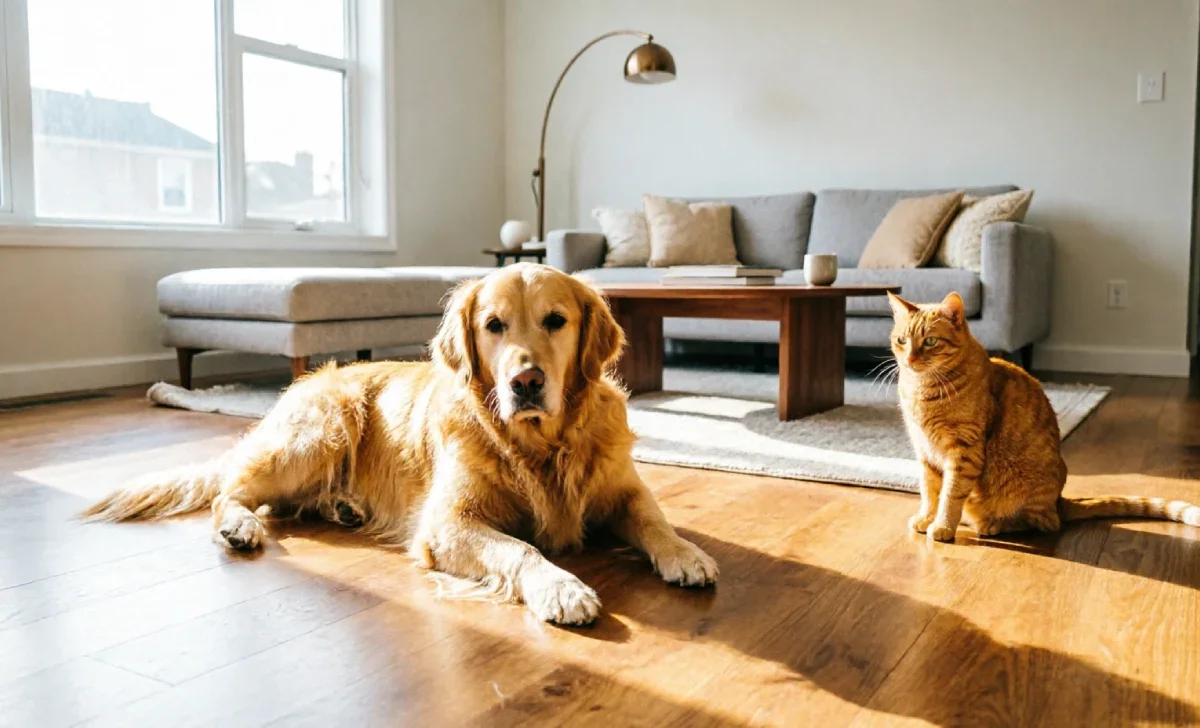
Got a dog that zooms through the house like it's late for something? Or a cat who treats your floor like a scratching post? Pet-friendly flooring solutions aren't a luxury anymore — they're survival gear. And before you even pick a new floor, check your current one for creaky spots with this squeaky floorboard repair guide, because paws find every weak board eventually.
What Makes Flooring Pet-Friendly?
Think of pet-friendly flooring solutions like a good pair of sneakers. It needs to handle impact, resist damage, and still look sharp after a rough day. Five things matter most: durability, water resistance, comfort, easy maintenance, and safety. Skip any one of those, and your floor becomes a liability instead of a flex.
Durability keeps the surface intact when claws dig in during a chase around the living room. Water resistance saves you from stains and warping after accidents or spilled water bowls. Comfort matters too — pets need decent grip so they don't slide.
Maintenance is the quiet hero here. A floor that's easy to sweep and mop beats one that needs babying every week.
Best Pet-Friendly Flooring Options
Luxury Vinyl Plank, known as LVP, is basically the golden child of pet-friendly flooring solutions. It's waterproof, scratch-resistant, and comes in styles that mimic real wood without the fragile ego. Homeowners love it because it survives daily chaos without complaint.
Laminate flooring is the budget-conscious cousin. It handles moderate scratches well, but deep claw marks can still show up over time. If your laminate already has some battle scars, this laminate flooring scratch repair fix works wonders before you consider a full replacement.
Engineered hardwood brings natural beauty into the mix, but it needs a protective finish to survive pet life. Bamboo flooring is eco-friendly and fairly tough, though it's not bulletproof against sharp claws.
Tile flooring is the heavyweight champion of scratch resistance and water protection. The tradeoff? It's cold, hard, and not exactly cozy for a nap.
Each option brings its own personality to the table, kind of like picking a car. LVP is the reliable daily driver. Tile is the tank that never quits. Hardwood is the classic ride that needs a little extra care to stay shiny. Bamboo splits the difference, offering a greener footprint without sacrificing too much toughness.
If you're torn between two options, think about which room you're flooring. A mudroom or kitchen leans toward tile or LVP. A cozy bedroom where your dog naps all day might do better with engineered hardwood or a well-finished laminate.
Factors to Consider Before Buying
Before committing to one of these pet-friendly flooring solutions, think about your specific pets. A large dog with thick nails needs tougher protection than a small cat that mostly naps.
Budget matters, obviously. LVP and laminate tend to cost less upfront than hardwood, while tile sits somewhere in the middle, depending on the style you pick.
Installation type counts too — some floors click together easily for DIY projects, while others need professional installation. Also factor in your home's traffic level and whether you're renting or own the place outright.
Installation, Cost, and Long-Term Value
Click-lock LVP and laminate are the easiest for a weekend DIY project. Most homeowners can install a decent-sized room without hiring anyone, which saves real money upfront.
Tile and hardwood usually call for a professional, especially if subfloor prep or leveling is involved. That adds labor cost, but it also means fewer installation mistakes down the line.
Think long-term value, not just sticker price. A cheaper floor that wears out in three years costs more over time than a slightly pricier one that lasts a decade with pets running across it daily.
Renters should lean toward flooring that's forgiving and reversible, since permanent changes aren't always allowed. Homeowners have more freedom to invest in higher-durability options like tile or engineered hardwood.
| Flooring Type | Scratch Resistance | Water Resistance | Comfort Level | Typical Cost |
|---|---|---|---|---|
| Luxury Vinyl Plank | High | High | Medium | $$ |
| Laminate | Medium | Medium-High | Medium | $ |
| Engineered Hardwood | Medium | Low-Medium | High | $$$ |
| Bamboo | Medium | Medium | Medium | $$ |
| Tile | Very High | Very High | Low | $$-$$$ |
Best Flooring for Pet Accidents and Messes
Accidents happen, even with the best-trained pets. Waterproof flooring, like LVP or sealed tile, wins here because liquid sits on top instead of soaking in. That means quick cleanup and zero warping drama.
Laminate can handle small spills if you're fast, but standing liquid is its enemy. Hardwood is the riskiest choice for accident-prone households since moisture damages the wood over time, even with a good finish.
If pet accidents are a regular thing in your home, prioritize sealed seams and water-resistant cores when shopping. This one factor alone can save serious money down the road.
Non-Toxic and Safe Flooring for Pets
Safety goes beyond just scratches and spills. Look for FloorScore certified products, which meet strict indoor air quality standards. Low VOC flooring reduces harmful fumes that can affect your pet's sensitive nose and lungs.
Pets spend way more time on the floor than we do, nose-to-surface most of the day. That makes non-toxic materials a real health consideration, not just a nice-to-have feature.
Check for NALFA certification on laminate products too, since it confirms the flooring meets safety and performance benchmarks. These small details separate a decent pick from a genuinely smart one.
Odor prevention matters here too. Some finishes trap smells from accidents, while others release them easily during cleaning. A floor that fights odor buildup keeps your whole home feeling fresher, especially in multi-pet households.
Tips for Maintaining Pet-Friendly Floors
Regular cleaning keeps pet-friendly flooring solutions looking fresh and performing well for years. Sweep or vacuum a few times a week to manage shedding and dirt buildup.
Trim your pet's nails regularly. Shorter nails mean fewer scratches and less wear on any flooring type, no matter how tough it claims to be.
Area rugs in high-traffic zones add extra protection where your pet naps or plays most. They also give paws better grip on slicker surfaces like tile.
Wipe up spills immediately, even on waterproof floors. Standing liquid can still seep into seams or grout lines if you leave it too long.
Set a simple routine and stick to it. A quick sweep every couple of days, a deeper mop weekly, and occasional nail trims keep your floors looking good without much effort.
Pet-friendly furniture pads under bowls and beds also prevent scuffing in spots where your pets spend the most time. Small habits like these add years to any flooring investment.
Frequently Asked Questions
What is the best flooring for pets?
Luxury Vinyl Plank usually tops the list for its mix of durability, water resistance, and affordability.
What is the best floor for dog pee?
Sealed tile or waterproof LVP handles liquid best since they don't absorb moisture into the surface.
Is vinyl flooring safe for pets?
Yes, especially FloorScore-certified options with low VOC ratings and solid air quality standards.
What flooring resists scratches from dogs?
Tile and Luxury Vinyl Plank both perform well, especially models with a thick wear layer or aluminum oxide finish.
Wrapping It Up
Choosing pet-friendly flooring solutions comes down to matching your pet's habits with the right material. Durability, water resistance, and easy cleaning should guide your decision more than looks alone. Once you've settled on a floor, keep exploring creative uses for it, like these laminate flooring on walls ideas, if you want a matching accent wall too.