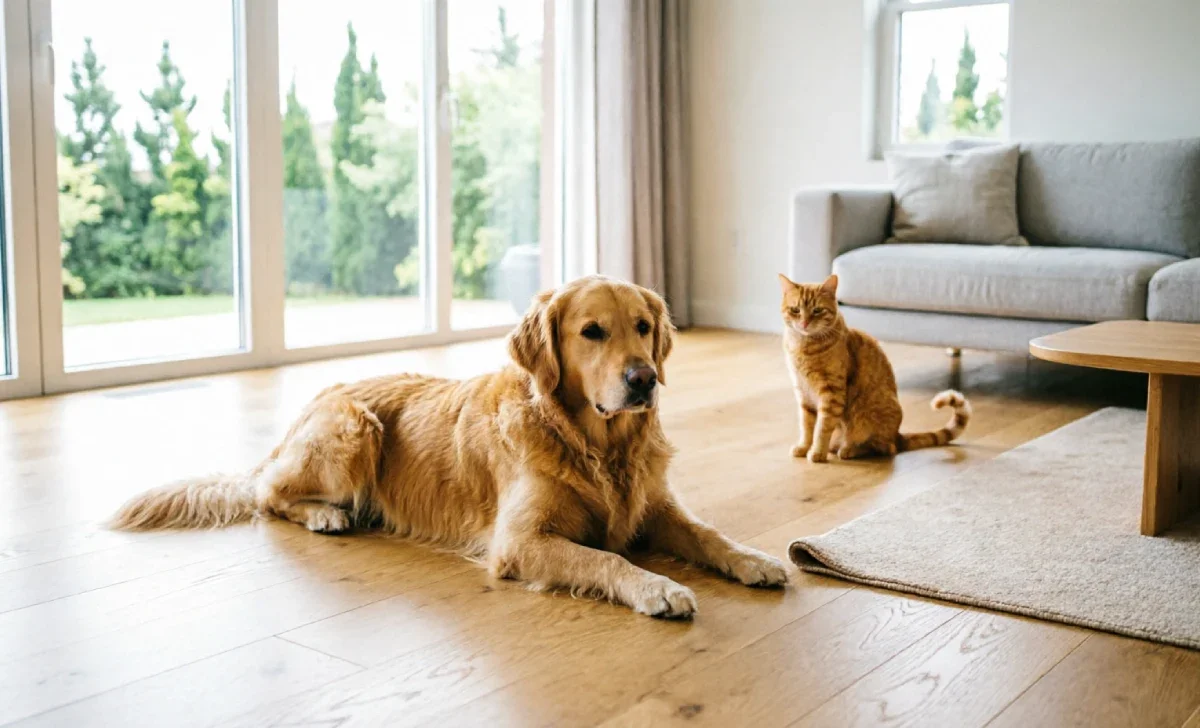
Choosing the best flooring for pets is about far more than looks — it's about surviving daily life with claws, fur, muddy paws, and the occasional accident. Whether you share your home with an energetic dog, a curious cat, or both, the flooring underfoot needs to handle scratches, moisture, slips, and constant traffic without falling apart. In this guide, we break down comfort, hair visibility, cleaning ease, and long-term durability across the top pet-friendly flooring options, so you can make a confident, informed decision for your home in 2026.
Comfort Benefits and Drawbacks of Hair, Stains, and Odors
Comfort matters for both you and your pet. Softer surfaces like carpet feel warmer underfoot, provide cushioning for older pets' joints, and give better traction for animals prone to slipping. However, softness comes at a cost: carpet fibers trap hair, dander, and dirt deep within the pile, making regular vacuuming a necessity rather than an option.
Stains are another major concern. Porous materials — including unsealed hardwood, some laminates, and traditional carpet — absorb liquid quickly. Pet urine, in particular, can seep into subflooring, leading to persistent odors and even structural damage if accidents aren't cleaned immediately. Odor retention is closely tied to porosity: the more absorbent a material is, the harder it becomes to fully eliminate smells, even with deep cleaning or enzymatic cleaners.
On the other hand, hard, sealed, and waterproof surfaces resist staining and odor absorption almost entirely. They may lack the plush comfort of carpet, but they make daily cleanup dramatically easier and protect your home's structure from long-term moisture damage. This trade-off between comfort and practicality is the core decision every pet owner faces when selecting flooring.
What Flooring Hides Pet Hair Best?
If you've ever wondered why fur seems to appear out of nowhere on certain floors, color and texture are usually the culprits. Flooring that closely matches your pet's coat color, or that features natural, multi-tone patterns, does a far better job of camouflaging loose hair between cleanings.
- Natural wood tones and wood-look LVP: Medium-brown or variegated wood-effect planks hide both light and dark hair better than solid, single-tone floors.
- Multi-tone and textured designs: Flooring with subtle color variation, grain patterns, or embossed texture breaks up the visual contrast that makes hair stand out.
- Pet-coat-friendly shades: If you own a golden retriever or tabby cat, warm caramel or honey-toned floors blend well. For black or dark-coated pets, deep walnut or charcoal-toned planks work better.
- Avoid stark solid colors: Pure white, jet black, or glossy solid-tone floors show every strand of hair and every paw print, requiring far more frequent cleaning.
Choosing a multi-dimensional finish isn't just an aesthetic upgrade — it's a practical strategy that reduces how often visible hair forces you to reach for the vacuum.
What Flooring Is Easiest to Clean After Pet Accidents?
When it comes to accidents, the single most important feature is a waterproof, non-porous surface. Two categories consistently lead the pack:
- Luxury Vinyl Plank (LVP) and SPC (Stone Plastic Composite): These are fully waterproof flooring options for pets, with sealed seams and a rigid core that prevents liquid from seeping through to the subfloor. Spills and accidents wipe up in seconds, making LVP flooring for pets a favorite among multi-pet households.
- Tile: Ceramic and porcelain tile are naturally non-porous, scratch-resistant, and completely impervious to moisture when properly grouted and sealed. This makes tile one of the best flooring options for pet accidents, particularly in high-traffic entryways, kitchens, and mudrooms.
Both surfaces resist staining, don't absorb odor-causing bacteria, and can be cleaned with a simple mop and pet-safe disinfectant. This is a major advantage over hardwood or carpet, where accidents require immediate, careful attention to avoid permanent damage. For homes with young puppies still housetraining, senior pets with incontinence issues, or multiple animals, prioritizing waterproof flooring for pets can save significant time, money, and frustration.
Vinyl vs Laminate for Pets: Which Wins?
A common point of confusion is vinyl vs laminate for pets. While both mimic the look of hardwood at a lower price point, their performance differs significantly. Traditional laminate has a fiberboard core that can swell if water seeps into seams, making it less forgiving of accidents. Waterproof laminate, a newer generation of the product, closes this gap by using water-resistant cores and tighter locking systems — though it still doesn't quite match the total waterproofing of SPC or LVP. For pet owners prioritizing budget alongside durability, waterproof laminate is a smart middle-ground choice.
Scratch-Resistant Flooring for Pets Prone to Slipping
Dogs with long nails, especially large or older breeds, need more than just waterproofing — they need scratch-resistant flooring for pets that also offers grip. Look for wear layers rated AC4 or higher on laminate and LVP products, textured or embossed finishes for added traction, and matte rather than high-gloss surfaces, since gloss becomes slippery and shows scratches more easily. Flooring for dogs that slip should combine a textured, low-sheen finish with a firm, stable core to reduce joint strain and injury risk during play or sudden movement.
Final Verdict: What Is the Best Flooring for Pets in 2026?
After weighing comfort, hair visibility, cleaning ease, and long-term durability, here's how the top contenders stack up:
- Best Overall: Luxury Vinyl Plank / SPC
- Best Budget Alternative: Waterproof Laminate
- Best for Maximum Durability: Tile
- Best for Real-Wood Lovers: High-quality Engineered Hardwood
- Best Natural Alternative: Bamboo
- Best for Comfort: Pet-specific low-pile carpet
There is no single "perfect" flooring for every household. The right choice depends on your pet's size and activity level, how frequently accidents occur, your budget, your comfort preferences, and even which room the flooring will go in. A high-traffic entryway has very different needs than a quiet bedroom where your pet naps.
Final recommendation: Rather than choosing flooring based on appearance alone, prioritize waterproofing, scratch resistance, traction, and easy maintenance — and always verify product quality and certifications (such as FloorScore ratings) before purchasing. A floor that looks beautiful but can't stand up to daily pet life will cost you more in repairs and replacements down the road.
FAQs: Best Flooring for Pets
What is the best flooring for dogs that scratch or slip?
Textured, matte-finish LVP or SPC with a high AC wear rating offers the best combination of scratch resistance and paw traction, reducing both surface damage and slip-related injuries.
What is the best flooring for cats?
Scratch-resistant, sealed surfaces like tile or high-quality LVP work well for cats, since they resist claw marks and are easy to disinfect after litter box mishaps or hairballs.
Is LVP flooring really waterproof enough for pet accidents?
Yes. Genuine LVP and SPC products are fully waterproof at the surface and seams, meaning urine and spills sit on top of the floor rather than soaking in, as long as accidents are wiped up in a reasonable time frame.
What is the best flooring for pet accidents in a multi-pet household?
Tile and SPC are typically recommended for homes with multiple pets, since they combine non-porous surfaces, high durability, and straightforward cleaning routines that can handle frequent accidents.
Is carpet ever a good option for pet owners?
Low-pile, stain-resistant carpet can work well in low-traffic areas like bedrooms, offering comfort and warmth, but it isn't ideal for accident-prone pets or homes with heavy shedding, since hair and odors are harder to fully remove.