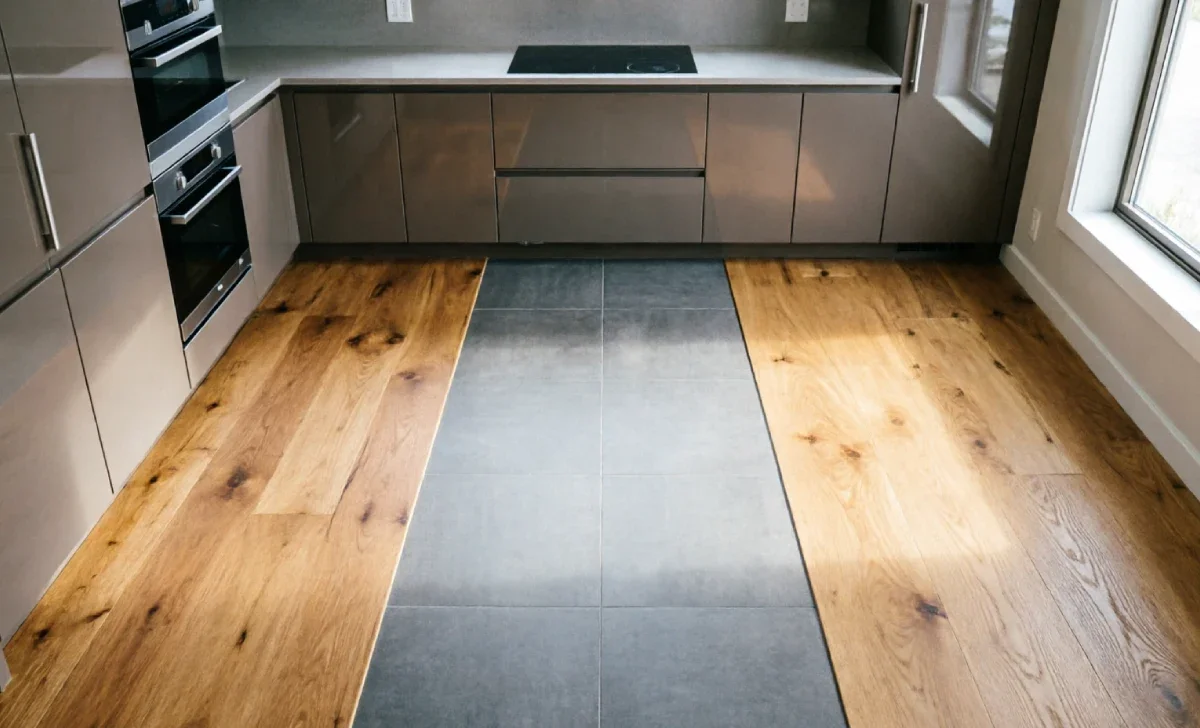
Your kitchen floor takes more abuse than any other floor in the house. Spills, grease, dropped pans, pets, and constant foot traffic wear it down fast. That is why the best flooring for kitchen spaces needs different qualities than a bedroom or living room floor.
There is no single winner for every home. The right choice depends on how much water hits your floor, how much comfort you want underfoot, your budget, and your style. In this guide, you will find the top kitchen flooring options for 2026, their pros and cons, and a clear way to pick the one that fits your home.
The leading choices right now are luxury vinyl plank, porcelain and ceramic tile, laminate, solid hardwood, and engineered hardwood. Each one solves a different problem, so let's break them down.
What to Consider Before Choosing Kitchen Flooring
Water and Moisture Resistance
Sinks, dishwashers, fridges, and cooking spills all threaten your floor daily. Waterproof and water-resistant are not the same thing, so check the label closely. Always read the warranty for moisture limits before you buy.
Durability and Foot Traffic
Kids, pets, and busy households put real stress on flooring. Look for strong scratch, dent, stain, and impact resistance. A floor that looks great on day one but dents in a month is not worth the savings.
Comfort Underfoot
Long cooking sessions are easier on softer flooring. Tile feels harder and colder than vinyl or wood. Anti-fatigue mats help, but the base material still matters most.
Maintenance and Cleaning
Daily sweeping and mopping are a given in any kitchen. Grout needs regular attention if you choose tile. Wood floors may need refinishing every several years depending on wear.
Budget and Installation Cost
Material price is only part of the total cost. Subfloor preparation and installation labor add up quickly. Factor in the full project cost before comparing options.
Kitchen Style and Open-Concept Layout
Think about how your kitchen floor connects to your dining or living space. Natural wood tones and stone-look finishes create a smoother visual flow. Seamless transitions matter more in open floor plans than in closed kitchens.
Best Flooring Options for Kitchens in 2026
Luxury Vinyl Plank and Tile: Best Overall for Many Kitchens
Luxury vinyl plank, or LVP, holds up well against water, scratches, and stains. It feels warmer and quieter underfoot than tile. You get realistic wood, stone and concrete looks without the maintenance headaches.
This makes LVP a strong pick for busy families, pet owners, and anyone watching their budget. In 2026, wide planks, matte finishes and realistic natural textures are leading the design trends. The main downside is that you cannot refinish it like real wood, and seams around wet areas still need careful installation.
Porcelain Tile: Best for Maximum Durability
Porcelain tile resists moisture, scratches, and stains better than almost any other flooring type. It holds up under heavy traffic and lasts for decades with basic care. Porcelain differs from ceramic in density and water absorption, which makes it the tougher option of the two.
The tradeoff is comfort. Porcelain feels hard and cold underfoot, and a dropped heavy pot can crack an individual tile. Grout lines also need regular cleaning. Large-format porcelain with fewer grout lines, including stone and marble-inspired looks, is gaining popularity this year.
Ceramic Tile: Affordable Traditional Choice
Ceramic tile costs less than porcelain and still handles moisture and daily wear well. It works well in most kitchens, especially with a matte finish that hides dust and footprints better than a glossy one. Grout maintenance remains the main ongoing task.
Engineered Hardwood: Best Balance of Wood Look and Stability
Engineered hardwood has a real wood surface built over a layered core, which makes it more stable than solid wood. It suits open-concept kitchens where the floor flows into a dining or living area. It is not fully waterproof, so spills still need quick cleanup.
You get the warmth and appearance of real wood with better resistance to humidity swings. Refinishing potential varies by product, so check the wear layer thickness before buying.
Solid Hardwood: Best for Timeless Style and Resale Appeal
Solid hardwood gives you a classic look that can be refinished multiple times over its life. It works beautifully when your kitchen flooring continues into adjoining rooms. Moisture remains its biggest weakness, so it needs more caution than tile or vinyl.
Warm natural tones, especially oak, wide planks, and matte or oiled finishes, are strong choices in 2026. Buyers often favor solid hardwood for resale value, since many homeowners see it as a premium feature.
Waterproof Laminate: Best Budget Wood-Look Alternative
Laminate flooring has improved a lot in recent years. Waterproof and water-resistant versions now offer much better protection than traditional laminate. It gives you the look of hardwood at a lower price point, though specs vary by product and quick cleanup still matters.
Natural Stone Flooring: Best for Premium Kitchens
Slate, travertine, limestone, marble, and quartzite all bring a unique, high-end look to a kitchen. Durability varies by stone type, but the aesthetic appeal is hard to match. Higher cost and the need for regular sealing are the main downsides, and some stones can stain, etch, or turn slippery when wet.
Sheet Vinyl: Best for Seam-Minimizing Water Protection
Sheet vinyl has far fewer seams than plank products, which limits water infiltration. It is comfortable, easy to clean, and budget-friendly. It suits households that want practicality over a premium appearance.
Kitchen Flooring Comparison and Cost Guide
When comparing LVP, tile, hardwood, and laminate, weigh water resistance, durability, comfort, cleaning needs, installation, and lifespan together, not one factor alone. Luxury vinyl and laminate sit in the budget to mid-range. Ceramic tile lands mid-range, while porcelain tile and engineered hardwood run mid to premium. Solid hardwood and natural stone sit at the premium-to-luxury end.
Always calculate cost as material plus installation plus subfloor prep. A cheap material with expensive prep work can cost more than a pricier floor that goes in easily.
2026 Kitchen Flooring Trends
Warm natural wood tones such as oak, honey, wheat, and warm greige are replacing cool gray palettes this year. Wide-plank flooring is popular across hardwood, engineered wood, laminate, and LVP because it creates a cleaner, more open feel. Matte and satin finishes are also trending since they hide dust and footprints better than high gloss.
Large-format tile, including 24x24 and 24x48 sizes, reduces grout lines for a more seamless look. Natural stone and stone-look porcelain continue to gain ground, and herringbone patterns are showing up more often to add character. Sustainable options like FSC-certified wood and low-emission certifications such as FloorScore and GREENGUARD Gold are increasingly part of the conversation too.
Common Kitchen Flooring Mistakes to Avoid
Choosing a floor based on looks alone is the most common mistake. Ignoring water exposure or skipping the warranty details often leads to regret later. Slippery polished surfaces, poor subfloor prep, and forgotten transitions between rooms all cause problems down the line. Avoid picking a material purely because it is cheap if it will not hold up to your household's daily use.
Which Kitchen Flooring Should You Avoid?
Carpet absorbs spills and moisture, which makes it hard to keep hygienic in a kitchen. Softwood dents and scratches easily and reacts poorly to moisture. Some natural stones need frequent sealing and can etch from acidic spills. Traditional, non-waterproof laminate can swell if water gets into the seams. None of these are automatically bad materials, but each one becomes a poor fit under the wrong conditions.
Final Verdict: What Is the Best Flooring for a Kitchen in 2026?
Luxury vinyl remains the best overall pick for most households. Porcelain tile wins for maximum durability, and solid hardwood offers the most timeless look. Engineered hardwood balances style and stability, quality waterproof laminate suits tight budgets, and natural stone delivers the most premium appearance.
The right answer depends on your priorities: water exposure, comfort, durability, budget, and how your kitchen connects to the rest of your home.
FAQs
What is the best flooring for a kitchen?
Luxury vinyl plank is the best overall choice for most kitchens because it resists water, feels comfortable underfoot, and costs less than tile or hardwood.
What is the most durable kitchen flooring?
Porcelain tile offers the highest durability, standing up to heavy traffic, moisture, and daily wear better than most other materials.
Is LVP or tile better for a kitchen?
LVP feels warmer and more comfortable, while tile offers greater long-term durability. Choose LVP for comfort and budget, and tile for maximum toughness.
Is hardwood a good choice for a kitchen?
Solid or engineered hardwood works well in open-concept kitchens, but spills need quick cleanup since moisture is its main weakness.
What is the best kitchen flooring for pets?
LVP and porcelain tile are the top picks for pet owners because they resist scratches, handle water bowls and spills well, and clean up easily.