Your dog skids across the kitchen floor. Your toddler drags a toy truck down the hallway. A dining chair scrapes back from the table every single night. If you have ever wondered which floors can take that kind of daily abuse, you are asking the right question.
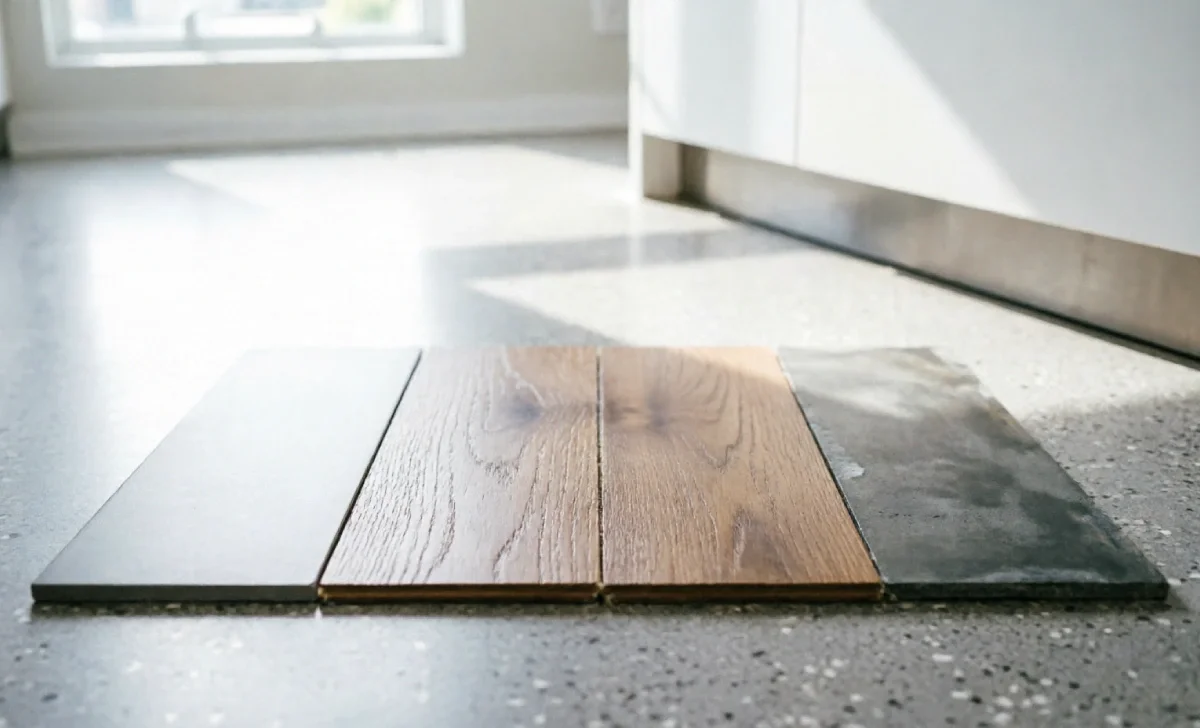
Scratch-resistant flooring is not one product. It spans tile, laminate, vinyl, hardwood, and concrete, and the performance gap within each category can be huge. No residential floor is completely scratch-proof, but some materials hide wear far better than others.
This guide compares seven flooring types by scratch resistance, water resistance, pet friendliness, and repair options, using current product specifications instead of vague marketing claims.
What Is Scratch Resistant Flooring?
Scratch-resistant flooring resists surface marks from everyday contact, but it is not scratch-proof. A scratch is a shallow surface mark, a gouge cuts deeper, and a dent compresses the material without breaking the surface. Abrasion wears a finish down gradually over time.
The surface coating, wear layer, and finish texture all affect how visible a scratch becomes. A textured or matte finish hides light marks better than a glossy one, which is why two products in the same material category can perform very differently.
Best Scratch Resistant Flooring Options in 2026
1. Porcelain Tile: Best Overall Scratch Resistance
Porcelain tile is one of the hardest common flooring surfaces, and it barely scratches under normal household use. It handles kitchens, entryways, and other high-traffic zones without showing wear, and it resists water completely.
The trade-off is comfort. Porcelain feels hard and cold underfoot, and dropped objects can crack or chip it. Matte or textured finishes improve traction and hide light marks better than polished tile.
2. Quality Laminate: Best Scratch Resistance for Wood Look Floors
Modern laminate uses a hard wear layer, typically aluminum oxide or melamine, bonded over a printed design layer. Laminate is rated by an AC number from AC1 to AC5, based on abrasion resistance testing.
AC4 handles busy households better than AC3, and AC5 suits heavy commercial traffic. The AC rating measures abrasion resistance only, though, and does not tell you how the floor handles moisture or impact.
3. SPC Flooring: Best for Pets and High Traffic Homes
SPC, or stone plastic composite, uses a rigid core made from limestone powder and polymers. That core resists dents and impacts better than softer vinyl products, and it holds up well under constant paw traffic.
Current rigid core flooring standards evaluate wear surface performance, residual indentation, and static load resistance, not scratch resistance alone. A thicker wear layer and a quality surface coating matter more than the core material by itself. SPC suits pets, kids, kitchens, and whole home installations.
4. Luxury Vinyl Plank: Best Balance of Scratch and Water Resistance
LVP pairs a printed design layer with a protective wear layer on top, and the plank stays flexible rather than rigid. It handles moisture well, making it a strong pick for bathrooms, basements, and laundry rooms.
Sharp or heavy objects can still cut or dent the surface, especially on thinner wear layers. Check wear layer thickness alongside overall plank construction rather than relying on thickness alone.
5. Engineered Hardwood: Best Real Wood Option
Engineered hardwood layers a real wood veneer over a stable core, and the factory finish, often aluminum oxide, determines most of its scratch resistance. Quality finishes can outperform solid hardwood, but this varies by product and brand.
Veneer thickness determines how many times you can refinish the floor down the road. In high-traffic rooms, furniture pads and area rugs help protect the surface between refinishing jobs.
6. Hardwood: Best for Long-Term Repairability
Solid hardwood scratches more easily than tile, laminate, or quality vinyl, and wood species and finish both affect how visible marks become. Janka hardness ratings measure resistance to denting, not scratching, so do not treat them as a scratch score.
The advantage is repair. You can sand and recoat surface scratches, and more serious damage can often be spot repaired rather than replaced, which laminate and vinyl cannot match.
7. Polished or Sealed Concrete: Best for Extreme Durability
Sealed concrete is about as tough as residential flooring gets, and it handles heavy foot traffic with minimal upkeep. A quality sealant is essential, since unsealed concrete stains and wears unevenly.
Concrete trades comfort and warmth for durability. It feels harder underfoot than any other option here, and sound carries more in concrete rooms, so it suits modern spaces better than cozy bedrooms.
Scratch Resistant Flooring Comparison
| Flooring | Scratch Resistance | Water Resistance | Pets | Repairability | Best For |
|---|---|---|---|---|---|
| Porcelain Tile | Excellent | Excellent | Excellent | Replace tile | Kitchens, high traffic |
| Laminate | Very good | Depends on product | Very good | Replace plank | Living areas |
| SPC | Very good to excellent | Excellent | Excellent | Replace plank | Whole home |
| LVP | Good to very good | Excellent | Excellent | Replace plank | Pets, wet areas |
| Engineered Hardwood | Depends on product | Depends on product | Moderate | Some refinishing | Real wood look |
| Hardwood | Moderate | Low to moderate | Moderate | Excellent | Long-term homes |
| Concrete | Excellent | Excellent when sealed | Good | Surface repair | Modern, high-use spaces |
How to Choose Scratch Resistant Flooring for Your Home
For homes with dogs and cats, prioritize scratch resistance, traction, and moisture resistance, and keep pet nails trimmed to reduce wear. For homes with kids, focus on impact resistance and comfort underfoot, since dropped toys and furniture scoots happen daily.
High-traffic zones like entryways, hallways, and stairs need materials rated for heavy wear rather than budget options. Kitchens need scratch and spill protection together, which points toward LVP, SPC, or a properly rated laminate. Bathrooms and basements should prioritize moisture resistance above all else, since standard laminate is not built for consistently wet conditions.
How to Prevent Scratches on Any Flooring
- Place entry mats at every exterior door
- Add felt pads under furniture legs
- Lift furniture instead of dragging it across the floor
- Use floor protection when moving appliances
- Trim pet nails regularly
- Sweep or vacuum grit and dirt often
- Stick to manufacturer-approved cleaning products and skip abrasive cleaners
Common Mistakes When Buying Scratch Resistant Flooring
Many buyers choose a flooring type by name alone, without checking the actual product specifications. Others look only at the AC rating on laminate or the wear layer thickness on LVP, missing other factors that affect durability just as much.
Overall plank thickness is not the same thing as scratch resistance, and warranty exclusions often rule out normal wear from pets or furniture. Waterproof flooring is not automatically scratch resistant either, so check both properties separately before you commit.
Scratch Resistant vs Scratch Proof: The Truth
No floor sold for residential use is truly scratch-proof. Sharp metal edges, embedded grit, heavy furniture, and sudden impacts can mark almost any surface given the right conditions.
The realistic goal is damage prevention, reduced visibility of the marks that do happen, and a floor you can repair without a full replacement. Judge products on that basis rather than chasing a scratch-proof claim that does not exist.
Frequently Asked Questions
What is the most scratch resistant flooring?
Porcelain tile and sealed concrete offer the strongest scratch resistance among common residential flooring options, followed closely by SPC and quality AC4 or AC5 laminate.
Is laminate more scratch resistant than LVP?
Quality laminate with a high AC rating often resists surface scratches slightly better than standard LVP, but LVP handles water and impact better, so the right choice depends on the room.
Is SPC flooring scratch-proof?
No. SPC resists scratches very well thanks to its rigid core and wear layer, but sharp objects and grit can still mark the surface over time.
What flooring is best for dogs?
SPC and LVP tend to work best for dogs, since both resist scratches, dents, and moisture, and neither requires the delicate care that hardwood does.
Can scratched flooring be repaired?
Hardwood can be sanded and refinished, engineered hardwood can be refinished a limited number of times depending on veneer thickness, and laminate or vinyl planks are typically replaced individually rather than repaired.
Which Scratch Resistant Flooring Is Best?
Porcelain tile wins for overall surface toughness, quality laminate wins for a wood look with strong scratch resistance, and SPC or LVP wins when pets and moisture are both concerns. Engineered hardwood suits buyers who want real wood with better durability than solid hardwood, while hardwood itself remains the easiest to repair long-term. Sealed concrete tops the list for extreme durability in modern spaces.
The best choice depends on your room, your lifestyle, your moisture exposure, and your budget, not just which material sounds toughest on paper.