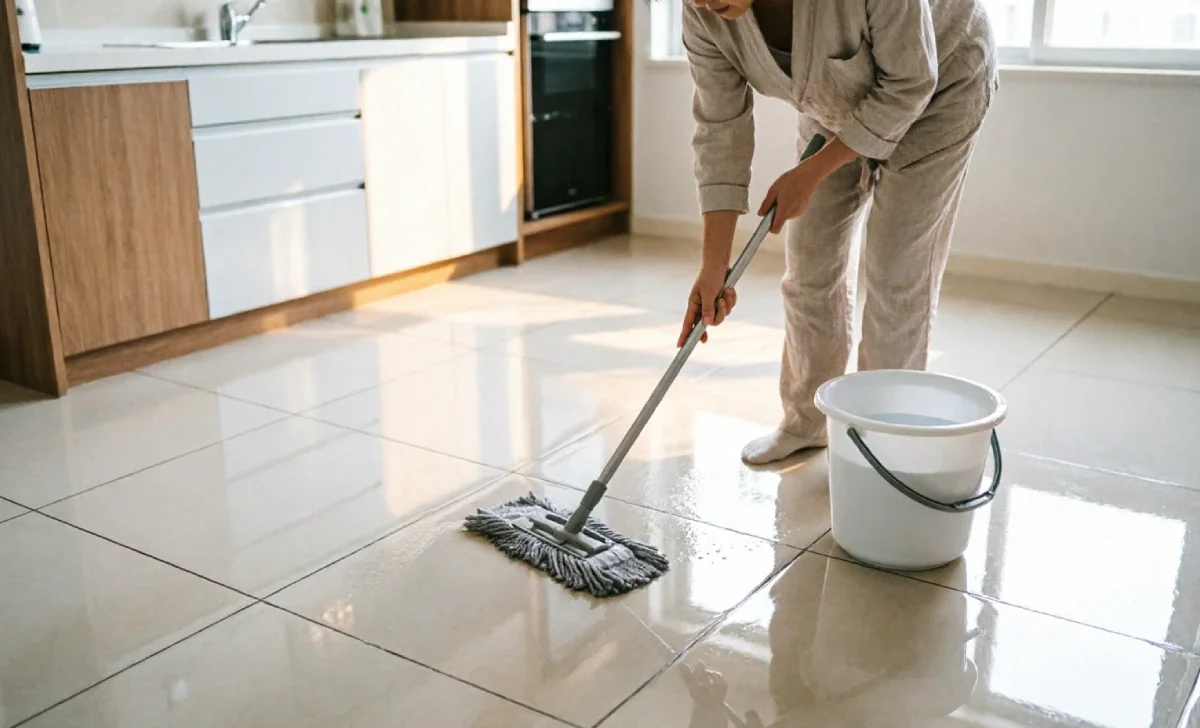
Tile floors look great for years, but only if you treat them right. Small daily habits help protect the shine and keep grout from turning grey, cracking, or staining. If you're still deciding between tile and other options, the best kitchen and bathroom flooring is worth a quick read first.
This guide breaks down real Tile Flooring Maintenance Tips you can start using today, no special training or expensive tools required.
You don't need fancy gear or a big budget. Just a few smart moves each week keep tile looking new, room after room, year after year, no matter how much foot traffic it sees.
Daily and Weekly Tile Care
Sweep or vacuum tile floors every day if you can, especially in busy kitchens, hallways, and entryways. Grit and dirt scratch the glazed surface faster than most people expect, even on durable ceramic and porcelain tile.
A soft broom or a vacuum with a hard floor setting works best. Skip the beater bar, since it can scuff glazed tile over time.
Mop once a week using a mild, pH-neutral cleaner. Harsh chemicals strip the finish and dull the color on both ceramic and porcelain tile.
Warm water alone handles light dirt just fine most days. Save the cleaner for when floors actually look dull or feel sticky underfoot.
Wring your mop out well before each pass across the floor. Too much water seeps into grout lines and can loosen it early.
Following these small Tile Flooring Maintenance Tips daily keeps bigger messes from ever forming in the first place.
Deep Cleaning Tile Floors
Give your tile a deeper clean once a month, or twice if your home sees a lot of foot traffic and mess.
Start by sweeping thoroughly, then mop with a store-bought tile cleaner or a mix of warm water and a few drops of dish soap.
A steam cleaner works wonders on tile, since the heat lifts grime without requiring harsh scrubbing chemicals that can wear down the glaze.
Rinse the floor with clean water after using any cleaner. Leftover residue attracts dirt fast and leaves streaky, dull patches behind.
Dry the floor with a microfiber cloth or chamois mop. This step matters more than people think, since standing water stains grout.
These monthly Tile Flooring Maintenance Tips take under an hour but add years to how your floor looks and performs.
Grout Care and Maintenance
Grout is the part of your floor that takes the most abuse day after day. It's porous, so it soaks up spills, oil, and grime fast, especially in kitchens and bathrooms where moisture sits around the most.
Clean grout lines weekly with a soft nylon brush and a paste made from baking soda and water. Scrub gently in small circles.
For tougher stains, a commercial grout cleaner does the job without damaging the tile around it. Always test a small spot first.
Seal your grout once a year, or every six months in bathrooms and kitchens. Sealant blocks moisture and keeps stains from setting deep in.
Skipping grout care is one of the biggest mistakes homeowners make. Discolored, crumbling grout drags down the whole room's look fast.
Good Tile Flooring Maintenance Tips always include grout, since a spotless floor still looks tired next to dirty, cracked lines.
Cleaning Ceramic, Porcelain, and Stone Tile
Ceramic tile is tough and handles most cleaners well, but stick to mild ones to protect the glaze and grout lines beneath it.
Porcelain tile is denser and more stain-resistant than ceramic. A simple mop with warm water and mild soap usually gets the job done.
Unglazed porcelain needs a bit more care, since it lacks the protective coating. A penetrating sealer helps it resist stains and moisture over time.
Natural stone tile, like marble or travertine, is sensitive to acidic cleaners. Skip vinegar- and lemon-based products, since they etch and dull the surface.
Use a stone-safe, pH-neutral cleaner instead, and reseal natural stone every year to keep it protected from spills and everyday wear and tear.
Each tile type calls for slightly different Tile Flooring Maintenance Tips, so check your manufacturer's care sheet if you're ever unsure. If you're updating floors in another part of the house, this quick DIY vinyl flooring installation guide covers a lower-cost, easier alternative worth comparing.
Preventing Damage to Your Tile Floors
Prevention saves you a lot of time and money down the road. A few small changes around the house stop most tile damage before it even has a chance to start.
Place mats at every entry point to catch dirt, grit, and moisture before it reaches your tile and scratch the surface underfoot.
Add felt pads under furniture legs. Dragging chairs and tables across tile is one of the fastest ways to chip or crack it.
Wipe up spills right away, especially in kitchens and bathrooms. Standing liquid seeps into grout and can stain or warp the sealant.
Avoid dragging heavy appliances across the floor without protection. A moving blanket or plywood sheet spreads the weight and prevents cracking.
Rotate rugs in high-traffic areas so wear spreads evenly. This keeps one section of tile from fading faster than the rest.
Tools and Products You'll Need
You don't need a full cleaning closet for good tile care. A soft broom, microfiber mop, and bucket cover most jobs.
Keep a nylon brush on hand for grout, plus a mild pH-neutral cleaner made for tile. Skip anything labeled abrasive or acidic.
A steam cleaner is a smart investment if you have a lot of tile. It cuts cleaning time and skips harsh chemicals altogether.
Store your tools together in a small bucket or caddy near the kitchen or laundry room. Having everything in one spot makes weekly cleaning far less of a chore.
When to Call a Professional
Some jobs go beyond regular Tile Flooring Maintenance Tips and genuinely need a trained hand instead of another weekend DIY project you might regret.
Cracked tiles, loose grout, or sunken sections often point to a subfloor issue. A professional can check for water damage underneath.
Regrouting large areas takes skill that most homeowners don't have time to learn. Hiring it out saves your floor from a patchy, uneven fix.
If stains keep coming back no matter what you try, a professional-grade sealant job usually solves the problem for good.
Quick Maintenance Schedule
Here's a simple breakdown to keep your routine on track without overthinking it every single day.
| Task | Frequency |
|---|---|
| Sweep or vacuum | Daily |
| Mop with a mild cleaner | Weekly |
| Deep clean | Monthly |
| Clean grout lines | Weekly |
| Seal grout | Yearly |
| Reseal natural stone | Yearly |
Print this out or save it somewhere handy. A simple schedule beats guessing every time your floor starts looking dull.
Final Thoughts
Sticking with these Tile Flooring Maintenance Tips keeps your floor looking sharp without eating up your whole weekend every time.
Small, steady habits beat one big scrub session. Sweep often, mop weekly, and treat grout like it matters, because it does.
If you're still picking out flooring for a smaller room, our guide on small space flooring selection can help you choose wisely.
Your tile floor can easily outlast trends, renovations, and years of daily traffic if you give it a little attention.