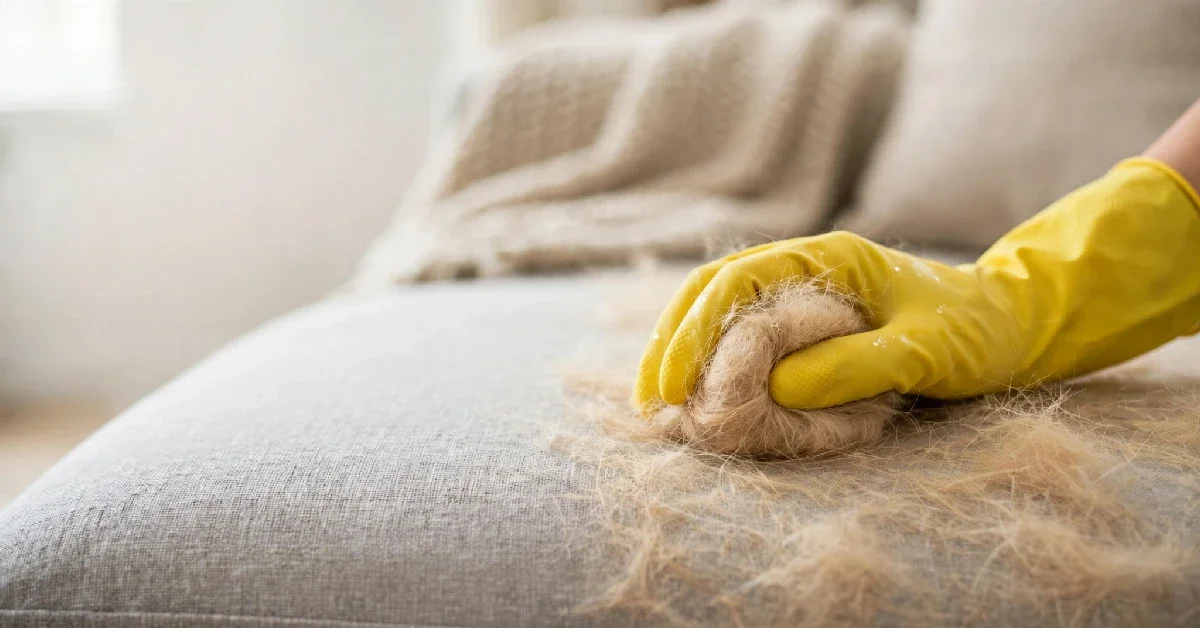
The hair is not sitting on your couch. It's woven into it. You vacuum, you lint-roll, and two days later the same cushion looks like your dog never left. That's the problem this guide solves.
Here's the fastest answer: put on a slightly damp rubber glove and wipe the fabric in one direction. The rubber grips the hair and gathers it into a ball you can pick up. It costs nothing, works on most upholstery, and takes under five minutes.
But method matters by fabric. A technique that rescues a canvas sofa can permanently mark velvet. This guide is organised by fabric type, safety-checked, and built around a routine that stops the hair coming back. Below you'll find 12 methods, a fabric-by-fabric matrix, prevention advice, and a 5-minute daily routine.
Key Takeaways
- Fastest zero-cost fix: a damp rubber glove wiped in one direction lifts hair from most fabrics in under 5 minutes.
- Vacuuming alone fails on upholstery — you need a motorised brush roll or rubberised pet tool, not suction alone.
- Match the method to the fabric. Velvet and chenille need gentle handling; canvas tolerates more.
- Hair sticks because of static and fibre snagging. Keeping indoor humidity around 30–50% reduces cling.
- Prevention beats cleanup: washable covers, regular grooming, and a weekly reset outperform any single tool.
- Never use a fabric shaver or pumice stone on velvet, chenille, wool, or leather — it cuts the pile permanently.
Why Pet Hair Sticks to Furniture
Two mechanisms are at work.
First, static electricity. As pet hair rubs against fabric, it picks up an electrostatic charge. Dry air lets that charge persist, which is why hair seems to jump back onto the couch moments after you clean it. Second, mechanical snagging. Each hair has a cuticle made of overlapping scales. Those scales catch on the loops and texture of woven fabric — especially loose weaves, napped fabrics like velvet, and textured surfaces like chenille and microsuede.
Smooth, tightly woven fabrics release hair easily. Textured and pile fabrics trap it. Short, stiff double-coat undercoat hair (Husky, Samoyed, German Shepherd, Labrador) is the hardest to lift. Fine long hair (Persian, Ragdoll) tends to mat into the weave.
Dry winter air makes static worse. The EPA's general indoor air quality guidance recommends keeping relative humidity roughly in the 30–50% range, which also helps reduce static cling.
Snippet-ready definition (45–50 words): Pet hair sticks to furniture because it carries a static electrical charge that attracts it to fabric fibres, and because the tiny scales on each hair catch on woven threads. Dry indoor air increases the static effect, which is why pet hair is worse in winter.
Pet Hair vs. Pet Dander: Why Removing Hair Helps Allergies
Pet hair itself is not the main allergen. Hair is made of keratin. Allergic reactions are triggered primarily by dander (skin flakes), saliva proteins (Fel d 1 in cats, Can f 1 in dogs), and urine proteins. Hair acts as a carrier for those particles — so removing hair does reduce the allergen load in a room, but indirectly.
HEPA-filtered vacuuming and damp-wiping capture allergen-bearing particles far better than dry dusting, which just redistributes them. If allergy symptoms persist, consult a doctor. Cleaning advice is not medical advice.
12 Fastest Ways to Remove Pet Hair from Furniture
Each method below follows the same pattern: how to do it, which fabrics it suits, why it works, and what to watch out for.
1. Damp Rubber Gloves
Put on household rubber or nitrile gloves and dampen them slightly. Wipe the fabric in one direction, gathering hair into a ball as you go. Rinse the gloves when they load up.
- Works best on: most upholstery, microfiber, canvas, cotton.
- Why it works: rubber friction plus slight moisture increases grip and helps discharge static.
- Caution: don't soak the fabric. Patch-test a hidden spot for colourfastness first.
2. Damp Microfiber Cloth
Lightly dampen a microfiber cloth — not wet — and wipe with the grain of the fabric in one direction.
- Works best on: leather, faux leather, vinyl, smooth fabrics, and as a first pass on any upholstery.
- Why it works: microfiber's split fibres trap hair; moisture neutralises static.
- Caution: excess water can leave watermarks on silk, velvet, and some cottons.
3. Lint Rollers & Reusable Fabric Rollers
Peel-and-stick rollers are for quick touch-ups. Push–pull reusable rollers cover larger areas.
- Works best on: smooth to medium fabrics, cushions, pillows, clothes.
- Why it works: adhesive or directional fabric grabs surface hair.
- Caution: adhesive sheets lose grip fast on heavy shedding and can leave residue on delicate fabrics. Treat this as a touch-up tool, not a primary method.
4. Vacuum with a Motorised Upholstery Attachment
Use the upholstery tool. For heavy coats, a motorised brush roll or rubberised pet tool dramatically outperforms plain suction.
- Works best on: all washable or dry-clean-safe upholstery, cushions, mattresses, car seats.
- Why it works: agitation loosens embedded hair while suction removes it.
- Caution: check the fabric cleaning code first (see table below). On X-coded fabrics, vacuum only — no liquids.
5. Window Squeegee
Drag a rubber squeegee across the fabric in short strokes.
- Works best on: sofas, carpets, car seats, mattresses.
- Why it works: the rubber edge acts like a blade, gathering hair into rows.
- Caution: use light pressure on napped fabrics like velvet.
6. Rubber Brush / Pet Hair Remover Brush
Brush in one direction, collecting hair as you go.
- Works best on: heavy-shed households, car seats, carpets, upholstery.
- Why it works: reusable, no consumable cost, effective on stubborn hair.
- Caution: hard bristles can snag delicate weaves — patch-test first.
7. Fabric Shaver / Lint Defuzzer (Use With Care)
Only for tightly woven, flat fabrics where hair is matted into pills.
- Works best on: cotton canvas, denim, some polyester blends.
- Why it works: trims surface fuzz and matted hair off the top layer.
- Caution — serious damage risk: never use on velvet, chenille, corduroy, wool, leather, or any pile or napped fabric. It will cut the pile and leave permanent bald patches. Never use on a fabric you can't replace.
8. Pumice Stone (Limited Use)
Gently drag across durable, tightly woven fabrics.
- Works best on: heavy cotton, canvas, some car upholstery.
- Why it works: the abrasive surface lifts embedded hair.
- Caution: abrasive. Can thin fibres, cause pilling, and pull threads on linen, silk, wool, and any open weave. Last resort on hard-wearing fabrics only.
9. Static Reduction: Anti-Static Spray or Light Mist
A light mist of water or a pet-safe anti-static spray reduces the charge holding hair to fabric.
- Works best on: any fabric that tolerates light moisture.
- Why it works: static is the main reason hair "jumps" back onto the couch after cleaning.
- Caution: choose pet-safe, fragrance-free products. Keep pets away until dry. Never use essential-oil sprays around cats — several essential oils are toxic to cats.
10. Laundry Method for Covers, Throws & Blankets
Shake out loose hair first. Wash on a normal cycle with detergent plus ½ cup white vinegar in the rinse cycle. Add a dryer sheet or — better — wool dryer balls in the dryer. Clean the lint trap mid-cycle. Avoid over-drying, which creates static.
- Works best on: slipcovers, throws, cushion covers, blankets, pet beds.
- Why it works: agitation and rinse release hair; vinegar helps loosen fibres and reduce static; dryer movement carries hair to the trap.
- Caution: don't overload the machine. A clogged lint trap reduces hair capture and is a dryer fire risk.
11. Baking Soda Pre-Treat
Sprinkle baking soda on the fabric, let it sit 15–20 minutes, then vacuum up.
- Works best on: odour and surface hair on dry-clean-safe fabrics.
- Why it works: absorbs oils and odour; lightens hair's grip so vacuuming lifts more.
- Caution: residue can dull some fabrics — vacuum thoroughly.
12. Balloon / Dryer Sheet Rub (Minor Effect)
Rubbing a dryer sheet or balloon over fabric reduces static so hair lifts more easily.
- Works best on: as a helper before another method.
- Why it works: anti-static action, not deep cleaning.
- Caution: treat as a helper, not a solution. Keep dryer sheets away from pets — some contain fragrances and chemicals that can irritate skin or be harmful if chewed.
How to Remove Pet Hair by Fabric Type
This is the section most guides skip. The right method depends entirely on your fabric.
Method × Fabric Safety Matrix
| Method | Microfiber | Leather | Velvet | Chenille | Linen/Canvas | Wool |
|---|---|---|---|---|---|---|
| Damp rubber glove | ✅ | ✅ | ⚠️ gentle | ✅ | ✅ | ⚠️ |
| Damp microfiber cloth | ✅ | ✅ | ❌ water marks | ⚠️ | ✅ | ❌ |
| Lint roller | ✅ | ✅ | ✅ | ⚠️ | ✅ | ✅ |
| Vacuum + motorised tool | ✅ | ✅ | ✅ soft brush | ✅ | ✅ | ✅ soft |
| Window squeegee | ✅ | ✅ | ⚠️ light | ✅ | ✅ | ❌ |
| Rubber brush | ✅ | ⚠️ | ❌ snag risk | ✅ | ✅ | ⚠️ |
| Fabric shaver | ⚠️ | ❌ | ❌ | ⚠️ high risk | ✅ | ❌ |
| Pumice stone | ⚠️ | ❌ | ❌ | ⚠️ | ✅ | ❌ |
Legend: ✅ safe · ⚠️ use caution / patch-test first · ❌ avoid — damage risk
Fabric Cleaning Codes
| Code | Meaning | What you can use |
|---|---|---|
| W | Water-based cleaner ok | Water-based cleaners, damp cloth |
| S | Solvent only | Dry-cleaning solvents — no water |
| WS | Both | Water or solvent |
| X | Vacuum/brush only | No liquids at all |
Microfiber & Microsuede
Brush with the grain in one direction to lift hair, then vacuum with an upholstery tool. A slightly damp rubber glove works well. Avoid saturating — water spots are common on microfiber. Codes are usually W or S; check the tag.
Leather & Faux Leather
Hair barely embeds. Wipe with a damp microfiber cloth, then dry. Condition leather occasionally to keep it supple. Never use abrasive tools, pumice, or fabric shavers.
Velvet & Velour
Pile fabric traps hair in the nap. Use a soft-bristled garment brush or lint roller in the direction of the pile, then vacuum with a soft upholstery tool. Avoid fabric shavers, pumice, and heavy pressure. Steam can help lift hair from the pile.
Chenille & Loose Weaves
The hardest category. Hair threads through the loops. Use a rubber brush or rubber glove, then vacuum with a brush attachment. A fabric shaver may help on chenille only with extreme caution — it can cut the pile. Consider a washable cover if your chenille piece sheds heavily.
Linen, Cotton & Canvas
Durable. Damp rubber glove, lint roller, squeegee, or vacuum all work. These tolerate the most aggressive methods — but check for shrinkage and colourfastness before wetting.
Wool & Delicate Fabrics
Vacuum with a soft brush only, or use a lint roller. Avoid water, heat, and abrasive tools. Professional cleaning for anything marked X.
How to Remove Stubborn, Embedded Pet Hair
If the first pass didn't work, escalate in order:
- Damp rubber glove or damp cloth
- Rubber brush or squeegee
- Vacuum with a motorised attachment
- Fabric shaver or pumice — durable, tightly woven fabrics only
- Professional upholstery cleaning
Embedded hair usually sits below the weave surface. Agitation matters more than suction. On washable fabrics, a small amount of diluted fabric softener or a diluted vinegar rinse can relax fibres before removal. Check the fabric cleaning code before applying any liquid. For expensive pieces, an IICRC-trained technician is a legitimate option.
How to Stop Pet Hair Sticking to Furniture
Use Washable Covers and Throws
Slipcovers, throws on seating areas, and washable cushion covers convert a cleaning problem into a laundry problem. Choose tightly woven, smooth performance fabrics — they release hair more easily than textured weaves.
Choose Hair-Resistant Upholstery
Better: tightly woven performance fabrics, leather, faux leather, smooth microfiber, canvas. Worse: velvet, chenille, loose linen weaves, corduroy, open-loop tweeds. Colour matters practically — hair is less visible on fabrics that match your pet's coat.
Brush and Groom Your Pet Regularly
Regular brushing removes loose undercoat before it lands on the sofa. Undercoat rakes and slicker brushes suit double-coated breeds; short-haired breeds do well with a rubber grooming glove or curry brush. Heavy double-coated shedders often need brushing several times a week, especially during seasonal coat changes. Avoid shaving double coats and overusing de-shedding blades — they can damage the coat and skin. Ask a groomer or vet for a breed-appropriate routine. Bathing helps release loose hair, but over-bathing strips natural oils.
Expert quote placeholder — Professional Groomer (credentials to verify): "[Insert real quote about breed-specific brushing frequency and de-shedding tool overuse.]"
Support Coat Health Through Diet
A complete, balanced diet supports skin and coat condition. Omega-3 fatty acids (EPA/DHA from fish oil) are commonly used to support skin and coat quality. Important accuracy note: no supplement stops normal shedding. Shedding is governed by the hair growth cycle and, in many breeds, light exposure. Persistent or patchy hair loss warrants a veterinary check — it can indicate allergies, parasites, hormonal issues, or skin disease.
Control Humidity and Static
Dry air amplifies static cling. Keeping indoor relative humidity in a moderate range (the EPA's general guidance is around 30–50%) reduces static. A humidifier in the dry season is a low-effort, high-impact fix.
Run an Air Purifier and Vacuum Routine
A HEPA air purifier captures airborne dander and fine hair. True HEPA filtration is specified to capture 99.97% of particles at 0.3 microns. It reduces airborne allergens but does not remove hair from furniture. Routine: quick upholstery vacuum 1–2×/week; full couch vacuum weekly; wash covers weekly in high-shedding households. Robot vacuums help with floors and low-pile rugs, not upholstered seating.
Pet-Safe Cleaning: What to Avoid
- Dryer sheets: some contain fragrances and chemicals that can irritate a pet's skin or cause harm if chewed. Keep out of reach. Prefer wool dryer balls as a non-chemical alternative.
- Essential oils: several — including tea tree, eucalyptus, peppermint, and concentrated citrus oils — can be toxic to cats and some dogs. Avoid diffusing or spraying them on pet bedding. Diluted white vinegar and plain water are low-risk on most fabrics.
- Anti-static and fabric sprays: choose fragrance-free, pet-safe products. Keep pets off treated furniture until fully dry.
- Aerosols and strong solvents: ventilate well and keep pets out of the room.
- Pumice stones and fabric shavers: mechanical damage risk to furniture, not a pet risk — but never leave residue or shards where pets can ingest them.
- Anything chewable left on furniture (adhesive roller sheets, dryer sheets) is a choking or ingestion risk for dogs.
7 Common Pet Hair Removal Mistakes
- Only using suction — without agitation, a vacuum leaves hair embedded in the weave.
- Ignoring the fabric cleaning code — water on S- or X-coded fabrics can leave permanent marks.
- Using a fabric shaver or pumice on pile fabrics — permanent damage.
- Cleaning in random directions — always work in one direction and gather, don't spread.
- Over-drying laundry — creates static, which re-attracts hair.
- Skipping the lint trap mid-cycle — the trap clogs, stops capturing hair, and becomes a fire risk.
- Only cleaning the top of cushions — hair falls between and behind cushions. Do all sides and the base regularly.
Bonus: believing a single tool does everything. A layered routine beats one gadget.
A Simple 5-Minute Daily Pet Hair Routine
- Daily (2–3 min): rubber-glove pass over seating areas; quick cushion fluff.
- Every 2–3 days (2 min): upholstery-tool vacuum on seating and between cushions.
- Weekly (10 min): full vacuum of the sofa (all sides), wash throws and covers, wash pet bedding.
- Monthly: check and replace the vacuum filter; wipe leather and vinyl surfaces and condition.
- Seasonal: increase brushing during coat-change periods; run a humidifier in dry months.
Conclusion
The fastest fix is a damp rubber glove, wiped in one direction, on most fabrics. The long-term fix is a layered routine: washable covers, regular grooming, humidity control, and a weekly vacuum with the right attachment. Match your method to your fabric, and you'll stop damaging the furniture while you clean it.
Start today with the 5-minute routine. If the hair is embedded, follow the escalation ladder — rubber glove, rubber brush, vacuum with a motorised tool, then a professional. Download the printable weekly checklist below to keep it going.ge. Log changes in a visible "updated on" line.
FAQs
What is the fastest way to remove pet hair from furniture?
A slightly damp rubber glove wiped across the fabric in one direction. The rubber grips the hair and gathers it into a ball you can pick up. It costs nothing, works on most upholstery, and takes under five minutes.
Why does pet hair stick to furniture?
Pet hair carries a static charge that attracts it to fabric fibres, and the tiny scales on each hair catch in the weave. Dry indoor air makes the static effect stronger, which is why pet hair is often worse in winter.
Does a dryer sheet remove pet hair?
Dryer sheets mainly reduce static, which helps hair lift more easily. They're a helper, not a complete solution. Keep them away from pets — some contain fragrances and chemicals that can irritate skin or cause harm if chewed.
How do you get pet hair out of a couch without a vacuum?
Use a damp rubber glove or damp microfiber cloth, wiping in one direction and gathering the hair as you go. A window squeegee or rubber brush also works well on fabric upholstery.
What is the best fabric for furniture if you have pets?
Tightly woven performance fabrics, leather, faux leather, and smooth microfiber release hair most easily. Velvet, chenille, corduroy, and loose linen weaves trap hair in the pile or weave and are the hardest to keep clean.
Does vinegar help remove pet hair from laundry?
Adding about half a cup of white vinegar to the rinse cycle can help loosen hair and reduce static, so more hair is carried to the lint trap. Shake out loose hair before washing and clean the lint trap during the cycle.
Do air purifiers remove pet hair from furniture?
No. A HEPA air purifier captures airborne dander and fine hair, which helps with allergens and air quality, but it does not lift hair from upholstery. You still need to brush, wipe, or vacuum the furniture itself.
Is pet hair an allergen?
Pet hair itself is not the main allergen. Reactions are triggered primarily by dander (skin flakes) and proteins in saliva and urine. Hair acts as a carrier for those particles, so removing it does reduce allergen levels in a room.
Does brushing my dog reduce shedding on the furniture?
Regular brushing removes loose undercoat before it ends up on the sofa, so it noticeably reduces the amount of hair on furniture. It doesn't stop normal shedding, which is a natural part of the hair growth cycle.
Can I use a fabric shaver to remove pet hair from a couch?
Only on tightly woven, flat fabrics, and with great care. Never use a fabric shaver on velvet, chenille, corduroy, wool, or leather — it cuts the pile and leaves permanent bald patches. Test on a hidden area first.
How often should I clean pet hair off my sofa?
A quick pass every one to two days, a full vacuum weekly, and wash throws and cushion covers weekly in high-shedding households. Small frequent cleans are far less work than one big job.
When should I take my pet to the vet for shedding?
Normal shedding is even and doesn't cause bald spots. See a veterinarian if you notice patchy hair loss, bald spots, redness, scabs, flaking, or scratching more than usual — these can signal allergies, parasites, or skin disease.