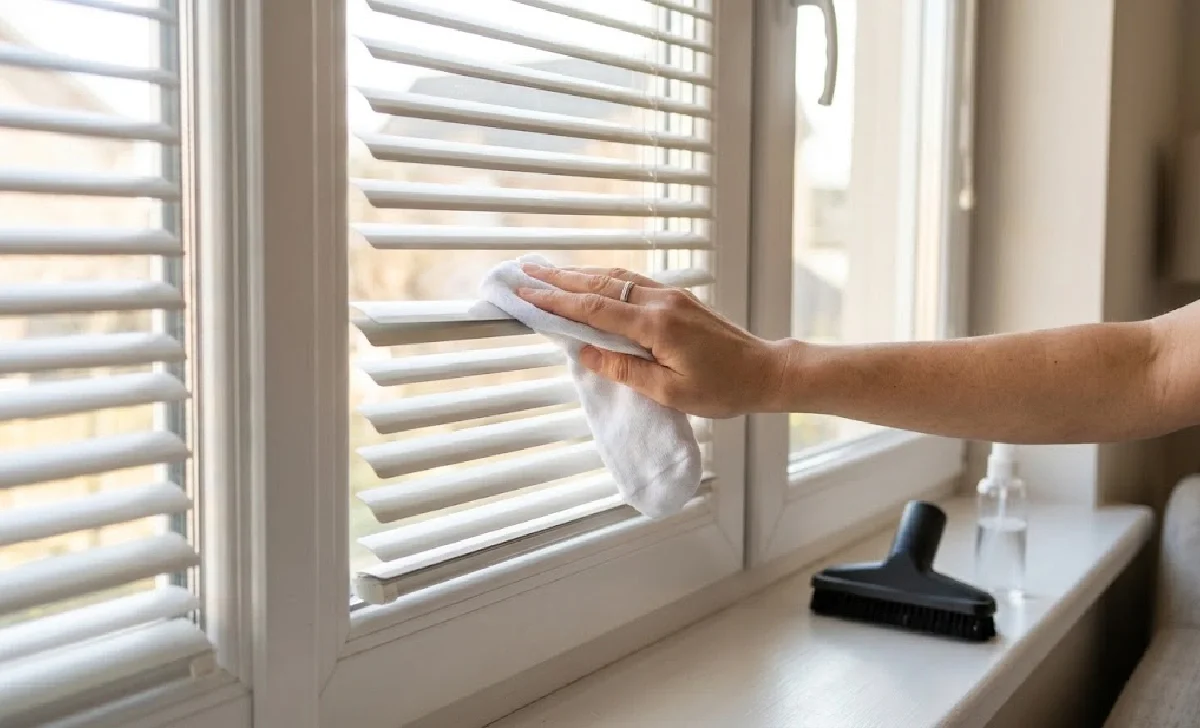
Blinds collect dust fast, but taking them down feels like a bigger job than it should be. The good news: you can clean most blinds without removing them—if you use the right method for the material. This guide covers Venetian, roller, vertical, Roman, wood, and faux-wood blinds, with step-by-step methods, tool lists, and stain troubleshooting.
Key takeaways:
- Most blinds can be cleaned in place with a dry-first approach.
- Material matters: wood needs minimal moisture; faux-wood and vinyl tolerate more; fabric needs low suction and spot-cleaning.
- The sock method speeds up two-sided slat cleaning.
- Vinegar + water is effective for grease on metal, vinyl, and faux-wood.
- When in doubt, test a hidden area and dry immediately.
Why Clean Blinds Without Removing Them? (And When Removal Is Still Best)
Cleaning blinds in place saves time and reduces the risk of bending slats or tangling cords. You avoid the hassle of unscrewing brackets, re-hanging, and realigning. For routine dust and light marks, in-place cleaning is usually enough.
But honesty matters: some situations still call for removal. If blinds are heavily soiled with grease, have mould behind the headrail, or the mechanism is broken, taking them down—or calling a professional—is the safer choice. This guide focuses on what you can do without removal, and flags when to stop.
Benefits of In-Place Blind Cleaning
- No dismantling: No tools, no ladder gymnastics.
- Lower risk of damage: Slats and cords stay supported by the window frame.
- Faster routine maintenance: A quick weekly dust takes minutes.
- Less disruption: Ideal for renters or anyone short on time.
When You Should Still Remove Your Blinds
- Heavy grease saturation (e.g., kitchen blinds never cleaned).
- Fabric mould or mildew that needs deeper treatment.
- Broken tilt mechanisms or cords that make cleaning unsafe.
- Blinds mounted in hard-to-reach spots (e.g., high skylights) where in-place cleaning is impractical.
Tools and Cleaning Solutions: What You Actually Need
Gather supplies before you start. The right tools make the job faster and prevent damage. Avoid abrasive sponges, soaking, and harsh chemicals—they can scratch, warp, or discolour blinds.
Essential Tools (and What to Avoid)
| Tool | Best for | Avoid on |
|---|---|---|
| Microfibre cloth | All blind types; dry dusting and damp wiping | Nothing—safe for all |
| Vacuum brush attachment | Venetian, vertical, roller, Roman | Delicate fabric (use upholstery attachment instead) |
| Old sock (clean) | Two-sided slat cleaning (sock method) | Very wide slats (use tongs with socks) |
| Soft brush | Fabric vertical vanes, Roman folds | Wood (can scratch) |
| Rubber dry-cleaning sponge | Spot-cleaning fabric and delicate surfaces | Wet cleaning (use dry only) |
Avoid: Plastic dusters (they scatter dust), abrasive scouring pads, and dripping wet cloths.
Safe Cleaning Solutions by Material
| Solution | Safe materials | Caution materials |
|---|---|---|
| Warm water + mild dish soap | Metal, vinyl, faux-wood, PVC, aluminium | Real wood (use barely damp cloth) |
| White vinegar + water (50/50) | Metal, vinyl, faux-wood for grease | Real wood, fabric (test first) |
| Fabric-safe detergent | Roller and Roman blinds (test hidden area) | Wood, metal |
| Plain water (damp cloth) | All materials for light spots | None—universal |
Always test any solution on a hidden area first.
The Universal No-Removal Method: Dry First, Then Damp
This five-step sequence works for most blinds and prevents dust from turning into mud. The core principle: dry first, work top-to-bottom, use minimal moisture, and dry immediately.
Step 1 – Close and Flatten the Slats
Use the tilt wand to close slats so they lie flat. For vertical blinds, ensure vanes hang straight. This gives you an even surface and prevents dust from falling between slats.
Step 2 – Dust or Vacuum from Top to Bottom
Use a microfibre cloth or vacuum brush on a low setting. Work downward so dust falls onto uncleaned areas, not clean ones. For Venetian blinds, dust horizontally along each slat.
Step 3 – Flip and Repeat
Tilt the slats the opposite way and repeat the dusting. Don’t forget the reverse side—dust accumulates on both.
Step 4 – Spot-Clean with a Damp Cloth
Wring out the cloth so it’s damp, not wet. Wipe marks gently, supporting the slat from behind. Dry immediately with a clean towel.
Step 5 – Dry Completely Before Use
Air-dry or towel-dry. Never roll up a damp roller blind or close damp wooden blinds—moisture trapped inside causes mould and warping.
How to Clean Venetian and Horizontal Blinds Without Removal
Venetian blinds are the most common type and the easiest to clean in place—if you use the right technique.
Dry Dusting and Vacuuming Venetian Blinds
Close the slats flat. Work top-to-bottom with a microfibre cloth or vacuum brush attachment. For a deeper clean, use the sock method (below).
The Sock Method for Two-Sided Cleaning
Wear a clean, slightly damp sock on one hand. Grip a slat between your thumb and fingers, with the sock on the top side. Slide from one end to the other. The sock cleans both sides at once, cutting cleaning time in half. For wider slats, use tongs with socks on both ends.
Removing Marks and Stains from Venetian Blinds
Use a barely damp cloth with a drop of mild dish soap. Support the slat from behind to avoid bending. Wipe gently, then dry immediately. Avoid scrubbing matte finishes—it can leave shiny spots.
How to Clean Roller Blinds Without Removal
Roller blinds are usually fabric or vinyl. Routine cleaning can be done in place: roll the blind fully down, vacuum with an upholstery attachment, wipe with a damp cloth, and air-dry before rolling up.
Routine Dusting and Vacuuming
Use low suction and an upholstery brush. Work top-to-bottom in gentle strokes. For vinyl roller blinds, a damp microfibre cloth is enough for light dust.
Spot-Cleaning Roller Blind Fabric
Test a hidden area first. Blot, don’t scrub, with a cloth dampened with fabric-safe detergent. Avoid soaking—moisture can cause water marks or mould. Work from the outside of the stain inward to prevent spreading.
Drying and Preventing Mould
Air-dry fully with the blind down. Ensure good ventilation. Never roll up a damp blind—trapped moisture leads to mould and a musty smell.
How to Clean Vertical Blinds Without Removal
Vertical blinds have vanes that hang from a headrail. The main risk is unhooking vanes during cleaning—so work gently.
Fabric Vertical Blinds
Vacuum gently top-to-bottom with an upholstery brush on low suction. For stubborn dust, use a soft brush. Spot-clean with mild detergent and a damp cloth, then air-dry.
PVC and Rigid Vertical Blinds
Wipe with a damp cloth and mild soapy water. Dry immediately to prevent water spots. Avoid pulling vanes upward—this can unhook them from the carrier.
How to Clean Roman and Fabric Blinds Without Removal
Roman shades are the most delicate. Always check the care label first—some covers are removable and machine-washable.
Dusting and Vacuuming Roman Shade Folds
Fully lower the shade. Use an upholstery attachment on the lowest suction setting. Work across the folds, then inside each fold, supporting the fabric with your free hand. For light dust, a microfibre cloth works well.
Spot-Cleaning Fabric Blinds Safely
Test a hidden area. Use minimal moisture—blot, don’t rub. Fabric-safe detergent diluted in water is usually safe. Air-dry completely before raising the shade.
Cleaning Wood and Faux-Wood Blinds Without Damage
Wood blinds are the most moisture-sensitive. Faux-wood and composite blinds are more forgiving but still need care.
Real Wood Blinds: Minimal Moisture Only
Dust frequently with a dry microfibre cloth. For spots, use a barely damp cloth—wring it out thoroughly. Dry immediately with a clean towel. Never soak wooden blinds—moisture causes warping and finish damage.
Faux-Wood and Composite Blinds
These tolerate more moisture. You can use a damp cloth with mild soapy water, but still dry after cleaning. Avoid abrasive cleaners that can scratch the surface.
Stain and Grease Troubleshooting (Without Removal)
Use this table to treat common marks without dismantling your blinds.
| Stain type | Solution | Method | Caution |
|---|---|---|---|
| Kitchen grease | White vinegar + water (50/50) | Dampen cloth, wipe gently, dry immediately | Avoid on real wood |
| Sticky residue | Mild dish soap + warm water | Damp cloth, blot, then dry | Test fabric first |
| Water marks | Plain water (damp cloth) | Wipe lightly, dry immediately | Don’t rub—can spread mark |
| Dust build-up | Dry microfibre cloth or vacuum brush | Top-to-bottom, flip and repeat | Don’t use wet cloth first |
| Fingerprints (vinyl/faux-wood) | Mild soapy water | Damp cloth, dry with microfibre | Avoid abrasive sponges |
How Often Should You Clean Blinds in Place?
Consistency beats deep cleaning. Light dust weekly; deeper clean every 2–3 months.
Routine Dusting Schedule
- Weekly: Quick dry dust or vacuum with a brush attachment.
- Monthly: Check for spots and cobwebs; spot-clean as needed.
Deeper Cleaning Frequency by Room
| Room | Dusting frequency | Deep-clean frequency |
|---|---|---|
| Kitchen | Weekly | Every 4–6 weeks (grease) |
| Bathroom | Weekly | Every 6–8 weeks (humidity) |
| Bedroom/living room | Weekly | Every 2–3 months |
| Conservatory | Every 2 weeks | Seasonal (spring/autumn) |
Conclusion
No-removal cleaning is a realistic routine for most blinds. The workflow is simple: close slats → dust/vacuum top-to-bottom → flip → spot-clean → dry. Aim for weekly dusting and a deeper clean every few months.
If blinds are heavily soiled, mouldy, or damaged, removal or professional cleaning may still be the safer choice. But for everyday maintenance, you now have a method that works—without taking anything down.
FAQs
Can you clean blinds without taking them down?
Yes, most blinds can be dusted, vacuumed, and spot-cleaned while mounted. Deep restoration or heavy soiling may still require removal.
What is the fastest way to clean blinds without removal?
Close the slats, dust or vacuum from top to bottom with a microfibre cloth or brush attachment, then flip and repeat. The sock method speeds up two-sided cleaning.
Can you use vinegar to clean blinds without removing them?
Yes, a diluted white vinegar solution (50/50 with water) is effective for grease and sticky residue on metal, vinyl, and faux-wood blinds. Avoid on real wood.
How do you clean wood blinds without removing them?
Dust frequently and use a barely damp cloth for spots, drying immediately. Never soak wooden blinds—moisture causes warping.
How do you clean both sides of blind slats without removal?
Close the slats flat, clean one side, then tilt them the opposite way and repeat. The sock method lets you grip both sides at once.
Do you need to remove roller blinds to clean them?
No, routine cleaning can be done in place: roll the blind fully down, vacuum with an upholstery attachment, wipe with a damp cloth, and air-dry before rolling up.