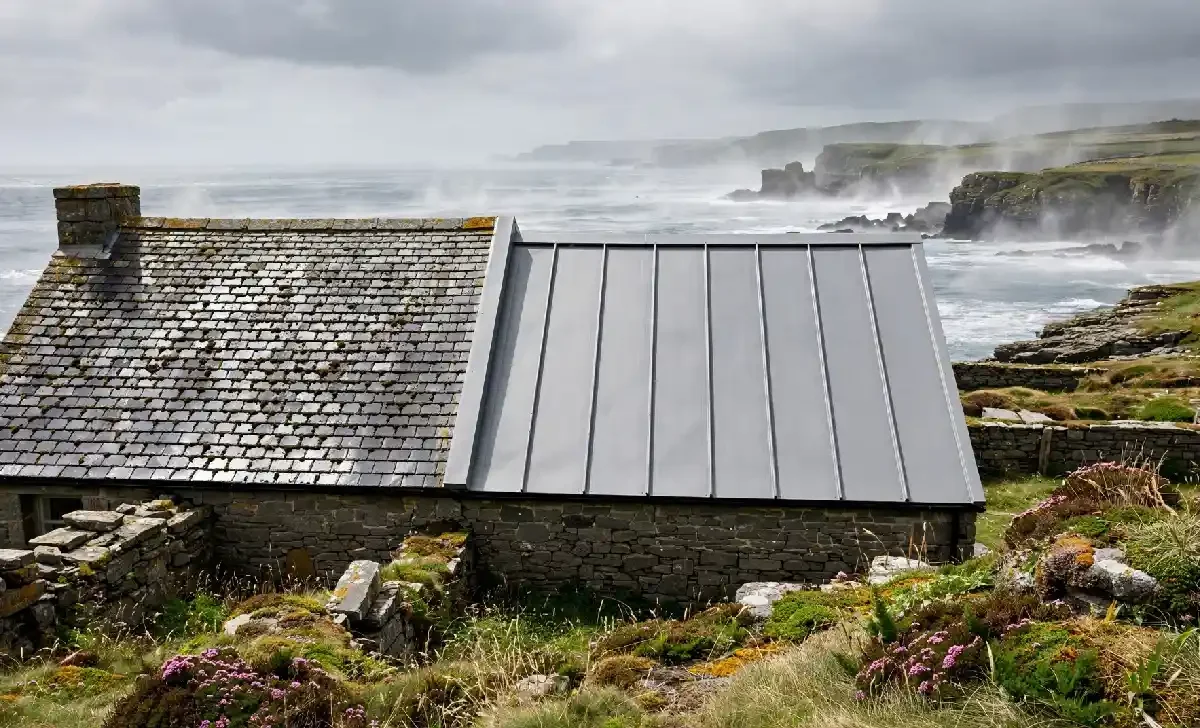
The best roof in Cornwall is not always the best roof in Cumbria. A house on the south coast faces salt spray. A hilltop farm in the Pennines faces snow and gales. A terrace in Manchester faces months of driven rain. Most roofing guides list materials first and climate second. This guide reverses that order.
Start with your strongest weather risk. Then check which materials handle it, what they cost to own over time, and what to confirm before you sign a contract. Nothing here replaces a survey by a qualified roofer, but it will help you ask better questions.
Key Takeaways
- Coastal homes: Choose aluminium or stainless steel fixings and sheet. Avoid unprotected steel at cut edges.
- Exposed, windy sites: Interlocking concrete tiles, clay tiles and natural slate all work well when fixed to the correct wind specification. Fixing matters as much as the material.
- Heavy rain: Good underlay, ventilation and correct pitch protect the roof more than the choice of material alone.
- Snow and upland sites: Check the roof pitch, the structure and the snow guard requirements, especially on metal.
- Summer heat: UK heat is a smaller risk than damp or wind. Loft ventilation and light-coloured roofs help more than special coatings.
- Lifetime cost: Slate and clay tile often last longest. Compare the annual cost of each option, not just the quote.
Decision Table: Start With Your Main Risk
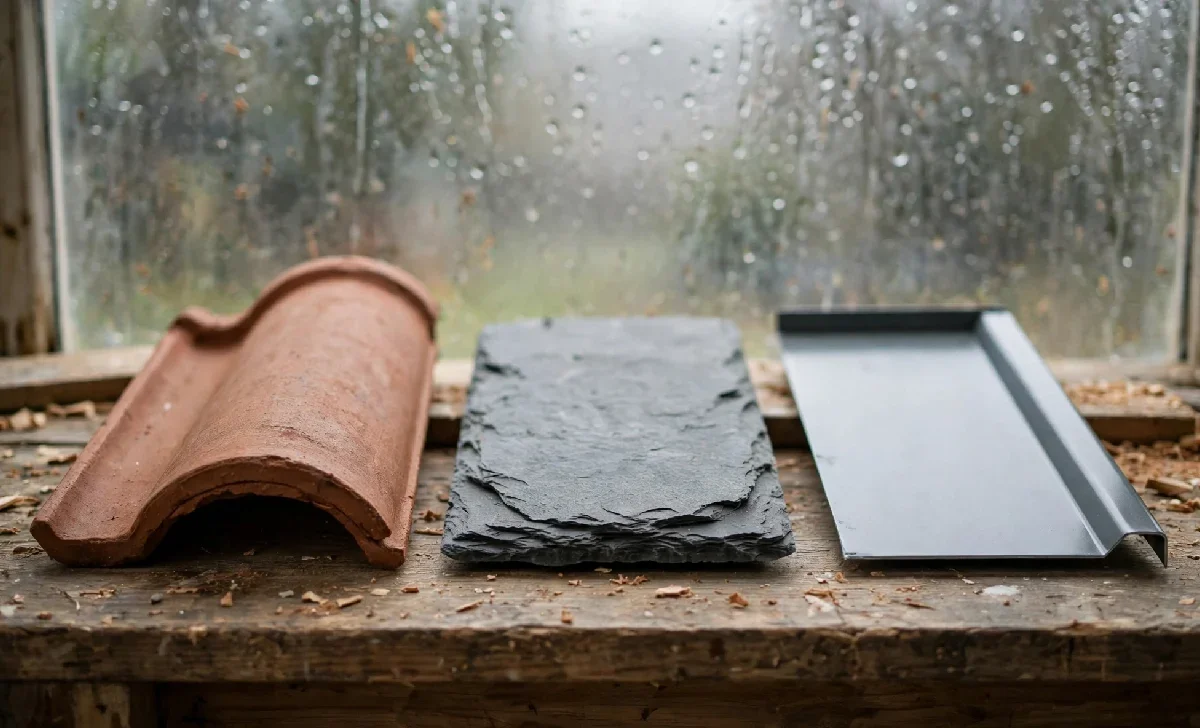
| Main risk | Best-fit materials | Why they work | Watch-out |
|---|---|---|---|
| Coastal salt air | Aluminium, stainless steel, natural slate | Aluminium forms a protective oxide layer. Slate does not corrode. | Unprotected steel corrodes at cut edges and fixings. |
| Exposed, windy sites | Interlocking concrete tile with clips, clay tile, natural slate, standing seam metal | Correct fixing resists uplift. | Poor fixing fails first, whatever the material. |
| Heavy, driven rain | Clay tile, slate, metal with sealed laps | Dense materials shed water well. | Underlay and ventilation decide long-term performance. |
| Snow and freeze-thaw | Clay tile, natural slate, metal with snow guards | Dense, frost-resistant tiles handle freeze-thaw cycles. | Metal sheds snow suddenly, so guards are needed over paths and doors. |
| Summer heat in towns | Light-coloured tile, slate, coated metal | Light colours run cooler in the sun. | Poor loft ventilation causes more problems than the roof surface. |
| Moorland or wildfire-prone land | Clay tile, concrete tile, slate, metal | All are non-combustible. | Check local planning and insurer requirements. |
Coastal Homes: Salt Air and Corrosion
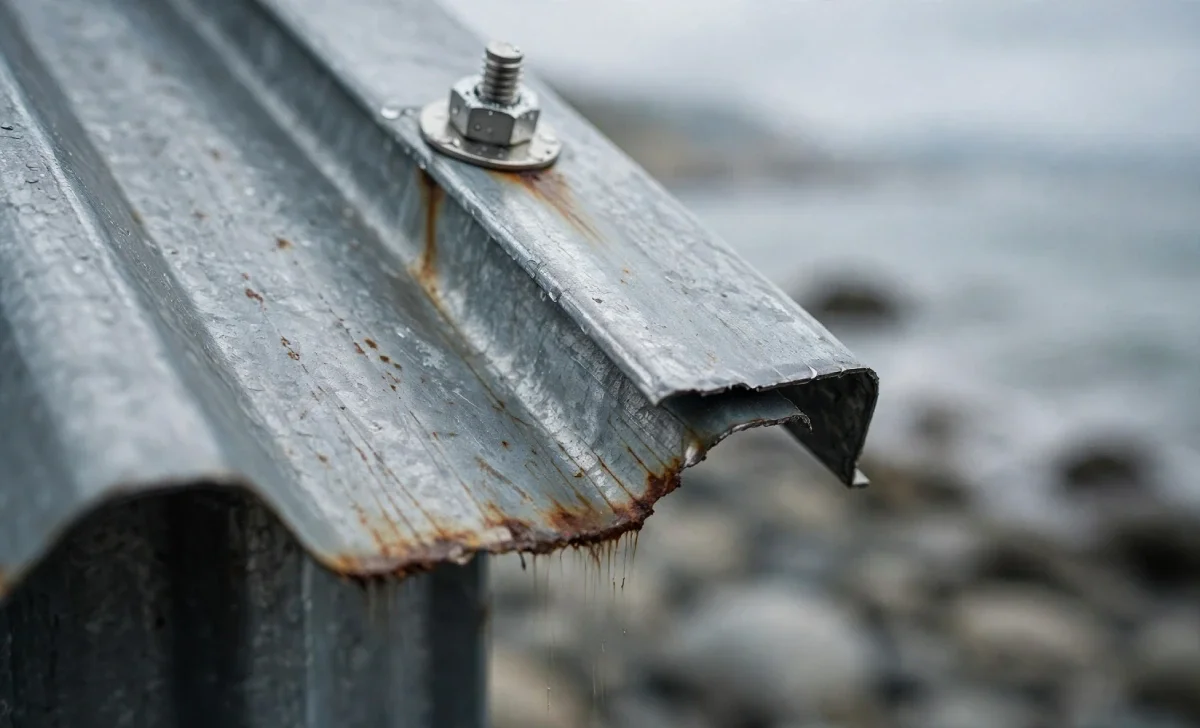
Salt spray carries chloride into the air. Chloride attacks the protective zinc coating on steel. Once the coating is broken, rust spreads from cut edges, drilled holes and fixings. Corrosion is most severe within a few hundred metres of the sea, but salt can travel further in strong winds.
Aluminium performs well here. It forms a thin oxide film that protects the metal. Stainless steel also resists salt well, though it costs more. Natural slate and clay tile are inert and do not corrode. Fixings matter just as much. Use stainless or suitably coated fixings, and avoid mixing metals, which can cause galvanic corrosion.
Check the coating and corrosion category stated by the manufacturer. Corrosion protection for metal roofing is usually described against the atmospheric categories in BS EN ISO 12944. Ask the supplier which category they certify their product for, and whether that applies to your distance from the sea.
Exposed and Windy Sites: Fixing Is the Real Test
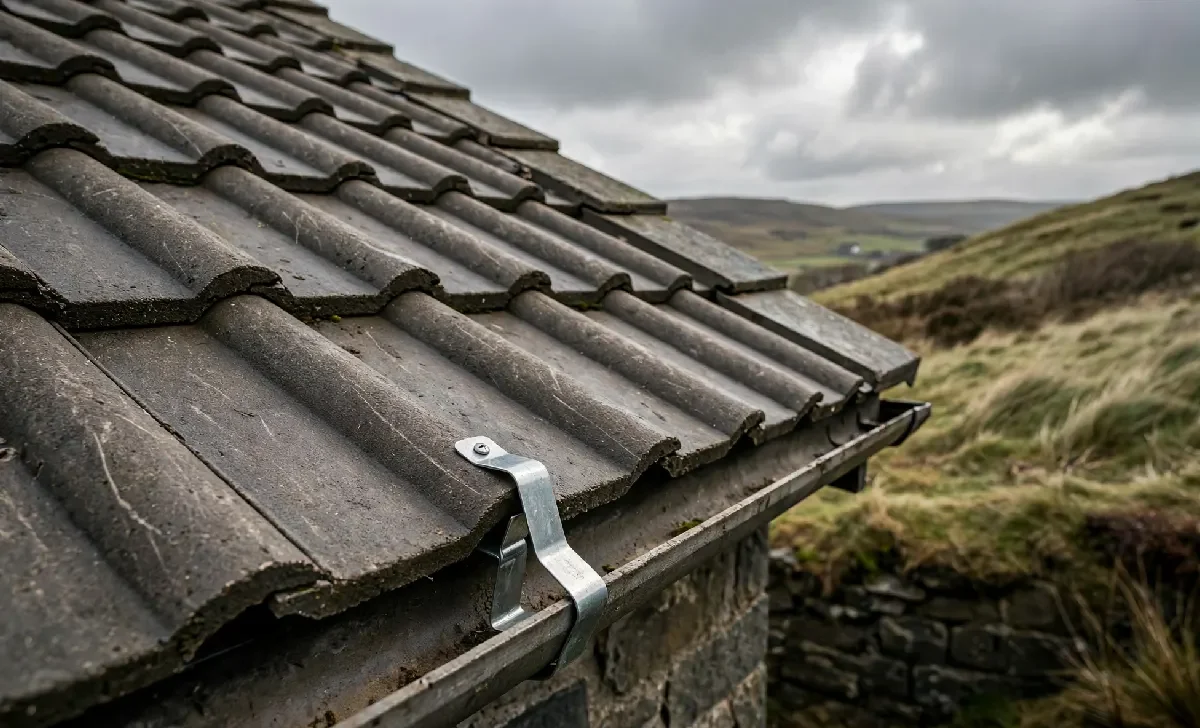
Wind uplift lifts tiles, slates and panels from the roof. Most wind damage starts at the edges, ridges and corners, where suction is strongest. The roof's fixing details decide how well it resists these forces.
For tiled and slated roofs, BS 5534 sets out fixing and clipping requirements based on pitch, exposure and location. Interlocking concrete tiles often need extra clips at the eaves, verges and ridges on exposed sites. Clay tiles can be fixed the same way. Natural slate uses nails and, in high-exposure areas, extra fixings or clips.
Standing seam metal resists wind well when the seams are mechanically locked, and the clips are correctly spaced. Ask for the wind resistance details in the product data sheet and the installer's fixing plan. Metal roof guidance from the Metal Cladding and Roofing Manufacturers Association (MCRMA) covers these details.
Heavy Rain and Damp: Underlay and Ventilation Matter Most
Driven rain tests every roof. Rain can get behind the tiles or panels, especially at low pitches. The best defence is a combination of correct pitch, sound lapping, a suitable underlay and good ventilation.
Breathable membranes allow moisture from inside the roof to escape. Keep the membrane taut and clear of the battens. Vent eaves and ridges so the loft stays dry. Condensation damage often looks like a roof leak, so check the loft before blaming the covering.
Cold, Snow and Freeze-Thaw
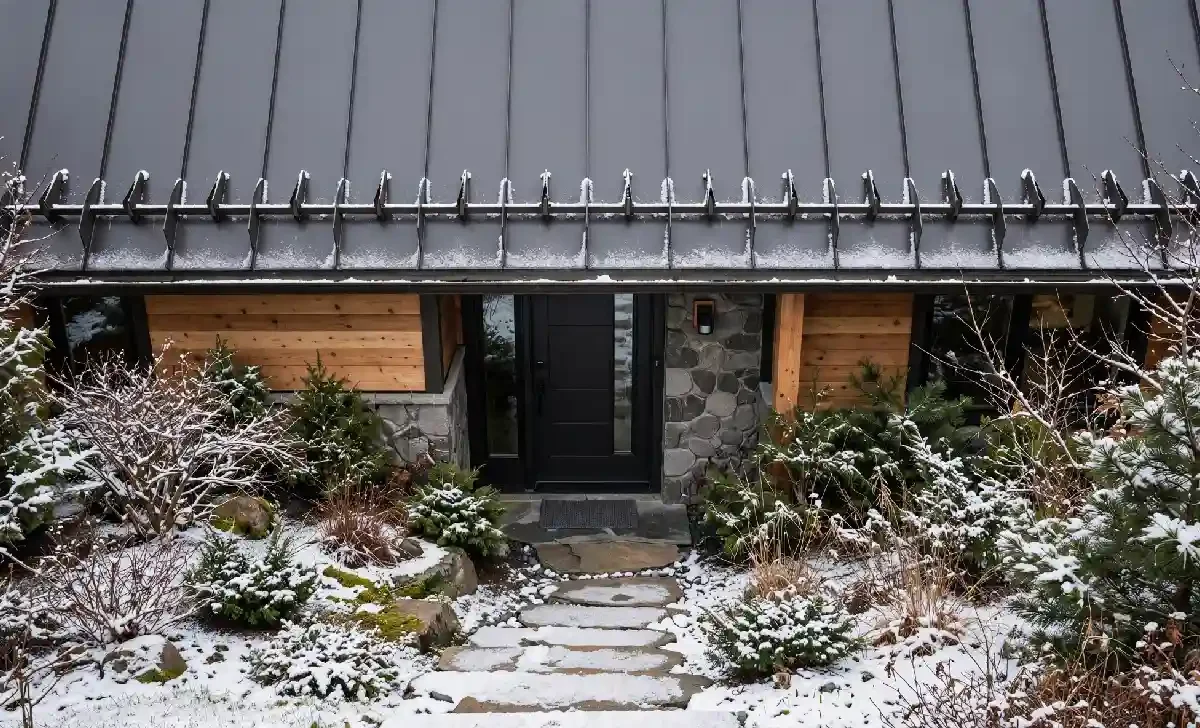
Frost damages porous materials. Water enters pores, freezes, expands and cracks the surface. Dense, frost-resistant clay and concrete tiles handle this well when they meet the relevant standards, including BS EN 1304 for clay and concrete tiles. Natural slate absorbs very little water and copes well with frost.
Metal roofs shed snow quickly because the smooth surface lets snow slide. That is a benefit for the roof, but it can be a hazard below. Fit snow guards over doors, paths, parking spaces and windows. Check that the structure can carry the snow load for your region and building type.
Ice dams are less common in the UK than in North America, but they do form at eaves when heat escapes from the loft. Improve insulation and ventilation to keep the roof surface cold and even. This is the cheapest protection against eaves problems.
Hot Spells and Sun
UK summers are generally milder than in southern Europe, but heatwaves are becoming more frequent. Dark roof surfaces can become far hotter than the air on a sunny day. Light-coloured tiles, slates and coated metal run cooler and reduce heat transfer into the loft.
Reflective coatings help a little, but the largest gains come from ventilation. A well-ventilated loft with good insulation keeps upper rooms cooler in summer. Think of the roof covering as one part of a system that includes the loft and insulation.
Moorland and Wildfire-Prone Land
Wildfire is a smaller concern across most of the UK, but moorland and heathland sites can see grass and heath fires. Embers can blow onto roofs during these fires. Non-combustible materials offer the best protection. These include clay tile, concrete tile, natural slate and metal.
In the UK, roof coverings are assessed for external fire performance under BS EN 13501-5. Typical roofing products are classified at the BROOF level, which indicates how the covering performs under a standard fire test. Check the classification in the product data sheet and confirm any requirements with your local planning authority or insurer.
UK Material Comparison
Lifespans below are typical ranges for UK conditions. They assume correct installation and regular maintenance. Your installer can give a figure for your specific site. Cost levels are relative, not prices. Get current installed quotes from local roofers before comparing budgets.
| Material | Typical lifespan | Wind performance | Salt air | Frost and snow | Relative cost |
|---|---|---|---|---|---|
| Concrete interlocking tile | 50+ years | Good with correct clips | Good | Good | Lower to mid |
| Clay tile | 50–100 years | Good with correct fixing | Excellent | Excellent | Mid to higher |
| Natural slate | 80–150 years (Welsh slate can last longer) | Good with correct fixing | Excellent | Excellent | Higher |
| Fibre cement slate | 40–60 years | Good | Good | Good | Lower to mid |
| Standing seam aluminium | 40–60 years | Very good | Excellent | Good, needs snow guards | Mid to higher |
| Coated steel (standing seam) | 30–50 years | Very good | Limited near coast | Good, needs snow guards | Mid |
Lifetime Cost: Compare Years, Not Just Prices
A cheap roof that needs early replacement often costs more than a dearer roof that lasts. A simple way to compare options is annual cost:
Annual cost = (installed cost + expected repairs) ÷ expected lifespan in years
This illustration uses made-up numbers to show the method. A £10,000 roof lasting 20 years costs £500 a year. An £18,000 roof lasting 60 years costs £300 a year. Use real quotes and your installer's lifespan estimate in the calculation.
Material Notes
Concrete and Clay Tile
Concrete tiles are a practical choice for most UK homes. They offer good weather performance at a lower price than clay. Clay tiles suit higher exposure and coastal sites and have a long track record. Both are heavy, so check the roof structure before you choose them.
Natural Slate
Slate is one of the longest-lasting roofing materials. It suits historic buildings and high-exposure sites. Its weight, cost and specialist fitting are the main drawbacks. Source slate from a reputable supplier, and ask for the origin and grade.
Metal Roofing
Standing seam metal suits modern builds, low-pitch roofs and sites needing a light structure. Aluminium suits coastal homes. Coated steel costs less but needs more care near the sea. Metal is quieter than some people expect when fitted with proper insulation and underlay. Ask about acoustic lining if rain noise matters to you.
Fibre Cement and Composite Slate
These lighter options copy the look of natural slate at a lower cost and weight. They suit most sites. Check the manufacturer's warranty terms carefully, especially for exposed or coastal sites.
Before You Sign: A Quote Checklist
- Ask for the wind fixing specification and whether it meets BS 5534 for your site.
- Check the corrosion protection and whether it suits your distance from the sea.
- Confirm the underlay type, ventilation plan and loft insulation.
- Ask whether snow guards are included where needed.
- Check the fire classification for the covering, if you are in a high-risk area.
- Ask for the warranty terms for both the materials and the workmanship, and any exclusions for coastal sites.
- Compare annual cost, not just the total.
Conclusion
No single material is best everywhere. The best roof for your home is the one that handles your strongest weather risk, lasts long enough to justify its cost, and is fixed correctly. Identify your main risk, check the specification, and compare annual cost before you decide.
If you are ready to get quotes, use the checklist above. Ask each roofer for their fixing plan, underlay details and warranty terms in writing. Then compare like with like.
FAQs
What is the best roofing material for a coastal home?
Aluminium is a strong choice for most coastal homes. Natural slate and clay tile also resist salt air well. Avoid unprotected steel, especially at cut edges and fixings.
Which roof lasts longest in the UK?
Natural slate and clay tile usually last longest, often several generations when installed and maintained well.
Is metal roofing good for UK homes?
Yes, in many cases. Standing seam aluminium suits coastal and modern builds. Coated steel works well inland with snow guards where needed. Check the acoustic lining if rain noise is a concern.
Do I need a special roof for snow?
Most UK roofs cope with snow. Steep pitches shed snow well, and metal roofs need snow guards over doors and paths. Upland sites should check the roof structure and snow load.
Will a tile roof survive high winds?
A tile roof survives high winds when fixed to the correct specification for the site. Ask your roofer to show the fixing plan, including extra clips at the edges if your site is exposed.
Does roof colour make a difference in the UK?
Colour has a modest effect. Light roofs run cooler in summer sun, but loft ventilation and insulation make a bigger difference to comfort and energy use.
How often should I inspect my roof?
Check the roof once a year and after severe storms. Look for slipped or cracked tiles, damaged flashings, blocked gutters and loft damp.