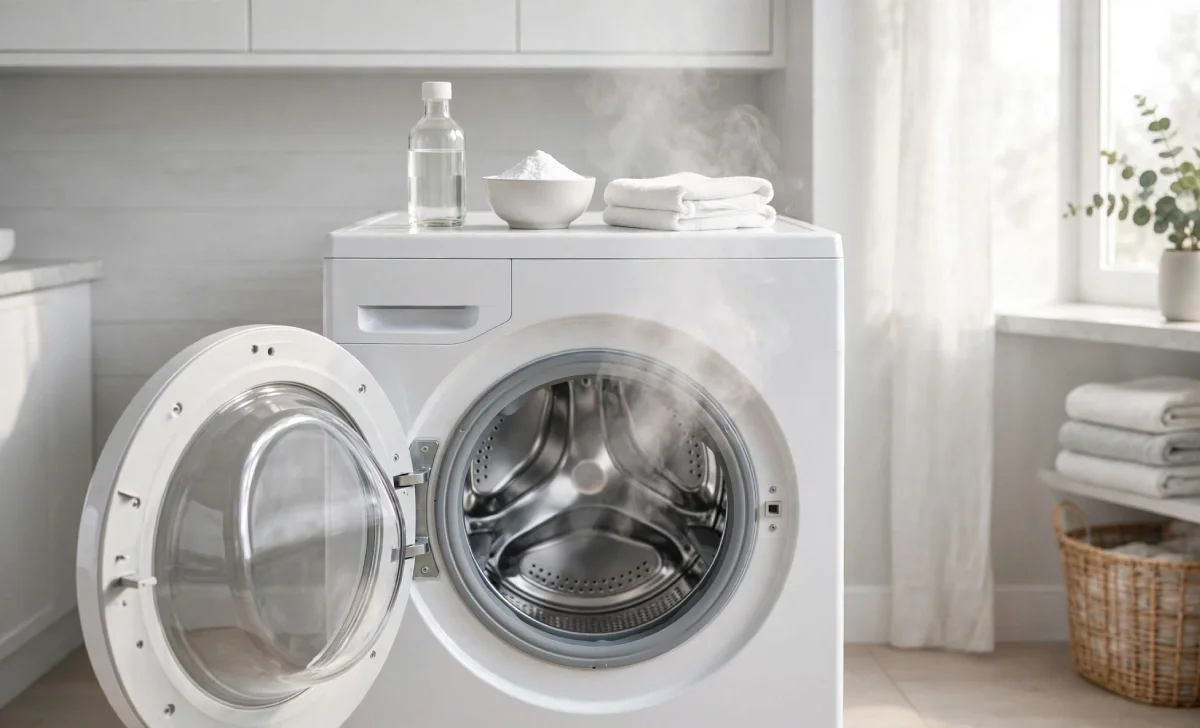
You open your washing machine expecting the smell of clean laundry, and instead you get a wall of musty, sour air. It's an unpleasant surprise, but it's also a sign that bacteria and mould have found a comfortable home somewhere inside your machine, and that smell can transfer straight onto your clothes. The good news is that washing machine odour is one of the most fixable appliance problems out there.
This guide walks through exactly why washers start to smell, how to clean every part that matters, which cleaning method fits your situation, and how to keep the odour from coming back.
Why Does My Washing Machine Smell?
A washing machine smell almost always comes down to three ingredients meeting in the wrong place: moisture, warmth, and organic residue. Detergent and fabric softener leave behind a thin, sticky film on the drum, the rubber gasket, and the dispenser drawer. That film traps lint, dirt, and skin cells from your laundry. When the door stays closed after a wash, the leftover moisture has nowhere to go, and the drum turns into a dark, humid space where bacteria and mould can multiply quickly. Mould can begin to establish itself in less than 48 hours once conditions are right, which is why odour can return fast if the machine isn't dried out between loads.
Washing everything in cold water compounds the problem. Cold cycles are gentler on fabric and cheaper to run, but they don't reach the temperature needed to kill the bacteria that cause odour, so residue keeps accumulating wash after wash. Using more detergent than a load actually needs makes things worse, since the extra soap doesn't fully rinse away and instead builds up as film inside the machine.
Common Causes of Washing MachinOdourror
- Moisture trapped in the folds of the door seal or gasket
- Detergent and fabric softener residue coating the drum and drawer
- Standing water left in the gasket after a cycle
- Keeping the door and drawer closed between washes
- Skipping cleaning cycles for months at a time
- Leaving wet laundry sitting in the drum after the cycle ends
- Drainage issues that leave water sitting in the machine
Front-Loader vs. Top-Loader: Which Smells More?
Front-load washers are more likely to develop a persistent odour than top-loaders, and the reason comes down to design. Front-loaders use a tightly sealed rubber gasket to keep water from leaking out during the wash, and that same seal traps moisture against the drum after the cycle finishes. They also use less water overall, which means detergent residue is more concentrated and harder to rinse away completely.
Top-load machines, particularly older models without a lid seal, allow far more air to circulate through the drum, so moisture evaporates faster, and odour has less chance to set in. That said, top-loaders aren't immune. If laundry sits in the drum too long or the machine goes uncleaned for months, mould and bacteria will grow there too. The fix for both machine types is largely the same: manage moisture and clean regularly, though front-loaders need a bit more attention to the door gasket specifically.
What You'll Need to Remove Washing Machine Odour
Before you start, gather a few basic supplies. Most of these are already in your kitchen or laundry closet:
- White vinegar
- Baking soda
- Chlorine bleach (optional, for de-sanitising)
- A commercial washing machine cleaner such as Affresh or Dr Beckmann Service-It
- Microfiber cloths
- An old toothbrush or small scrub brush
- Rubber gloves
- A soft-bristled brush for stubborn buildup
You won't need all of these at once. Pick the cleaning method that matches how bad the smell is, covered in the comparison section below.
Step-by-Step Washing Machine Odour Removal
Step 1: Empty the Drum
Make sure there's no laundry, coins, or stray items inside before you begin. You need the drum completely clear to clean it properly and run an empty maintenance cycle.
Step 2: Clean the Rubber Door Seal
Pull back the folds of the rubber gasket around the door opening. This is where most of the mould and residue collects, and it's often invisible until you look closely. Wipe the entire seal, inside and out, with a cloth dampened in a vinegar-and-water solution, or a mild bleach solution if you see visible mould. Use a soft brush to scrub any dark spots you find. Dry the seal thoroughly with a towel when you're done. On its own, this one step resolves a large share of odour complaints.
Step 3: Clean the Detergent Drawer
Remove the detergent drawer completely (most slide or pop out with a small release tab). Rinse it under warm running water, then scrub the compartments with an old toothbrush to remove built-up soap film and fabric softener residue. Don't forget the housing behind the drawer, since grime collects there too. Let everything dry before sliding the drawer back in.
Step 4: Run a Hot Cleaning Cycle
With the drum empty, run the hottest cycle your machine offers, or use a dedicated "Tub Clean" setting if your model has one. Choose one of these options:
- Commercial cleaner: Follow the product's instructions
- Vinegar: Pour 2 cups of white vinegar into the drum
- Baking soda: Add ½ cup of baking soda directly to the drum
- Bleach: Add about ¼ cup (roughly 50ml) to the bleach compartment of the detergent drawer
Safety warning: Never mix bleach and vinegar in the same cycle. Combining them produces toxic chlorine gas.
Step 5: Clean the Drain Pump Filter
Check your owner's manual to find the filter, usually behind a small panel near the bottom front of the machine. Open it carefully, since some residual water will drain out, and make sure the water has cooled first. Remove any lint, coins, or debris caught inside, rinse the filter under water, and reinsert it securely.
Step 6: Wipe Down and Air Dry
Finish by wiping the inside of the drum with a damp cloth and drying any remaining moisture from the seals and dispenser area. Leave the door and detergent drawer open afterwards so the machine can air out completely rather than trapping humidity again.
Which Cleaning Method Works Best?
There's no single "correct" method here, since vinegar, baking soda, bleach, and commercial cleaners each solve a slightly different problem. Vinegar is a mild acid that cuts through detergent buildup and kills a good share of bacteria, making it a solid choice for regular upkeep. Baking soda is mainly a deodoriser rather than a disinfectant, so it works well paired with vinegar, run as two separate cycles rather than mixed. Bleach is the strongest option and the right call for visible mould or a smell that hasn't responded to gentler cleaning, but it's harsher on rubber and metal parts if used too often. Commercial cleaners like Affresh are formulated specifically for washing machines and are convenient for a monthly routine, without any measuring or mixing.
| Method | Best For | Pros | Cons |
|---|---|---|---|
| White Vinegar | Regular monthly maintenance | Natural, inexpensive, breaks down residue | Less effective against heavy mould |
| Baking Soda | Neutralising lingering odour | Natural, safe, gentle | Needs vinegar or another cycle to actually kill bacteria |
| Chlorine Bleach | Deep sanitising, visible mould | Strongest disinfecting power | Can damage rubber or metal parts if overused |
| Commercial Cleaner | Convenience, consistent results | Formulated specifically for machines | Costs more than vinegar or baking soda |
How to Clean Specific Washing Machine Parts
The rubber gasket deserves the most attention, since it holds moisture longer than any other part. For a deeper clean, soak a cloth in vinegar and press it into the folds of the seal for about 20 minutes before wiping and scrubbing. If mould has really set in, a paste made from baking soda and a small amount of water can help lift it before you rinse.
The detergent drawer housing — the compartment the drawer slides into — is easy to overlook because you never actually see it once the drawer is back in place. Use a toothbrush and a vinegar solution to scrub inside this cavity every couple of months, since soap scum collects here just as fast as in the drawer itself.
The drain filter should be checked periodically for lint, hair, and small objects that make their way through the wash. A clogged filter can leave standing water in the machine, which adds to odour problems on top of everything else. Always let the machine cool and drain naturally before opening this panel.
Washing Machine Maintenance Schedule
| Frequency | Task |
|---|---|
| After every wash | Leave door and drawer open, wipe visible moisture off the seal |
| Weekly | Wipe the door seal dry with a cloth |
| Monthly (or every 30 cycles) | Run a hot empty cycle with vinegar, bleach, or a commercial cleaner |
| Every 2 months | Deep clean the detergent drawer and housing |
| Regularly | Check and clean the drain pump filter |
| Monthly | Run at least one hot wash (60°C / 140°F or higher) to reduce bacteria buildup |
If you run more than 40 loads a month, stick to the monthly cleaning schedule. If your household runs 30 loads or fewer, cleaning every two months is usually enough.
How to Prevent Washing MachiOdoOdourr
- Leave the door slightly open after every wash so moisture can escape
- Leave the detergent drawer open too, not just the door
- Take laundry out of the machine promptly instead of letting it sit
- Use only the recommended amount of detergent, especially with HE machines
- Run a monthly maintenance or "Tub Clean" cycle
- Wipe the door seal and drawer dry regularly
- Occasionally run a hot wash, even if most of your laundry is done cold
- Avoid overloading the drum, since it limits airflow and rinsing
- Cut back on fabric softener, which leaves more residue than most detergents
What If the Smell Won't Go Away?
If you've cleaned the machine thoroughly and the odour persists, try switching methods before assuming something is broken. A washer that didn't respond to vinegar may need a bleach cycle or a commercial cleaner formulated for tougher buildup. Standing water in the drum after a cycle usually points to a drainage problem rather than a cleaning problem, so check the drain hose and filter for blockages.
A rotten egg smell is worth taking seriously. It can point to sewer gas entering through a dry or faulty drain trap, or in some cases a gas leak if there's a gas dryer nearby, which should be checked immediately rather than treated as a cleaning issue. If your machine is 12 to 15 years old or older, odour can become baked into worn seals and internal components that no longer clean up fully, and replacement may be the more practical option at that point. When none of thee supplieanddd the smell still won't shift, it's worth calling an appliance repair technician to rule out a mechanical issue.
Conclusion
Washing machine odour is common, and it's almost always fixable without calling in a professional. Once you've worked through the door seal, drawer, drain filter, and a hot maintenance cycle, the smell should clear within one or two washes. The habit that matters most going forward is simple: leave the door and detergent drawer open; these supplies help, and run a proper cleaning cycle about once a month. Start with Step 1 today, and your next load of laundry should come out smelling the way it's supposed to.
FAQs
Why does my washing machine smell like mildew?
Mildew smell comes from trapped moisture, detergent residue, and bacterial growth inside the drum, door seal, or detergent drawer. Keeping the door closed between washes creates the damp, dark environment mildew needs to grow.
Can I use vinegar and baking soda together?
Run them separately rather than mixing them in the same cycle. A hot cycle with vinegar first helps kill bacteria, and a second cycle with baking soda helps neutralise lingering odour. Combined together, they react and cancel each other out, which makes them less effective than using them one after another.
How often should I clean my washing machine?
About once a month, or every 30 cycles. Households running 40 or more loads a month should stick to monthly cleaning, while those running 30 or fewer can clean every two months.
Is bleach or vinegar better for cleaning a washing machine?
Vinegar is gentler and works well for routine maintenance. Bleach is stronger and better suited to visible mould or a smell that hasn't cleared with gentler cleaning, but it can wear down rubber parts if used too often. Never combine the two in the same cycle, since it produces toxic chlorine gas.
Why does my washing machine smell like rotten eggs?
This can point to bacterial buildup releasing hydrogen sulfide gas, a plumbing issue letting sewer gas into the machine, or, if you have a gas dryer nearby, a possible gas leak that should be checked right away.
Should I leave my washing machine door open?
Yes. Leaving the door slightly open after each wash lets moisture escape and helps prevent mould from forming. Leaving the detergent drawer open does the same job for that compartment.
Can a smelly washing machine make my clothes smell?
Yes. Bacteria and mildew living inside the machine can transfer directly onto your laundry during the wash cycle, leaving clothes with a musty or sour smell even after they've been through a full wash.