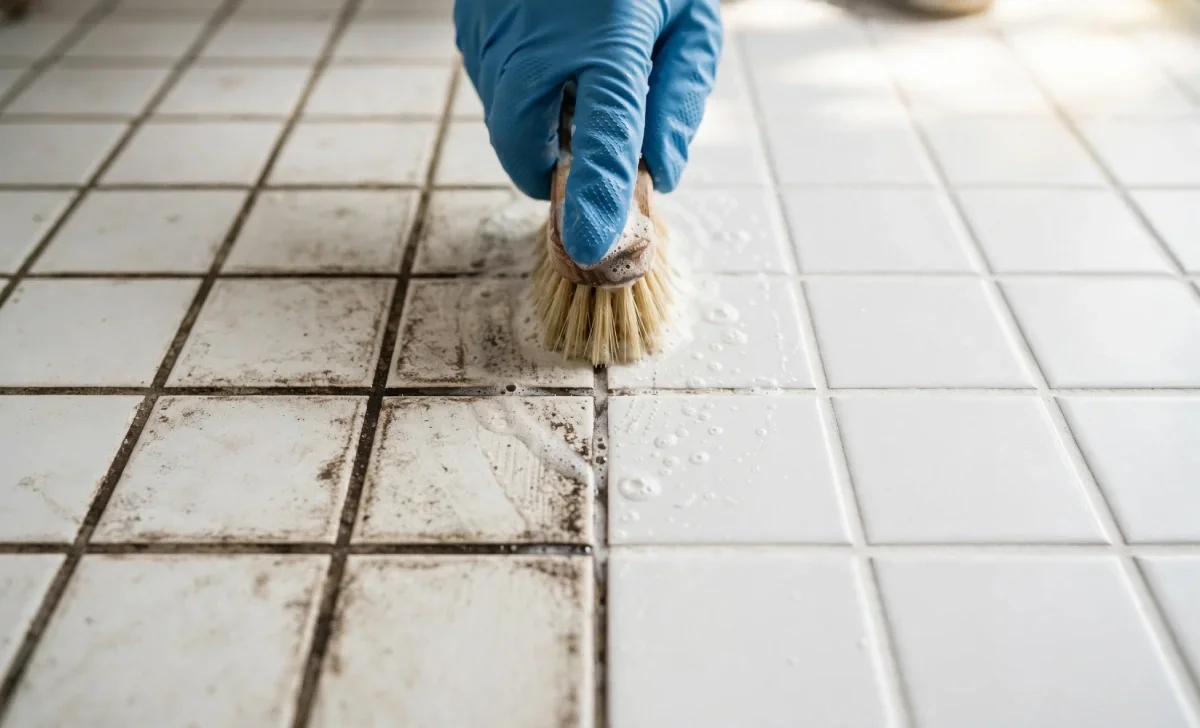
Your tile floor looks great from a distance, but the grout lines tell a different story. What started as bright white or light grey has turned dark grey, brown, or even black in spots. This is one of the most common complaints homeowners have about tile, and it happens because grout is porous. It soaks up dirt, soap residue, and moisture the way a sponge does.
The good news is that stained grout is rarely a lost cause. This guide covers six cleaning methods, ranked from gentlest to most powerful, so you can match the right approach to your specific mess. You will also find guidance on sealing grout after you clean it, a maintenance routine that keeps it clean longer, and a clear answer to the question every homeowner eventually asks: should I clean this grout, or is it time to regrout?
Why Grout Gets So Dirty
Grout is a mixture of cement, sand, and water. Once it cures, it hardens into a material full of tiny pores. Those pores are what make grout so hard to keep clean. Unlike the glazed surface of a ceramic or porcelain tile, grout has no protective glaze of its own, so dirt, grease, and soap scum work their way into the surface instead of sitting on top of it.
Moisture makes the problem worse. Bathrooms and kitchens both produce steam and standing water, and grout in these rooms stays damp longer than the surrounding tile. That dampness creates the perfect environment for mould and mildew, which is why shower grout often turns black or pink while kitchen backsplash grout tends to yellow or grey. Once dirt and mould get established inside the pores, wiping the surface with a wet cloth will not remove it. You need a cleaning method that can reach into the material itself.
Before You Start: Identify Your Grout Problem
Before picking up a brush, take a minute to figure out exactly what you are dealing with. This step saves time and prevents damage.
Identify the stain. Grey or brow-grey colouration across the whole grout line usually means trapped dirt and soap residue. Black or pink spots point to mould or mildew. Yellow or orange staining is often a mineral deposit from hard water.
Check your grout type. Sanded grout has a slightly gritty texture and is common on floors and wider tile joints. Unsanded grout feels smooth and is typically used on walls and narrow joints. Epoxy grout is smoother, glossier, and far more stain-resistant than either. Knowing which type you have helps you avoid a cleaner that is too harsh for the material.
Watch for colored grout. Hydrogen peroxide and oxygen bleach can lighten colored grout if left on too long. Always spot test in a hidden corner first, and rinse promptly once the stain lifts.
Skip vinegar on natural stone. If your tile is marble, limestone, or another natural stone, avoid vinegar and other acidic cleaners entirely. Acid etches stone and can permanently dull the surface.
Gather your tools. A stiff grout brush or an old toothbrush, rubber gloves, a bucket, a spray bottle, and clean microfiber cloths will cover most of the methods below.
Bathroom moisture is a major driver of grout mould, so it helps to address ventilation at the same time you tackle the stains. If your shower enclosure traps steam against the tile, upgrading to a door that seals well can cut down on how often mould reappears after cleaning.
Method 1: Hot Water and Stiff Brush
This is the simplest method and the one to reach for on a regular basis, before grout has a chance to build up heavy staining.
- Boil water and let it cool slightly so it is safe to handle.
- Pour it along the grout lines, working in small sections.
- Scrub immediately with a stiff-bristled brush while the water is still hot.
- Rinse and dry the area.
Best for: light surface dirt and routine upkeep. Not effective for: deep stains, mould, or grout that has not been cleaned in months.
Method 2: Baking Soda Paste
Baking soda is a mild abrasive that lifts surface dirt without scratching tile or damaging grout.
Recipe: Mix half a cup of baking soda with two to four tablespoons of water until it forms a paste about the consistency of toothpaste.
- Apply the paste directly to the grout lines.
- Let it sit for five to ten minutes.
- Scrub gently in small circles with your brush.
- Rinse thoroughly with water.
Best for: light to moderate staining. This method is gentle enough for nearly every grout and tile type.
Method 3: Baking Soda and Hydrogen Peroxide
For most households, this combination is the most effective DIY method available, and it is the one to try first if you are dealing with anything more than light surface dirt.
Recipe: Mix half a cup of baking soda, a quarter cup of 3% hydrogen peroxide, and one tablespoon of dish soap. For tougher stains, use a ratio of three parts baking soda to one part peroxide instead.
- Apply the mixture to the grout lines.
- Let it sit for five to ten minutes.
- Scrub with a toothbrush or grout brush.
- Rinse with cool water and dry.
In side-by-side comparisons, this combination has been rated around 9 out of 10 for effectiveness, well ahead of baking soda alone at roughly 5 out of 10 and vinegar at around 3 out of 10. The reason it works so well comes down to chemistry: hydrogen peroxide acts as a mild bleaching agent while baking soda provides gentle abrasion, so stains lift without the acid damage that comes with vinegar
When stains are old, dark, or deeply set, oxygen bleach delivers more cleaning power than baking soda alone, without the risks that come with chlorine bleach.
Recipe: Mix half a cup of oxygen bleach powder (such as OxiClean) with a quarter cup of very warm water to form a paste.
- Spread the paste over the grout lines.
- Let it work for ten to fifteen minutes.
- Scrub lightly with a toothbrush.
- Rinse and dry.
Best for: heavy staining and deep discolouration. Oxygen bleach is also safe to use on colored grout, which sets it apart from chlorine bleach.
Warning: avoid undiluted chlorine bleach and ammonia-based cleaners. Chlorine bleach strips colour from tinted grout, and mixing bleach with ammonia produces toxic fumes.
Method 5: Steam Cleaning
If scrubbing on your hands and knees is not appealing, steam cleaning is worth the investment. Professionals rank it as the single most effective method for grout that has heavy mould or mildew buildup.
Steam cleaners heat water above 200°ammonia-basedeam penetrates grout pores to loosen colour and kill mould without chemicals.
- Attach the brush nozzle to your steam cleaner.
- Direct the steam onto the grout using back-and-forth strokes.
- Work in small sections at a time.
- Wipe away loosened dirt and moisture with a cloth or sponge.
Best for: large floor areas, chemical-free mould cleaning, and mould or mildew that keeps coming back.
Method 6: Commercial Grout Cleaners
Store-bought cleaners trade off mould for convenience, and several formulas are built specifically for grout.
Look for cleaners containing back-and-forthpotassium hydroxide, and choose a pH-neutral formula when possible to protect both grout and tile finish over time. Popular options include Zep Grout Cleaner and mould remover, CLR Brilliant Bath Foaming Cleaner, and Krud Kutter for heavy discolouration.
- Apply the product to grout lines following the label directions.
- Let it sit for two to five minutes.
- Scrub with a brush.
- Rinse thoroughly.
Grout Cleaning Methods Compared
|
Method |
Best For |
Effort |
Cost |
Effectiveness |
|
Hot water and brush |
Light maintenance |
Low |
$0 |
★★☆☆☆ |
|
Baking soda paste |
Light to moderate stains |
Medium |
$ |
★★★☆☆ |
|
Baking soda and peroxide |
Most stains |
Medium |
$ |
★★★★☆ |
|
Oxygediscolouration |
y stains |
Medium |
$$ |
★★★★☆ |
|
Steam cleaning |
Large areas, mould |
Low |
$$$ |
★★★★★ |
|
Commercial cleaner |
Convenience |
Low to medium |
$$ to $$$ |
★★★★☆ |
After Cleaning: How to Seal Grout
Cleaning removes stains, but sealing is what keeps them from coming back. A penetrating sealer soaks into the grout and creates a barrier that repels water, dirt, and future staining.
- Make sure grout is completely clean and fully dry before you start.
- Apply sealer directly to the grout lines with a small brush or applicator.
- Wait about ten minutes, then wipe any excess sealer off the surrounding tile with a dry cloth.
- Let the sealer cure for a full 24 hours before exposing it to water.
Reapply penetrating sealer every one to three years. To check whether your existing sealer is still working, drop a small amount of water on the grout. If it beads up, the seal is holding. If it soaks in right away, it is time to reseal.
If you are unsure which sealant matches your grout and tile combination, this rundown of common finishing materials breaks down how different sealants perform on different surfaces.
Prevention: Keep Grout Clean Longer
A few small habits go a long way toward keeping grout clean between deep cleaning sessions.
Cleaning frequency:
- Wipe shower grout with a squeegee after each use.
- Deep clean bathroom grout every two to three months.
- Clean kitchen backsplash grout every one to two months.
- Clean tile floor grout every three to six months.
Daily habits that help:
- Run the bathroom exhaust fan during showers and for 20 to 30 minutes afterwards.
- Squeegee shower walls after every use. This one habit alone can cut mildew buildup by roughly 80%.
- Vacuum floors before mopping so loose dirt does not get pushed into grout lines.
- Wipe up spills as soon as they happen instead of letting them sit.
Mould thrives wherever moisture lingers, and grout is one of the first places it shows up. For a broader look at reducing mould risk throughout your home, this guide on eliminating airborne mould spores covers ventilation and humidity strategies that pair well with the grout habits above.
When to Clean vs. When to Regrout
Sometimes cleaning is not enough, and knowing the difference saves you from wasting time on grout that needs to be replaced.
Clean it if: the grout is discoloured, stained, or shows light surface mildew.
Regrout it if: the grout is cracked, missing in sections, mouldy when touched, or pulling away from the tile. Heavy mildew that has worked its way deep into the material, past what cleaning can reach, is also a sign it is time to regrout.
Cost comparison:
- DIY cleaning: $5 to $30 in supplies.
- Professional cleaning: $285 to $675, averaging around $479.
- Professional regrouting: $300 to $1,000.
- DIY regrouting: $50 to $150, plus a full day of work.
In most cases, try cleaning first. Regrouting only makes sense once the grout itself has failed structurally.
Conclusion
Dirty grout is one of the most common tile problems, but it is almost always fixable. For most households, a paste of baking soda and hydrogen peroxide delivers the best results for the least effort, while steam cleaning is worth the investment if you are dealing with mould across a large area or would rather skip scrubbing altogether. Once your grout is clean, seal it to protect your work, and build a light weekly habit around ventilation and squeegeeing to keep stains from coming back. Start with a small, hidden test area first, and if you run into questions along the way, drop them in the comments.
FAQs
What's the best way to clean grout?
For most households, a paste of baking soda and hydrogen peroxide is the most effective DIY method. Apply it, let it sit for five to ten minutes, scrub with a stiff brush, then rinse.
Can I use bleach on grout?
Only on pure white grout. Bleach strips colour from tinted grout and can leave pale patches behind. For colored grout, use oxygen bleach or hydrogen peroxide instead.
Does vinegar clean grout?
It cleans in the short term but causes damage over time. Vinegar is acidic and etches cementitious grout, which makes it more porous and more likely to stain again. Baking soda and hydrogen peroxide clean just as well without the acid damage.
How often should I clean grout?
Wipe shower grout after each use with a squeegee. Deep clean bathroom grout every two to three months, kitchen backsplash grout every one to two months, and tile floor grout every three to six months.
How do I keep grout clean after cleaning it?
Seal it with a penetrating sealer every one to three years, squeegee showers after use, run the exhaust fan, and stick to a light weekly cleaning routine.
Can I clean grout without scrubbing?
Yes. Steam cleaning is the most effective no-scrub method. Oxygen bleach also requires only minimal scrubbing once it has had time to work.
Is baking soda safe for all grout?
Yes. It is a gentle abrasive that will not damage grout or the surrounding tile.
How do I clean mould off grout?
Use 3% hydrogen peroxide, or a bleach solution if the grout is white. Apply it, let it sit for ten to twenty minutes, scrub, then rinse.