
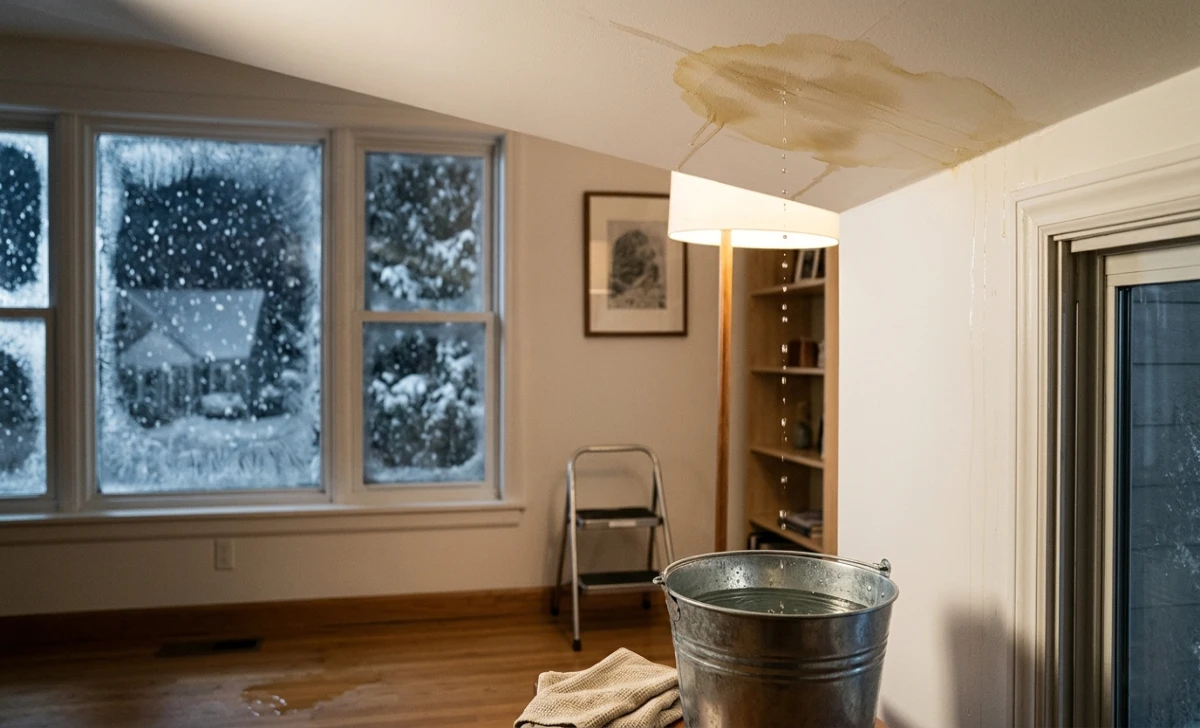
Standing in your living room at midnight watching water drip from the ceiling while snow piles up outside is a feeling you don’t forget. I’ve been there, staring at a wet stain spreading across the drywall, wondering how to stop it before everything inside gets ruined. Winter roof emergencies hit differently than summer leaks because you can’t just climb up with a ladder and patch it. Ice, frozen temperatures, and heavy snow change everything about how you respond.
If your roof is leaking right now, or you’re worried it might this winter, you don’t need to become a roofing expert. You need to know what to do in the next few hours, how to protect your home from water damage, and when to call someone who actually knows their way around a roof. This guide walks you through each step so you can handle it without panic.
Why Winter Makes Roof Problems Worse
Cold weather alone doesn’t cause leaks — but it makes existing problems explode. Here’s what actually happens: warm air escapes from your attic and melts the snow sitting on your roof. That water runs down toward the gutters, hits the cold edge of the roof, and refreezes into thick ice. That ice dam then acts like a dam (hence the name), trapping more water behind it. The trapped water has nowhere to go except back up under your shingles and into your house. You can have perfectly good shingles and still get a serious leak because of how the ice dam redirects water.
This cycle — snow melting, water running, then refreezing — is the same freeze-thaw process that cracks pavement and splits pipes. It does the same kind of damage to your roof over repeated winters, pulling nails loose, shifting flashing, and buckling shingles far faster than normal wear would.
Add heavy snow weight on top, and you’ve got nails getting pulled loose, flashing shifting, and shingles buckling. Heavy accumulation also blocks gutters so water can’t escape even when it does melt. Wind rips at shingles during storms and can bend metal edges away from the roof deck. Over multiple winters, this repeated stress shortens your roof’s lifespan by years.
The worst situation is heavy snow followed by warm days, then a sudden deep freeze. Water gets trapped, seeps in fast, and by morning you’re dealing with stained ceilings or wet insulation in the attic.
Spot Problems Before They Turn Into Emergencies
You don’t need to climb up in freezing weather to check your roof. From ground level or looking out windows:
- Long icicles hanging off gutters (especially uneven or thick ones) signal an ice dam forming underneath
- Water stains spreading across ceilings or walls, particularly near outside walls
- Sagging rooflines or unusual dips after heavy snow accumulation
- Daylight visible through the attic ceiling or wet insulation when you peek upstairs
If water is actively dripping inside, act now. Grab buckets and towels. Move furniture and anything valuable away from the leak. Throw down plastic sheeting or old towels to catch water and protect your floors. I’ve had to push the couch aside at 2 a.m. more times than I’d like — better that than replacing hardwood floors.
Safe Actions You Can Take Right Now
The first rule with winter roof emergencies: stay off the roof itself if it’s icy, snowy, or steep. Most serious injuries happen when someone tries to be the hero in bad conditions. Professionals have the equipment and experience; you don’t, and that’s okay.
What you can safely do from the ground:
Use a roof rake (a long pole with a flat head designed for clearing roofs) to pull down snow from the lowest 3 to 4 feet of the roof. You’re not trying to clear the entire roof — that’s both unnecessary and dangerous. You’re just removing snow from the area most likely to create ice dams, easing the load and breaking up ice formations. Work from below, never from a ladder.
If you spot a small leak in an area you can safely reach from a ladder resting on level ground, cover it with heavy plastic tarp or roofing tape. Secure the covering with boards or bricks so wind doesn’t tear it off. Don’t nail into the roof if you can avoid it — those holes become leaks later.
Keep gutters as clear as you can from ground level so water escapes when the snow does melt. Clogged gutters force backup.
Take photos and timestamps of any damage you see. Write down the weather conditions and when you noticed the leak. Insurance companies want this documentation when you file a claim.
These steps buy you time. They’re not permanent solutions. In winter, full roof repairs often wait for better weather, but stopping active water leaks now prevents thousands of dollars in interior damage later.
Finding a Roofer When You Actually Need One
Call a roofer immediately if water is actively coming into your house, you see structural sagging or collapsed sections, large patches of shingles are missing, or ice dams are massive and backing up water. Winter calls cost more because of urgency, challenging weather, and time pressure, but delaying leads to mold, rot, and structural damage that costs far more down the road.
Here’s the reality most guides skip over: after a big storm, you’ll call five roofing companies. Three won’t answer. One will say they’re booked for two weeks. Another will show up in an unmarked truck pushing a cash-only deal with no documentation. This is normal. Don’t panic or make desperate choices out of frustration.
Start with established local companies that have solid reviews. Not the storm chasers who flood neighborhoods with flyers after every weather event. Legitimate contractors are slammed in winter, but they’re not unreachable. Getting a callback in 24 to 48 hours is normal. Getting one same-day is rare.
When you talk to them, ask directly about their winter process. How do they handle ice or snow on the work area? Do they use heating tools? Do they work safely around frozen surfaces without creating new problems? Get everything in writing — even for a temporary patch. A real contractor won’t hesitate to document what they’re doing.
Don’t be surprised if a good roofer suggests a temporary patch now and a permanent repair in spring when conditions allow better workmanship. This is actually the smarter play. Winter is harsh on roofing materials and worker safety. A patch that holds until April beats a hasty permanent fix that fails in the next freeze.
What Your Insurance Actually Covers (And What You Need To Do)
Your insurance company expects you to take “reasonable steps” to prevent further damage after a loss. If a tree branch punches a hole in your roof, you can’t just leave it open for three days and expect them to cover all the water damage inside. You have to take action.
Keep every receipt. Tarp, plywood, temporary patches, emergency labor — save the proof. Most policies reimburse you for these temporary repairs, but only if you have documentation. Photograph your temporary fixes too. Insurance adjusters appreciate the evidence that you acted responsibly.
Here’s the critical part: don’t authorize thousands of dollars in permanent work before the adjuster inspects the damage. The insurance company needs to see the original damage before you’ve repaired it. A quick tarp to stop active leaking is fine. A full new roof deck is not. You could be on the hook for the cost if you do major work without approval. If this is your first time going through the process, a step-by-step guide to roof insurance claims can help you understand exactly what to document, when to call your insurer, and how to avoid common mistakes that reduce or void a payout.
The “reasonable steps” clause protects you as much as it protects them. It means you’re not obligated to hire a contractor same-day if it’s not actually possible. But you are obligated to stop water from pouring in uncontrolled if you can reasonably do so.
Preventing the Next Winter From Being This Stressful
After one winter leak, you tend to look at your roof completely differently. The good news: most winter emergencies are preventable.
The biggest culprit is usually the attic. Poor insulation means heat from your house rises, melts the snow sitting on the roof above, and starts the ice dam cycle. Better insulation and proper ventilation stop that cycle before it starts. You don’t need to solve it tonight, but after the emergency passes, this is the investment that makes next winter quieter.
Trim branches that hang over the roof in the fall before snow and ice load them down. Heavy branches snap and punch holes. Fall cleanup is easier and safer than dealing with it during a storm.
Clean gutters before winter arrives. Check flashing around chimneys, vents, and skylights. These are common leak points. Look for rust, gaps, or loose sections. If you manage a commercial property or a larger building, a structured roof maintenance checklist makes this process easier to track and repeat consistently each season — the same inspection logic applies to residential roofs, just at a smaller scale.
If ice dams keep recurring year after year, heat cables along the eaves help in some cases. They’re not perfect and they use electricity, but they prevent backups in homes where insulation improvements alone don’t solve the problem.
These prevention steps don’t make your roof indestructible. They cut the odds of another emergency by a lot. A roof that lasts five to ten extra years pays for itself.
When was the last time you checked your attic insulation? Have you noticed more icicles than last year? These small signs now prevent big stress later.
FAQs
Can I repair a winter roof leak myself?
Only from the ground or base of a ladder. Anything else risks serious injury or making the problem worse. Professionals have the tools, training, and safety gear. This is one place where calling for help beats trying to be resourceful.
How much do emergency winter roof repairs cost?
It varies by damage and location, but expect higher prices than off-season work because of urgency and difficult conditions. Tarping and a temporary patch might start at a few hundred dollars. Larger jobs climb fast. Get quotes from two or three established companies before deciding.
Does homeowners insurance cover roof leaks in winter?
Usually yes if a storm or falling object caused the damage. No if it’s gradual wear or poor maintenance. Read your policy and document everything. When in doubt, call your insurance agent before authorizing any work.
What exactly is an ice dam and why does it leak?
An ice dam is a ridge of frozen ice forming at the edge of your roof. It traps melting snow (from your warmer attic) behind it. Water backs up under the shingles and seeps into your house. Improving attic insulation and ventilation solves ice dams at the source.
Is it safe to walk on a snowy roof to fix things myself?
No. Snow hides black ice underneath, making roofs extremely slippery. You also can’t see the weight you’re adding or judge where safe footing is. Falls from roofs cause serious injuries and deaths. If you need work done up there, hire someone with safety gear and experience walking snowy roofs.
My roof is leaking but I can’t find a roofer for days. What do I do?
Focus on containing water inside your home. Buckets, towels, plastic sheeting — stop the dripping before it damages ceilings or floors. Keep calling roofers; someone will get back to you. In the meantime, a tarp is better than nothing if you can safely secure one. Don’t climb up yourself trying to speed things along