
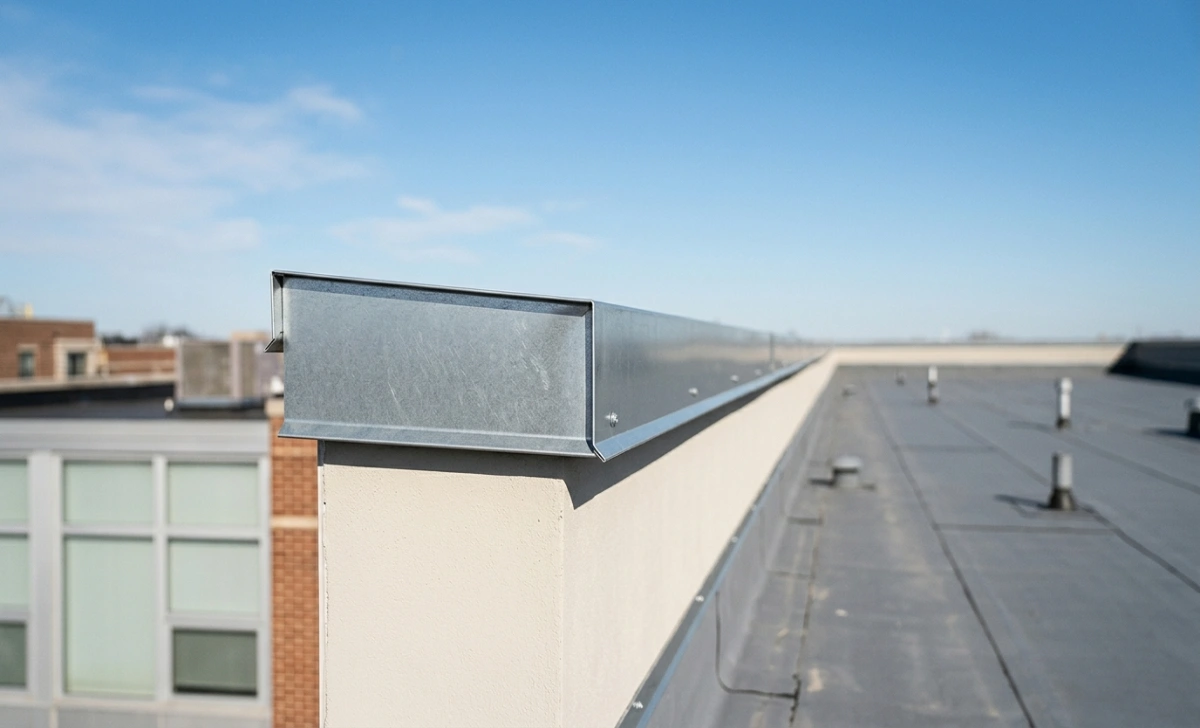
If you’ve got a flat roof or parapet walls, you might have come across the term “roofing cop” and wondered what it actually means. Let me break it down in plain terms.
A roofing cop acts as a waterproof shield for parapet walls and roof edges. It stops leaks before they start and helps your roof system last longer. In this guide, I’ll walk you through what roofing cops are, which materials work best for different homes and budgets, how to spot when yours needs replacing, and what to ask your roofer before signing anything.
Key Takeaways
- A roofing cop is a waterproof cap that sits on top of your roof’s walls to keep water out.
- This guide covers what roofing cops are, the different materials available, approximate costs, and how to choose the right option for your home. You’ll also learn how to spot signs that your coping needs attention and what questions to ask your roofer before moving forward.
What Is a Roofing Cop?
A roofing cop is a pre-made cover or cap installed on top of parapet walls and roof edges. Its job is straightforward: keep water from seeping into those vulnerable joints and transitions. The word “cop” is short for “coping,” which refers to a protective covering that caps horizontal surfaces like the tops of walls.
You’ll see coping most often on flat roofs and commercial buildings, but some homes with parapet walls use it too.
Coping does three main things:
- Protects vulnerable edges — It covers the top of walls where the roof membrane meets vertical surfaces, creating a waterproof barrier.
- Directs water away — Properly installed coping slopes slightly outward, guiding rainwater and snowmelt toward drains instead of letting it pool.
- Extends roof life — By keeping water out of the most vulnerable spots, coping prevents the kind of slow damage that leads to expensive repairs.
Think of coping as a protective cap that sits on top of your roof’s walls — like a lid on a container. Without it, water works its way into seams and joints, causing leaks, rot, and structural damage over time.
Types of Roofing Cop Materials
Different materials work better for different roof types, climates, and budgets. Here are the most common options and what you need to know about each.
Metal Coping
Metal coping — usually galvanized steel or copper — is the most durable and widely used choice. It handles extreme weather well and can last as long as your roof when installed correctly. The tradeoff is a higher upfront cost. Some metals, like uncoated steel, can rust over time if the protective layer wears away.
Aluminum Coping
Aluminum is lighter and rust-resistant, which makes it a smart fit for humid or coastal climates. It costs less than steel or copper but still gives you solid protection. The main downside is that aluminum dents more easily than heavier metals — though in my experience, that rarely affects how well it performs day to day.
Stone and Concrete Coping
Stone and concrete coping give buildings a traditional, finished look and are incredibly durable when properly supported. The big thing to watch here is weight. Stone and concrete need strong structural support beneath them, and repairs can be more complex and expensive than with metal options.
PVC and Composite Coping
PVC and composite materials are modern, budget-friendly options that pair well with TPO and similar membranes. TPO is that bright white material you see on flat or low-slope commercial roofs — it reflects heat and helps lower energy costs. PVC coping is designed to work naturally alongside it.
Here’s how the materials compare:
| Material | Best For | Durability | Maintenance |
|---|---|---|---|
| Metal | Long-term protection | High | Low |
| Aluminum | Humid climates | Moderate–High | Low |
| Stone/Concrete | Masonry buildings | High | Moderate |
| PVC/Composite | Budget-conscious, flat roofs | Moderate | Low |
Benefits of Installing a Roofing Cop
Coping might seem like a small detail, but it plays a big role in protecting your roof and everything underneath it.
Prevents Water Infiltration at Roof Edges
Even a quarter-inch gap can let water in. Once water gets inside, it can rot wood framing and damage insulation for six to twelve months before you ever see a stain on your ceiling. I’ve seen that happen more times than I’d like to count.
Protects Parapet Walls from Weather Damage
Without coping, the top of your parapet walls takes a direct hit from rain, snow, UV rays, and freeze-thaw cycles. Over time, that exposure breaks down masonry, cracks concrete, and degrades roof membranes. Coping acts like a shield — it takes the beating so your walls and roof don’t have to.
Improves Roof Drainage and Runoff
Properly sloped coping guides water toward drains or gutters instead of letting it sit on horizontal surfaces. On flat roofs, even a little standing water speeds up wear and leads to leaks. Better drainage means a longer-lasting roof.
Extends the Life of Your Roof System
Coping is a relatively small investment that prevents much larger problems. By keeping water out of the most exposed areas, it protects the roof membrane, the structure underneath, and your interior walls. That means fewer emergency repairs and a roof that actually reaches its full expected lifespan.
Where Roofing Cops Are Used
Understanding where coping goes on a roof helps you know what to look for — and what to ask your roofer about.
Parapet Wall Caps
Parapet walls are those short walls that rise above the roofline on flat or low-slope roofs. Coping caps the top of them, creating a finished edge that keeps water from soaking into the masonry or membrane below. This is the most common application you’ll see.
Flat Roof Perimeters
On flat roofs, coping seals the entire perimeter where the roof membrane meets the wall. That creates a continuous waterproof barrier around the edges — which is exactly where most flat roof leaks start when installation isn’t done right. If you’re dealing with roof damage after wet or cold weather, the perimeter coping is often the first place worth inspecting.
Roof-to-Wall Transitions
Any spot where a roof meets a vertical surface needs protection from water. Coping covers transitions like where a flat roof meets an exterior wall, or where a lower roof section meets a higher wall on a multi-level home.
How to Choose the Right Roofing Cop for Your Roof
Picking the right coping isn’t just about grabbing the cheapest option. Here’s what actually matters.
Match the Material to Your Roof Type
Different roofing systems work better with certain coping materials. PVC coping pairs naturally with TPO roofs because they’re designed to work together, while metal coping works with almost any roof type. Ask your roofer what’s compatible with your existing roof system before you decide.
Consider Your Local Climate
Climate plays a big role in how long coping lasts. In humid or coastal areas, rust-resistant materials like aluminum or PVC make more sense than steel. In cold climates, you’ll want materials that handle repeated freeze-thaw cycles without cracking — quality metal or composite options are usually the right call.
Factor in Long-Term Maintenance
Some materials need periodic attention. Metal coping might need resealing or repainting every few years, while stone and concrete may require occasional mortar joint repairs. PVC and aluminum, on the other hand, are mostly install-and-forget. Think about how much ongoing maintenance you’re realistically willing to handle.
Compare Line-Item Quotes from Multiple Contractors
Getting detailed quotes from multiple contractors helps you see exactly what you’re paying for. That way, you can spot hidden fees or missing line items before you sign anything.
Roofing Cop vs. Flashing and Drip Edge
Homeowners often confuse coping with flashing and drip edge because they all help manage water. Here’s the difference:
- Roofing cop (coping) — Covers the top of parapet walls and roof edges. Acts as a horizontal cap.
- Flashing — Thin metal pieces that seal joints and transitions where two surfaces meet. Works alongside coping to direct water.
- Drip edge — Installed along sloped roof edges to guide water into gutters. Serves a different purpose than coping.
All three work together to create a watertight roof system. Coping specifically protects horizontal wall tops, while flashing seals vertical joints and drip edge handles sloped edges.
Signs Your Roofing Cop Needs Replacement
Catching coping problems early can save you from much bigger repairs down the road. Here’s what to watch for.
Visible Rust or Corrosion
If you see rust spots or corrosion on metal coping, water can start seeping through those weak points. Surface rust might just need cleaning and resealing, but deep corrosion usually means it’s time for replacement.
Gaps or Loose Sections Along the Edge
Wind and thermal expansion can pull coping away from the wall over time. Even small gaps let water in. If you see loose or separated sections, get them looked at before they cause leaks inside.
Water Stains Near Parapet Walls
Interior water stains on ceilings or walls near the roofline often trace back to failed coping. If you notice discoloration, peeling paint, or damp spots in those areas, have a roofer inspect the coping and flashing. You can also find a local professional using a roof repair service near you to get a proper assessment quickly.
Cracking or Warping in the Material
Stone, concrete, and plastic coping can crack from age, weather exposure, or settling. Warped metal coping loses its ability to shed water properly. Either issue compromises the protective function and typically means replacement is needed.
How Much Does a Roofing Cop Cost?
There’s no single number for coping costs — they depend on several factors. But understanding what drives the price will help you evaluate quotes more confidently.
Material Cost Factors
Material choice is the biggest variable. PVC and aluminum coping cost less per linear foot than copper or stone. Metal coping typically falls in the middle range, while custom stone or copper installations sit at the high end. Your roofer can give you specific pricing based on your roof’s dimensions and the material you choose.
Labor and Installation Costs
Complex roof shapes, hard-to-reach areas, and multi-story homes all increase labor time and cost. If your existing coping needs to be removed first, that adds another layer of expense. Straightforward installations on single-story buildings with simple rooflines cost less than complicated jobs.
Why Prices Vary Between Contractors
Some contractors include coping in the overall roof replacement quote, while others list it as a separate line item. That makes comparing quotes tricky if you don’t know what you’re looking at. Always ask for line-item breakdowns so you can see exactly what each contractor is charging for materials, labor, and removal.
Questions to Ask Your Roofer Before Installing a Roofing Cop
Asking the right questions helps you evaluate contractors and feel confident in your decision.
What Material Do You Recommend for My Roof?
A qualified roofer will explain why one material fits your situation better than another based on your roof type, climate, and budget. Clear, practical recommendations are a good sign you’re dealing with someone who knows their trade.
Is Coping Included in My Roof Replacement Quote?
Some contractors bundle coping into the total roof replacement cost, while others charge separately. Clarify this upfront so you’re not surprised by extra charges later. Ask to see the line-item breakdown.
What Warranty Covers This Work?
Coping installation falls under the workmanship warranty, but coverage length and what’s included can vary. Ask how long the warranty lasts and whether it covers both materials and labor if something goes wrong.
FAQs
What is the 25% rule in roofing?
The 25% rule is a general guideline used in roofing assessments. If more than 25% of a roof’s surface is damaged or deteriorated, most professionals recommend a full replacement rather than a repair. Some insurance policies and building codes also reference this threshold when deciding whether to approve repair claims or require a new roof. It’s worth asking your roofer how they apply this rule to your specific situation.
How do you tell if a roofer is lying?
A few red flags are worth watching for. Be cautious if a contractor pushes for cash-only payment, asks you to pay everything upfront before work starts, or can’t provide a written estimate with itemized costs. Vague warranty terms, no local business address, and pressure to decide immediately are also warning signs. Always get at least two or three quotes and check reviews from past customers before committing.
What color roof increases home value?
Neutral tones — like slate gray, charcoal, tan, and muted brown — tend to appeal to the widest range of buyers and often add the most value at resale. That said, the “best” color depends on your home’s exterior, your neighborhood, and local buyer preferences. A roofing professional or real estate agent familiar with your area can give you more tailored advice.
What is the best time of year to replace shingles?
Late spring through early fall is generally the best window for shingle replacement. Temperatures between 10°C and 27°C (50°F to 80°F) allow asphalt shingles to seal properly and give crews comfortable, safe working conditions. That said, experienced roofers work year-round — it’s just worth noting that very cold or very wet conditions can affect how well certain materials adhere.
Can I install a roofing cop myself?
Technically, yes — but it’s not recommended unless you have real experience with roofing. Improper installation is one of the most common causes of coping failures. If the fit is even slightly off, water will find its way in. For most homeowners, hiring a qualified roofer is the safer and more cost-effective choice in the long run.
Does a roofing cop require regular maintenance?
Most coping materials are relatively low-maintenance, but a quick visual check once or twice a year doesn’t hurt. Look for loose sections, cracked sealant, or rust spots. Catching small issues early is almost always cheaper than waiting until water gets inside.
How long does a roofing cop typically last?
That depends on the material and local conditions. Metal coping can last 20–30 years or more with minimal upkeep. PVC and aluminum are also durable but may need attention sooner in extreme climates. Stone and concrete coping, when properly installed and supported, can last decades.
Does homeowners insurance cover roofing cop replacement?
It depends on your policy and the cause of damage. Sudden, accidental damage — like coping torn loose in a storm — is usually covered. Damage from gradual wear, poor maintenance, or age typically isn’t. Review your policy carefully and talk to your insurer if you’re unsure what’s included.