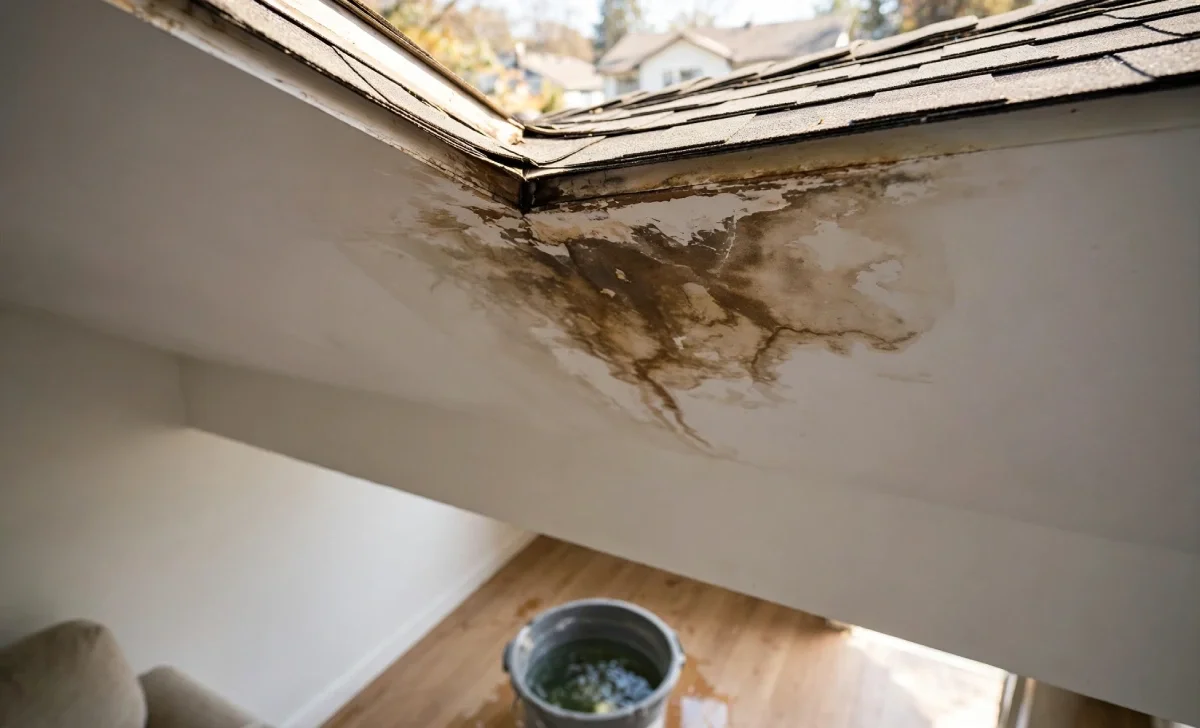
A roof leak can start as one small stain on the ceiling. If you ignore it, that stain can turn into rotten wood, soaked insulation, and mould. This guide walks you through the whole process. You will learn how to confirm a leak, find where the water enters, stop the damage for now, decide whether to hire a pro, file an insurance claim, and keep the roof from leaking again.
The cost figures in this guide are estimates for 2026. Prices change by region and by roof type, so get a written quote from a local roofer before you commit to any repair.
Signs You Have a Roof Leak
Some leaks show clear signs. Others start small and hide for months. Check the areas below before you assume the problem is the roof.
Interior Signs
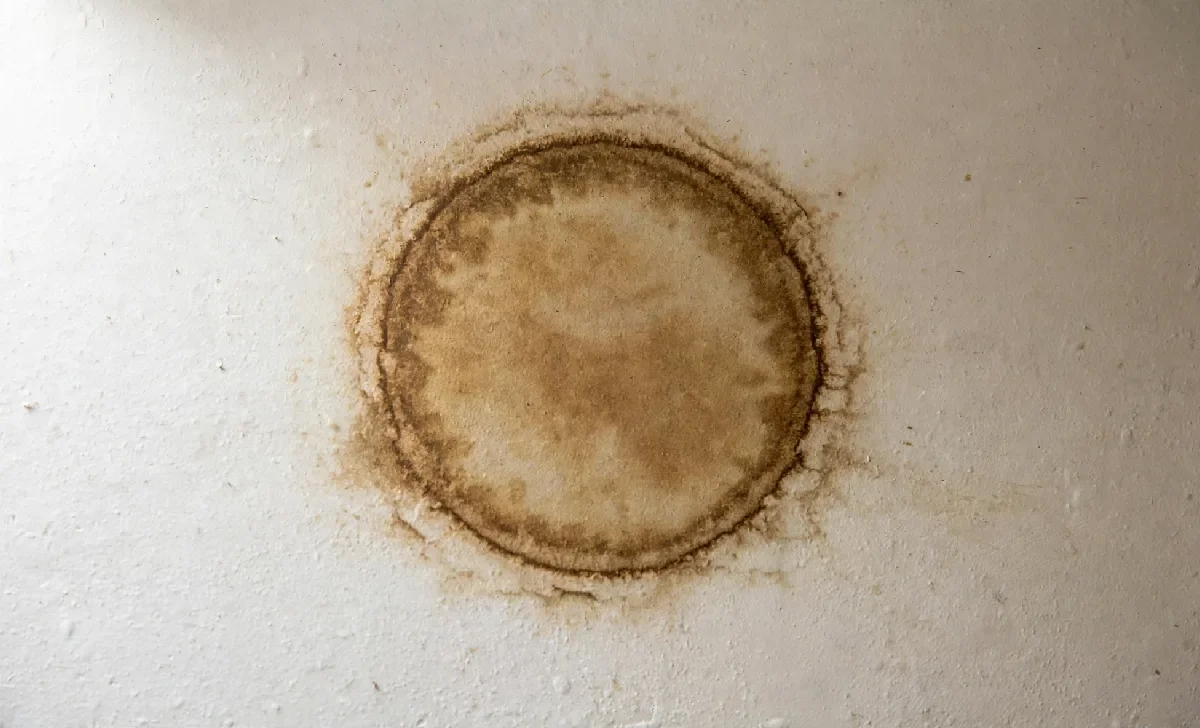
Look at your ceilings and top-floor walls first. Watch for brown or yellow water stains, bubbling or soft drywall, and paint that peels or bubbles. A ceiling that sags in one spot often holds water. Dripping sounds during or after rain are another common sign.
Attic Warning Signs
Check your attic with a flashlight on a dry day and again after rain. Look for wet or matted insulation, dark stains on the underside of the roof deck, and damp or darkened wood on the rafters. A musty smell is a warning sign too. It often means moisture has been trapped for a while.
Exterior Signs
Walk around the outside of your home from the ground. Look for missing, cracked, curled, or buckled shingles. Check the flashing around chimneys, skylights, and vent pipes. Check for granules in your gutters. Shingles lose granules as they age, and heavy granule loss can point to a worn roof.
Roof Leak or Something Else?
Water on a ceiling does not always come from the roof. Plumbing leaks, condensation in the attic, and window leaks can look similar. A plumbing leak often shows up near bathrooms or water lines and may get worse when you run water. Condensation usually appears on cold surfaces during cold weather. Use the signs above to narrow down the source before you climb the ladder.
How to Find the Source of a Roof Leak
Finding the exact entry point is the most important step. A repair in the wrong spot will not stop the leak.
Step 1: Start Inside at the Water Stain
Begin under the stain and work your way uphill, toward the roof. Water follows the slope of the roof deck and the framing, so the entry point can be several feet away from the stain. Mark the stain's location on the ceiling with a pencil or tape.
Step 2: Inspect the Attic and Roof Deck
Go into the attic with a flashlight during or right after rain. Look for active drips, wet insulation, and dark stains on the sheathing. Sheathing is the wood layer under the shingles. Follow the wet trail back toward the highest point you can reach. Note any gaps around pipes, vents, and chimneys.
Step 3: Perform a Visual Roof Inspection
From a stable ladder and on a dry day, look at the roof surface. Check for cracked or missing shingles, damaged flashing, and exposed nails. Look closely at valleys, where two roof slopes meet. Valleys carry a lot of water and wear out faster than flat sections.
Step 4: Use the Garden Hose Test
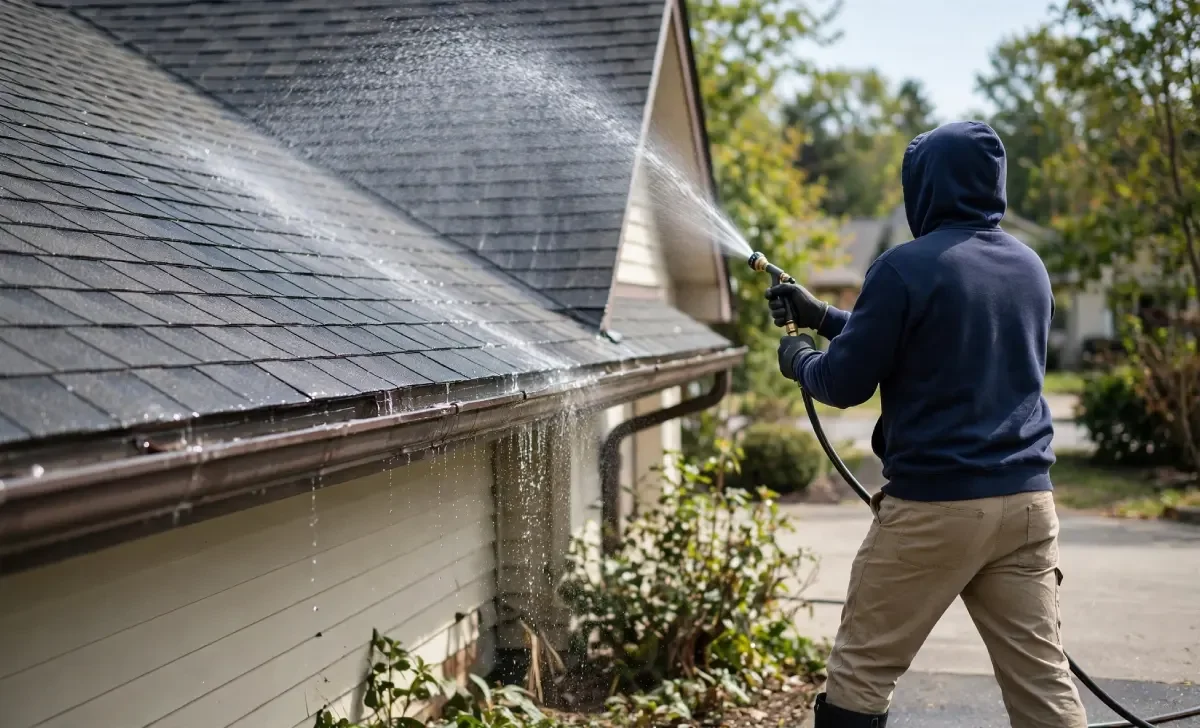
This test works well when you cannot see the leak. Have one person stay in the attic or under the stain while another works on the roof with a garden hose. Start at the bottom of the roof and spray one section for about five minutes. Move up the roof slowly. Work from bottom to top because water flowing down from above can hide the real entry point. When the person inside sees water, stop and mark that spot. Never spray near power lines or electrical equipment.
Step 5: Check High-Risk Areas
Some spots cause most leaks. Check these first:
- Vent boots: The rubber collar around plumbing vents often cracks after 10 to 15 years.
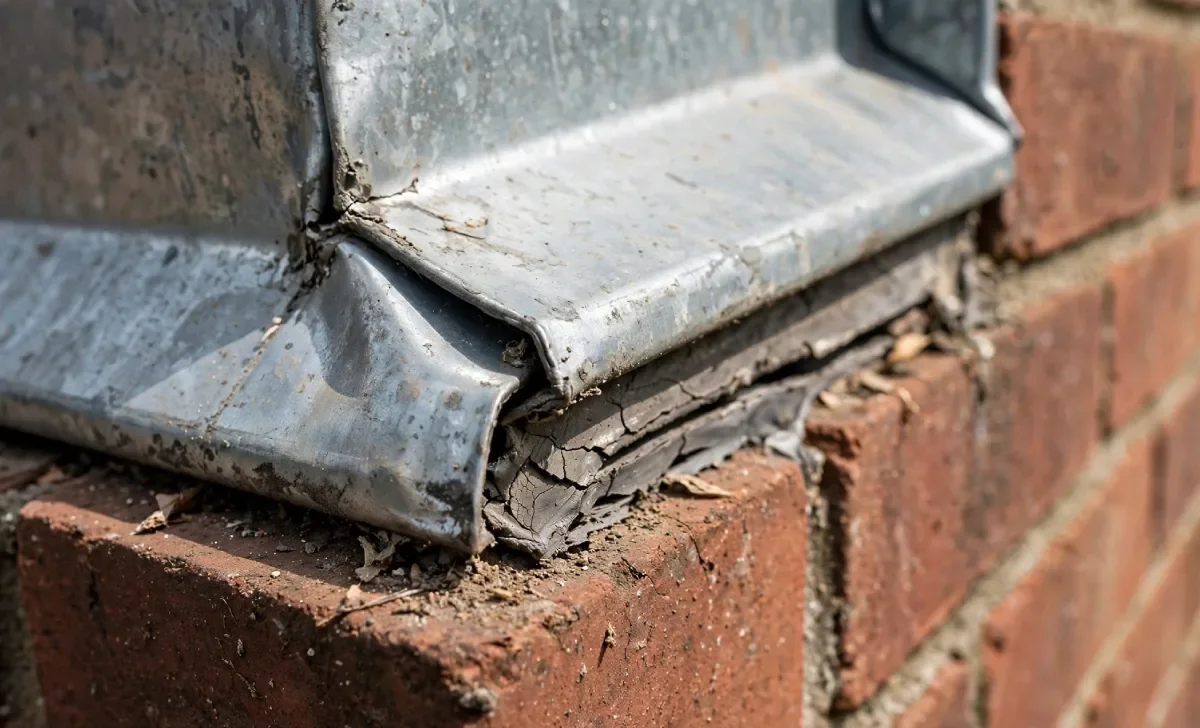
- Chimney flashing: Metal strips around the chimney can lift or separate from the brick.
- Valleys: Water collects here, and shingles wear faster.
- Skylights: Seals and flashing around skylights can fail over time.
- Roof penetrations: Any pipe, wire, or vent that passes through the roof needs a tight seal.
Step 6: Use Advanced Detection Methods
When the source is still unclear, a professional can use an infrared camera to find cold or damp areas under the roof. A moisture meter can measure wet wood and drywall without tearing it open. These tools cost more than a garden hose, but they save time when the leak is hidden.
Emergency Roof Leak Fixes
When water is coming in right now, your goal is to limit damage. A temporary fix buys you time until a roofer can make a permanent repair.
Safety First
Do not go on the roof during rain, high wind, or when the shingles are wet. Do not climb onto the roof alone at any time. If you cannot reach the leak from a stable ladder, wait for a professional.
Indoor Water Management
Place a bucket or tub under the drip. Move furniture, rugs, and electronics away from the area. Lay towels or plastic sheeting on the floor. If a ceiling bulges with water, poke a small hole in the lowest point with a screwdriver. Let the water drain into the bucket. A small, controlled hole is safer than letting the whole ceiling fall.
Attic Water Diversion
In the attic, place a bucket under the drip. If water runs along the rafters, lay a sheet of plywood or a plastic tarp on the insulation to direct the water into a container. Keep insulation dry where you can, because wet insulation loses its ability to insulate.
Emergency Tarping (Exterior, Only When Safe)
A tarp can cover a damaged area until a roofer arrives. Use a heavy-duty tarp that is larger than the damaged section, with at least two feet of overlap on every side. Secure the tarp to the roof with roofing nails or screws through the tarp, or use 2x4 boards on the ridge and the eave to hold it down. Do not nail through the tarp into the roof deck in a way that creates new holes. Remove the tarp as soon as the permanent repair is done.
Temporary Sealants and Patch Materials
Several products work for short-term fixes:
- Roofing cement: A thick paste for small cracks and gaps around flashing. Apply it with a putty knife and let it cure before rain.
- Butyl or sealant tape: Flexible tape that sticks to clean, dry metal, shingles, or rubber. It works well on small holes and cracked vent boots.
- Liquid rubber sealant: A brush-on coating for small areas. Apply it to a clean, dry surface in mild weather, and read the label for drying time.
- Patch kits: Pre-cut fabric and sealant for specific materials, such as metal roofing.
Read each product label for surface type and temperature limits. A temporary fix is a stopgap only. Plan a permanent repair soon after.
What Not to Do
Avoid these common mistakes:
- Do not climb onto a wet, icy, or windy roof.
- Do not use duct tape or household caulk on roofing. They fail quickly outdoors.
- Do not ignore a leak because it "stopped" after the rain ended. Water may still be trapped in the insulation.
- Do not remove shingles to look for the leak unless you know how to replace them correctly.
DIY vs. Professional Roof Leak Repair
Some repairs are reasonable for an experienced homeowner. Others need a licensed roofer. Choose the right path based on the size of the problem, the roof's slope, and the risk involved.
Repairs You Can DIY Safely
Small, isolated problems are usually safe for an experienced homeowner on a low, stable roof. Examples include replacing one or two damaged shingles, resealing a small area of flashing with roofing cement, and replacing a cracked vent boot. You will need a stable ladder, roofing nails, a pry bar, roofing cement, a replacement shingle or boot, and a helper.
Repairs That Require a Professional
Call a roofer for any of the following:
- A sagging roof or any sign of structural damage
- Multiple leaks or leaks you cannot find
- Rotten decking or wet framing
- A steep roof or one you cannot reach safely
- Leaks around solar panels, skylights, or large chimneys
- Electrical hazards, such as water near wiring or light fixtures
Cost and Warranty Comparison
DIY repairs usually cost less in materials. Labour is the main cost of professional work. A roofer also carries insurance and can handle the job faster and more safely.
Warranty matters too. Many shingle manufacturers require installation by a licensed contractor to keep the warranty valid. If a DIY repair causes a later leak, the manufacturer may refuse to cover it. Check your warranty before you start work. A repair that voids the warranty can cost far more than the repair itself.
Roof Leak Repair Costs in 2026
Costs vary by region, roof material, roof pitch, and how much damage is hidden. The table below shows typical estimates for common repairs. Use it as a planning guide, not a fixed price.
| Repair Type | Typical Price Range | Average |
|---|---|---|
| Small shingle patch (missing or cracked) | $150 to $500 | $350 |
| Vent boot replacement | $150 to $400 | $275 |
| Pipe collar or flashing seal | $200 to $600 | $400 |
| Valley flashing repair | $400 to $1,000 | $700 |
| Chimney flashing replacement | $500 to $1,800 | $950 |
| Sheathing repair (per sheet) | $200 to $500 | $350 |
| Emergency tarp and temporary seal | $200 to $600 | $400 |
What Drives the Cost Up
Seven factors affect the final price:
- Repair type: Flashing and chimney work cost more than shingle patches.
- Accessibility: Steep, high, or hard-to-reach roofs take longer.
- Extent of damage: Hidden water damage adds carpentry work.
- Material condition: Old materials can be brittle and hard to match.
- Emergency or scheduled work: Same-day service often costs more.
- Roof pitch: Steeper slopes need more safety equipment and time.
- Regional labour rates: Prices differ from one area to another.
Repair or Replace?
Repair is usually the better choice when the roof is in good shape overall, and the damage is limited to one area. Replacement makes more sense when the roof is near the end of its life, when leaks appear in several places, or when the decking is rotten. As a rough guide, many asphalt shingle roofs last about 20 to 30 years. If your roof is past that age and leaking in more than one place, get a quote for replacement alongside a repair estimate.
When to Call a Professional Roofer
Some leaks can wait a few days. Others need help right away.
Call immediately if:
- You cannot find the source of the leak.
- Water is coming in quickly or in large amounts.
- A ceiling is sagging or bulging.
- You see water near electrical wiring or fixtures.
- You smell a strong musty odour.
Schedule service soon if:
- You have more than one leak.
- A leak keeps coming back after a repair.
- Your roof is 20 years old or older.
Watch for these red flags: rotten decking, visible structural damage, or leaks around solar panels. These problems need an expert inspection.
What a Professional Inspection Includes
A good roofer inspects the roof surface, the flashing, the attic, and the interior ceilings. They may use a moisture meter or thermal imaging. You should receive a written report with photos and a repair estimate.
How to Choose a Licensed, Insured Roofer
Ask for proof of license and liability insurance. Check that workers' compensation coverage is in place. Get at least three written quotes. Be wary of anyone who asks for full payment up front or pressures you to sign the same day. Ask about the workmanship warranty and the manufacturer's warranty on materials.
Does Home Insurance Cover Roof Leak Repair?
Often, yes, but only in certain cases. Insurance pays for sudden, accidental damage. It usually does not pay for gradual problems.
What Is Covered and What Is Not
Typically covered:
- Damage from storms, wind, hail, or fallen trees
- Sudden damage that happens over a short period
Typically not covered:
- Wear and tear, such as ageing shingles
- Leaks from poor maintenance
- Slow leaks that go unnoticed for months
Read your policy carefully. Coverage varies, and your deductible may be higher than the repair cost.
How to File a Roof Leak Insurance Claim
- Document the damage. Take clear photos and video before you make any changes.
- Protect the property. Make a temporary repair to prevent more damage. Keep receipts for materials.
- Contact your insurer. Report the claim as soon as you can. Many policies have deadlines.
- Wait for an adjuster. The insurer may send an adjuster to inspect the damage.
- Get repair estimates. A written estimate from a licensed roofer helps support your claim.
- Make permanent repairs after approval. Wait for the adjuster's inspection before you replace materials.
Documentation Checklist
- Photos of the damaged roof, attic, and ceilings
- Receipts for temporary repairs and materials
- A written list of damaged items
- Repair estimates from licensed roofers
- The date the damage was first noticed
- Your policy number and claim number
Roof Leak Prevention and Maintenance Checklist
Regular checks catch small problems before they become costly. Schedule your inspections in spring and fall.
Spring Roof Maintenance
- Check your ceilings and attic for water stains or damp insulation from winter.
- Clean gutters and downspouts so water drains away from the roof edge.
- Look at flashing around chimneys, vents, and skylights for gaps or rust.
- Remove leaves, branches, and other debris from the roof surface.
Fall Roof Maintenance
- Clear debris before the leaf drop and winter storms.
- Inspect seals and caulk around roof penetrations.
- Trim tree branches that hang over the roof.
- Check for loose or missing shingles after summer storms.
Year-Round Monitoring
- Watch ceilings after heavy rain or wind.
- Check the attic once a year for signs of moisture.
- Schedule a professional inspection every year or two, especially for roofs over 15 years old.
- Keep records of repairs and inspections. They help with insurance claims and home sales.
Conclusion
Finding and fixing a roof leak takes a clear sequence. Confirm the leak, trace the water to its source, stop the damage with a temporary fix, decide between DIY and a professional, check your insurance, and then prevent the next leak with regular inspections.
Start today. Check your ceilings and attic, and if you cannot find the source, book a professional inspection. A quick repair now costs far less than a rebuilt ceiling later.
FAQs
How do I find the source of a roof leak?
Start in the attic and follow the water stain back to its highest point. Water often travels several feet from the actual entry point. If the source is still unclear, try a garden hose test on the roof, working from the bottom up while someone watches inside.
What is the fastest way to stop a roof leak?
Place a bucket under the drip and move valuable items away from the area. If the ceiling bulges, make a small hole to drain the water. If the weather is calm and the roof is safe to reach, apply a tarp or roofing tape over the damaged area. Never climb onto a wet or windy roof.
How much does roof leak repair cost in 2026?
Most repairs cost between $350 and $1,500. Small shingle patches often fall between $150 and $500. Chimney flashing replacement averages around $950. Emergency tarping can add $200 to $600. Get a written quote from a local roofer for an accurate price.
Does homeowners insurance cover roof leaks?
Insurance usually covers sudden damage from storms, wind, hail, or fallen trees. It usually does not cover leaks caused by wear and tear, poor maintenance, or slow deterioration. Check your policy and contact your insurer as soon as you find the damage.
Can I repair a roof leak myself?
Small, isolated repairs such as one shingle or a small flashing seal can be DIY work for an experienced homeowner on a low, stable roof. Structural damage, steep roofs, multiple leaks, and electrical hazards need a professional.
What is the best temporary roof sealant?
Roofing cement works well for small cracks and gaps. Butyl sealant tape works on small holes and cracked vent boots. Liquid rubber sealant works for small coated areas. Read each label for surface type and temperature limits, and plan a permanent repair soon after.
How do I prevent roof leaks?
Inspect your roof every spring and fall. Clean gutters, check flashing and seals, remove debris, and trim overhanging branches. Schedule a professional inspection every year or two.
What happens if I ignore a roof leak?
Small leaks can grow into bigger problems over time. Water can rot the roof decking, soak the insulation, and encourage mould. A repair that costs a few hundred dollars today can become a much larger bill if the damage spreads.