
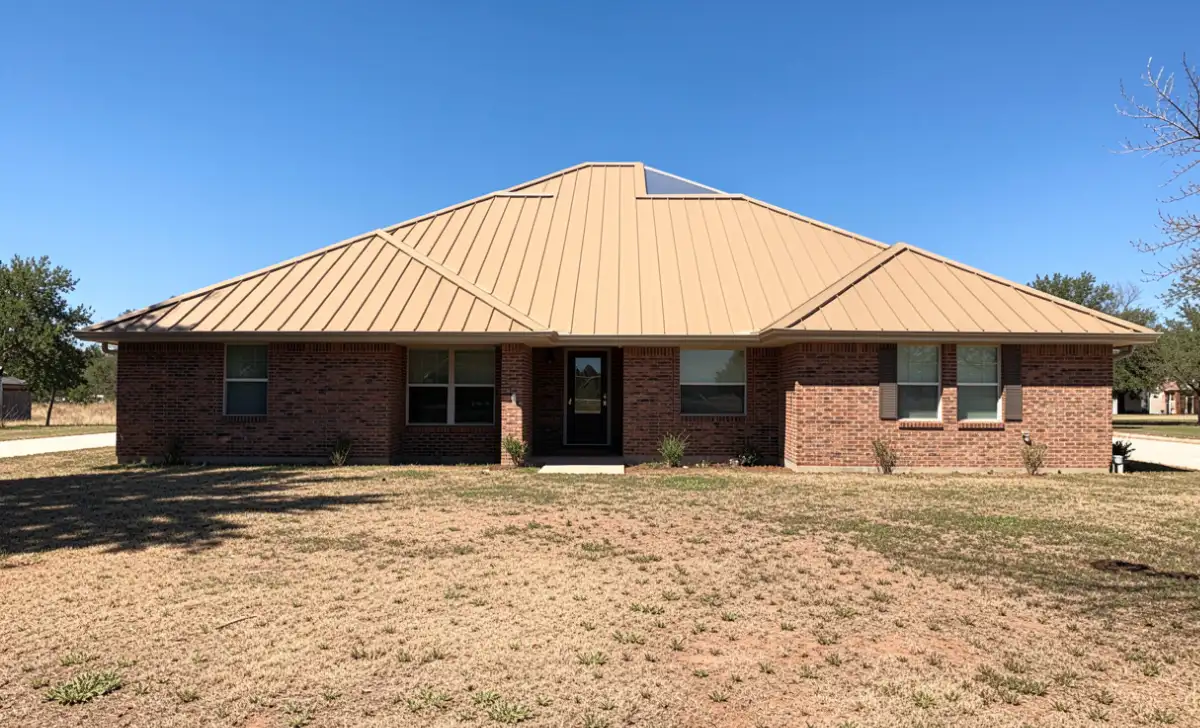
Metal roofing in Central Texas holds up against intense heat, hailstorms, and flash flooding better than most other roofing materials. Homeowners across Austin, Waco, San Antonio, and surrounding areas are choosing standing seam and Galvalume steel panels for their long service life and lower cooling costs.
Before you hire a contractor or pick a panel style, you need to understand how Central Texas weather affects metal roofing performance, what installation actually costs in 2026, and what separates a quality installation from one that fails in five years.
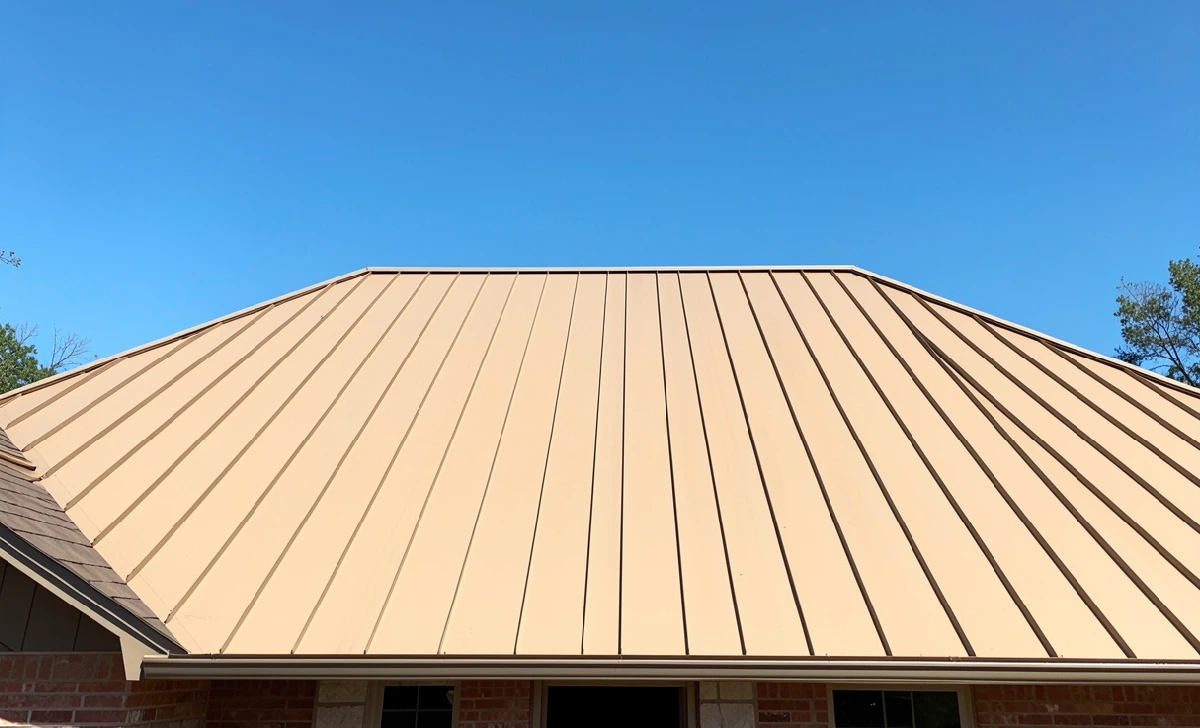
1. Why Metal Roofing Makes Sense in Central Texas
Central Texas sits in one of the most demanding roofing climates in the United States. Summers push temperatures past 105°F for weeks at a time. Hailstorms roll through the I-35 corridor every spring. And sudden heavy rain tests drainage on every roof in the region.
Asphalt shingles typically last 15 to 20 years under those conditions before granule loss and UV degradation force a replacement. Metal roofing, installed correctly, lasts 40 to 70 years in the same environment.
Beyond longevity, metal reflects solar radiation instead of absorbing it. A properly coated metal roof can cut attic temperatures by 20 to 30 degrees, which means your AC unit runs less during July and August — the two months that define your annual energy bill.
The upfront cost is higher. But when you calculate the cost per year over a 50-year period, metal almost always comes out ahead, especially in a climate that destroys softer roofing materials faster than the national average.
2. Best Metal Roofing Materials for the Texas Climate
Not every metal performs equally in Texas heat and humidity.
Galvalume Steel is the most common choice in Central Texas. It combines steel’s strength with a zinc-aluminum coating that resists rust. Most Galvalume panels carry a 25-year paint warranty and 40-year corrosion warranty. For residential homes in Austin, Killeen, or Temple, this is typically the most cost-effective option.
Aluminum weighs less than steel and resists corrosion without a coating. Coastal areas near Corpus Christi benefit from aluminum because salt air accelerates rust on steel. Central Texas is far enough inland that Galvalume steel handles the environment well at a lower cost than aluminum.
Copper and Zinc are premium options that develop a natural patina over time. These materials suit historic homes or high-end custom builds, but most homeowners in Central Texas won’t see a return on that premium investment.
Stick with Galvalume steel or aluminum for standard residential projects. Match the material to your budget and your proximity to coastal salt air.
3. Standing Seam vs. Exposed Fastener: Which One Fits Your Home
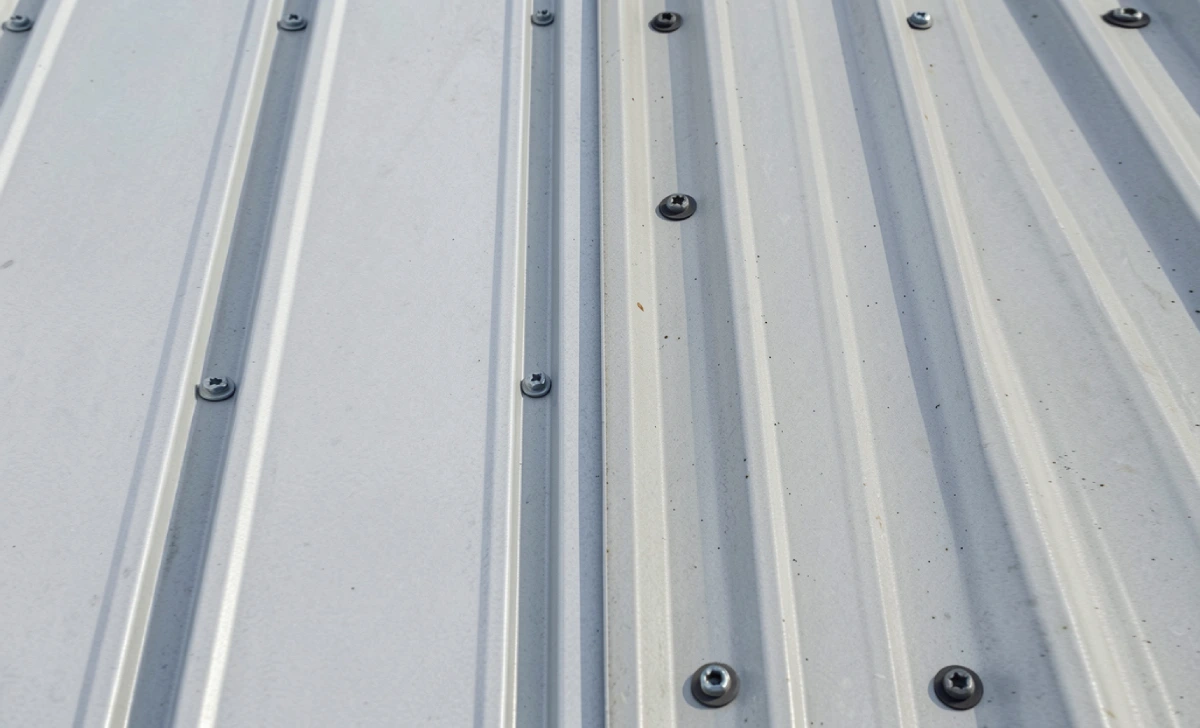
Two styles dominate the residential metal roofing market in Texas: standing seam and exposed fastener (also called corrugated or ribbed metal panels).
Standing seam hides all fasteners beneath raised seams that run vertically along the roof. Rain, debris, and UV rays never touch the screws. This system expands and contracts with temperature changes without stressing the fasteners — a key advantage in Texas where roofs swing from 20°F winter nights to 105°F summer afternoons. Standing seam is the better long-term system, but it costs 30 to 50 percent more than exposed fastener.
Exposed fastener panels use screws driven directly through the metal into the decking. The screws are visible on the roof surface and come with rubber washers that compress to create a watertight seal. Over time, Texas heat degrades those washers, and the screws can back out slightly from thermal movement. A quality exposed fastener roof installed with good screws and proper torque still performs well — it just requires more periodic inspection than standing seam.
For a permanent primary residence, standing seam is worth the extra cost. For barns, workshops, agricultural buildings, or budget-conscious projects, exposed fastener delivers solid performance at a lower price.
4. How Much Does Metal Roofing Cost in Central Texas
Pricing in 2026 for metal roofing in the Austin-San Antonio-Waco triangle runs between $9 and $18 per square foot installed, depending on the system, roof complexity, and contractor.
A 2,000-square-foot home with a simple gable roof typically lands between $18,000 and $28,000 for a standing seam installation. Exposed fastener systems on the same home run $12,000 to $18,000. Multiple valleys, dormers, skylights, and steep pitches add to that number.
Material costs account for roughly 40 percent of the total. Labor makes up the rest. Contractors in Austin charge more than those in smaller markets like Belton or Lampasas, so getting three bids from local crews makes sense.
Don’t anchor your decision to the lowest bid alone. A poorly installed metal roof leaks at the seams, fails at the ridge cap, and costs as much to repair as a full replacement.
5. Energy Efficiency and Cooling Benefits
A reflective metal roof with a cool-roof coating qualifies for ENERGY STAR certification when the solar reflectance meets minimum thresholds. In Central Texas, this matters because cooling costs dominate annual utility bills.
A standard dark asphalt shingle absorbs 90 percent of solar radiation and converts it to heat. A light-colored Galvalume panel with a Kynar-based paint reflects 60 to 70 percent of that radiation. Combine that with proper attic ventilation and you can reduce cooling load by 10 to 25 percent, according to the Oak Ridge National Laboratory.
Lighter paint colors — cream, light gray, and tan — reflect the most heat. If you want a darker color for aesthetic reasons, ask your contractor for a Cool Roof-rated paint with a high Solar Reflectance Index (SRI). Manufacturers like Sherwin-Williams and PPG both offer Kynar 500-based finishes designed for high-heat climates.
6. Hail and Storm Performance
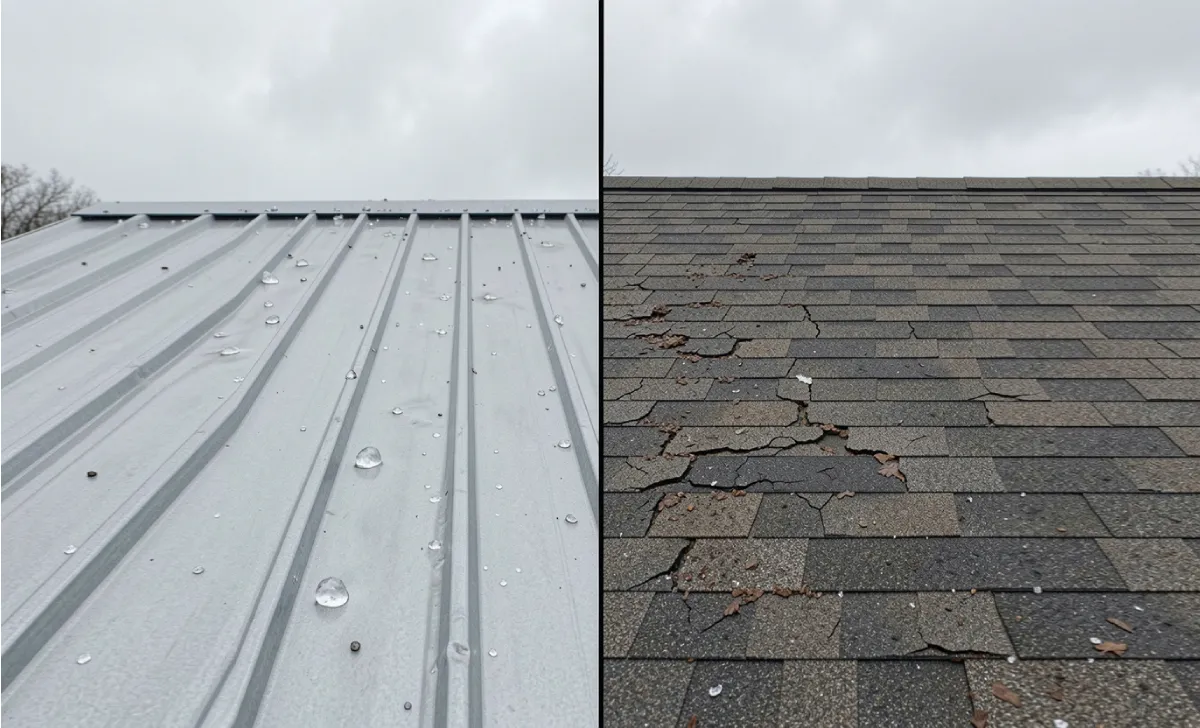
Central Texas sits in what insurance adjusters call Hail Alley. The corridor from San Antonio north through Austin and Waco sees some of the highest hail frequency in the country, with golf-ball-sized stones documented in multiple counties every spring.
Metal roofing carries a Class 4 impact resistance rating — the highest available — when tested to UL 2218 standards. That rating matters because many Texas insurance companies offer discounts of 20 to 30 percent on homeowner premiums for roofs with Class 4 certification.
Hail dents metal but rarely cracks or penetrates it. Asphalt shingles crack, bruise, and lose granules, which accelerates aging and voids warranties. After a hail event, a dented metal roof typically keeps working without leaks. A damaged asphalt roof often needs full replacement within two to three years.
Just like freeze-thaw cycles damage roofing systems in colder states — as documented in this breakdown of winter roof damage from Virginia — the thermal expansion and contraction cycles Central Texas roofs experience through hot summers and cold fronts stress low-quality materials over time. Metal handles those cycles better than any alternative.
7. How Long Metal Roofs Last in Texas Heat
Steel and aluminum don’t crack, rot, or grow mold. The coatings degrade before the metal does.
A Galvalume steel roof with a Kynar 500 paint finish typically holds its color and corrosion resistance for 30 to 40 years before significant maintenance is needed. The structural steel underneath can last 60 years or longer if no physical damage occurs.
UV exposure is the biggest factor in Central Texas. Cheap polyester paint finishes fade within 10 years. Kynar 500 (polyvinylidene fluoride) finishes hold color significantly longer. When comparing bids, ask specifically what paint system the contractor is using and get the manufacturer’s warranty in writing.
Gutters and trim components often fail before the roof panels themselves. Clean gutters twice a year in Central Texas — spring debris from cedar and oak, and fall leaves — to prevent water backup that corrodes trim metal at the eave.
8. Finding a Reliable Metal Roofing Contractor in Central Texas
Metal roofing requires different skills than asphalt shingle work. A general roofer who primarily installs shingles may not know how to properly flash a standing seam panel at a wall, set the correct screw torque on exposed fastener panels, or cut and fold trim metal without cracking the paint.
Ask every contractor these questions before signing anything:
- How many metal roofs have you installed in the last 12 months?
- Do you have manufacturer certification from your panel supplier?
- Can you provide three local references from metal roofing jobs completed in 2024 or 2025?
- Who pulls the permit, and do you handle that process?
Check their license with the Texas Department of Licensing and Regulation and verify their insurance certificate lists your project address. A legitimate contractor provides both without hesitation.
9. Permits and HOA Rules in Texas
Texas does not require a state roofing license, but most Central Texas cities — Austin, Round Rock, Waco, New Braunfels — require a building permit for full roof replacements. The permit triggers an inspection that confirms proper decking, underlayment, and flashing installation.
If your home sits in an HOA, review your CC&Rs before choosing a panel profile or color. Many Texas HOAs restrict visible metal roofing to specific colors or prohibit exposed fastener panels on street-facing roof planes. Getting written HOA approval before you sign a contract avoids costly color changes after installation.
10. Metal Roofing Maintenance Schedule
Metal roofs require far less maintenance than asphalt, but they’re not zero-maintenance.
Annual: Walk the roof line from the ground or use binoculars to check for visible dents, lifted panels, or damaged trim. Clear debris from valleys and gutters.
Every 3 years: Have a contractor do a close inspection of all penetrations — pipe boots, skylights, HVAC curbs — and check screw torque on exposed fastener roofs.
Every 10 years: Inspect paint condition and touch up any areas showing bare metal. Recoat pipe boots and sealants around penetrations.
A metal roof that gets this basic attention performs for decades without major repair costs.
Expert Tips
Work with a contractor who orders panels from a local roll former rather than shipping pre-cut panels from out of state. Local roll forming means panels cut to your exact roof dimensions, fewer seams, and faster installation.
Request a written warranty that covers both the material and the installation labor. Manufacturer warranties cover the panel. Only the contractor’s warranty covers the workmanship.
If your attic has no ridge vent or soffit vents, address ventilation before the new roof goes on. Trapped heat degrades roofing fasteners and decking from inside, regardless of what’s on top.
Common Mistakes to Avoid
Choosing a contractor based on price alone. A $4,000 savings on installation can cost $15,000 in repairs if the contractor cuts corners on flashing or uses inferior fasteners.
Skipping the underlayment. Some contractors skip synthetic underlayment to save money. In Texas, where hailstones occasionally crack panel paint, underlayment provides a critical backup layer.
Ignoring attic ventilation. Metal reflects heat from the outside, but poor ventilation traps heat inside the attic and undermines the cooling benefit.
Not checking for manufacturer certification. Panel manufacturers like ABC Metal Roofing, Metal Sales, and McElroy Metal offer installer certification programs. Certified installers typically receive better warranty backing.
Assuming all metal roofs look the same. Standing seam, corrugated, and stone-coated steel panels all look very different. Ask your contractor for physical samples and photos of completed local jobs before you commit.
Conclusion
Metal roofing in Central Texas is a long-term investment that pays off through lower energy costs, fewer replacements, and better performance against hail and extreme heat. The material itself is proven. The outcome depends almost entirely on which contractor installs it and which system you choose for your specific home and budget.
Get three bids from certified local installers. Ask for the manufacturer warranty in writing. Confirm permits get pulled before work starts. Do those three things and you give yourself the best shot at a roof that performs for the next 40 to 50 years without major headaches.
If you’re ready to move forward, start by calling two or three local contractors this week and ask them specifically about their metal roofing experience — not their general roofing experience. The difference in their answers will tell you everything you need to know.
FAQs
Does metal roofing increase home resale value in Central Texas?
Yes. Appraisers and buyers recognize metal roofing’s longevity. Remodeling Magazine’s Cost vs. Value data consistently shows metal roofing recovers 60 to 80 percent of installation cost at resale, and in Texas markets where buyers understand hail risk, a Class 4-rated metal roof can be a selling point.
Will metal roofing be loud during rain in Texas?
Only if installed over open framing without solid decking or underlayment. A metal roof installed over OSB decking and synthetic underlayment sounds the same as an asphalt roof during rain. Most Central Texas homes use solid decking, so noise is rarely an issue.
Can I install metal roofing over my existing asphalt shingles?
Texas building codes in most jurisdictions allow one overlay. Your contractor should inspect the existing decking for rot or damage before deciding. An overlay saves on tear-off costs but adds weight and can trap moisture if the old shingles are already saturated or damaged.
How do I know if my contractor is pulling a permit?
Ask for the permit number before work begins. You can verify it through your city’s online permit portal. Never let a contractor start work without an active permit in your name.
Does metal roofing attract lightning?
Metal conducts electricity but does not attract lightning any more than an asphalt roof does. The National Lightning Safety Institute confirms that metal roofing is no more susceptible to lightning strikes than other materials. If a strike does occur, metal is non-combustible — a significant safety advantage over wood or asphalt.