
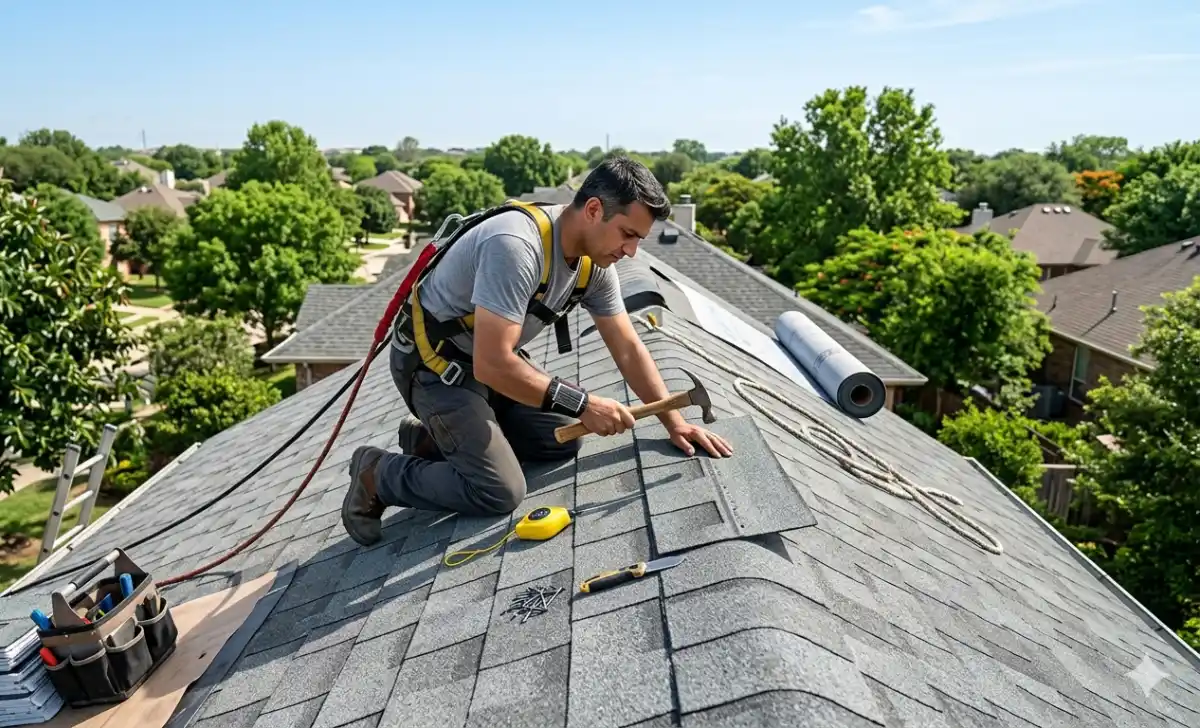
There’s a moment every homeowner dreads—looking up and realising the roof isn’t going to last another winter. Two questions hit at once: Can I do this myself? And what’s it actually going to cost?
The honest answer to both: it depends. DIY roof installation is absolutely doable on the right house, by the right person. But it isn’t a weekend project you can wing. It takes several days of physical work at height, proper tools, and a clear-eyed decision about whether your specific roof is something you should be tackling at all.
This guide walks you through the full process of how to roof a house—from tear-off to final seal—covering the tools, the steps, the mistakes to avoid, and how to honestly decide if DIY is the right call for you.
Is DIY Roof Installation Worth It?
Before you order shingles, sit with this question seriously.
Labour makes up 40–60% of most professional roofing quotes. On a standard home, that can mean saving £1,500–£4,000. That sounds great—until you add up dumpster hire, a safety harness, tool rentals, underlayment, flashing, and the real possibility of fixing something that went wrong the first time.
The savings also narrow fast on complicated roofs. Multiple valleys, dormers, chimneys, or a steep pitch changes the picture entirely. And many shingle manufacturers only honour warranties with professional installation—worth checking before you buy materials, especially if you ever need to make a roof insurance claim down the line.
Quick gut check:
- Do you have 5–7 full days available?
- Are you comfortable on a ladder and walking a sloped surface?
- Is the pitch under 6/12 (6 inches of rise per foot of run)?
- Is the roof simple—one or two planes, few penetrations?
Mostly yes? Keep reading. Several no’s? Get a few professional quotes and compare properly first.
Safety Comes First
Roofing ranks among the more hazardous home improvement jobs. I fell off a roof once—only about 10 feet up, mostly bruises—but it completely changed how I approach every job since.
Before you climb up, make sure:
- The pitch is walkable (under 6/12 for DIYers)
- Weather is dry, calm, and between 10–27°C
- You have a fall protection harness, rope, and anchor (around £80–£120)
- Rubber-soled boots and knee pads are on
- Your ladder is rated for your weight, extends 3 feet above the roofline, and is tied to the eave
- Anyone on the ground has a hard hat—falling nails are no joke
Don’t skip the harness because it feels unnecessary. It isn’t.
Also check local rules. Most areas require a building permit for a full DIY roof replacement. Skipping that step creates headaches with insurance and resale later.
Tools and Materials You’ll Need
Tools:
- Roofing tear-off shovel and pry bar
- Utility knife with hook blades
- Chalk line and tape measure
- Tin snips, stapler, hammer
- Circular saw (for deck repairs)
- Roofing nailer with compressor (optional but worth it)
- Extension ladder and scaffolding
Materials:
- Asphalt shingles (add 10% for waste)
- Starter shingles and ridge cap shingles
- 15- or 30-lb roofing felt paper
- Self-stick ice-and-water underlayment
- Drip edge, valley, step, and dormer flashing
- 1¼” zinc-coated roofing nails
- Roof sealant (I use Lexel—holds up better than silicone or asphalt-based products)
On roof installation cost: Realistically, DIY materials for a standard home run £1,100–£2,100 including dumpster hire and safety gear. Professional installation for the same house typically runs £3,000–£7,000+. The gap is real—but only if the job goes smoothly. For current local pricing, checking roof repair costs near you helps build an honest comparison.
Roof Installation Steps: The Full Process
Here’s the new roof installation process in the order that actually works. These are the core roof installation steps—rushing any one of them tends to show up as a leak two winters later.
Step 1: Tear Off the Old Roof
Protect landscaping with tarps and park a dumpster close to the house. Pry off ridge cap shingles first, then use the tear-off shovel starting at the ridge, pushing everything down toward the eave. Remove or pound flat every old nail—even a slightly raised nail will damage your new shingles.
Step 2: Repair the Deck
Walk the exposed plywood or OSB and check for soft spots or rot. Cut out damaged sections back to a joist on each side and replace with the same thickness material—usually 12mm. Sweep clean before moving on.
Step 3: Install Drip Edge on the Eaves
Hold the drip edge snug against the fascia and nail every couple of feet with 1¼” roofing nails. It’s not always code-required, but it prevents water from rotting the fascia and deck edges—worth doing every time. The drip edge on the gable (rake) ends goes on after the underlayment, not before.
Step 4: Apply Ice Barrier
In colder or severe-weather areas, self-stick ice-and-water underlayment is either required or simply smart. Line the lower edge with the drip edge, peel the backing as you unroll, and keep it flat—ripples can show through the finished shingles. Overlap each upper course by at least 50mm.
Step 5: Lay Roofing Felt Paper
Roll out felt from eave to ridge, overlapping each upper course over the lower by at least 50mm. Staple every 30cm—undersized felt tears underfoot and is a fall hazard. Run the final row over the ridge and drape it onto the other side for a watertight lap at the peak.
Step 6: Install Valley Flashing
Valleys are the most leak-prone spots on any roof. Self-stick underlayment goes in first, pressed firmly into the valley crease. Felt paper goes on top, then metal flashing nailed along the outer edges only—no nails on the exposed centre. Snap chalk lines 4–8cm either side of the valley and run shingles vertically along those lines for a clean finished edge.
Step 7: Install Vents
Run a bead of sealant under each vent’s flashing, set it over the opening, nail through the flashing, and dab sealant on each nail head. Don’t nail through the downhill flashing edge—shingles still need to slide underneath it.
Step 8: Lay Starter and Field Shingles
Starter shingles go along the eave first, adhesive strip facing up, hanging about 12mm past the drip edge. Five nails per shingle, 5–8cm up from the bottom.
Then work field shingles from the eave toward the ridge. Five nails per shingle, nailed just above the adhesive strip. Stagger the seams between rows. Establish your reveal—the exposed height of each row, typically 125–165mm—and snap a chalk line every few rows to keep things straight.
Step 9: Shingle Around Vents
Slide lower shingles under the vent flashing, nail through the flashing, and seal each nail. Upper shingles go on top, cut to fit. Nail close to the flashing without going through it.
Step 10: Cap the Ridge
Wrap field shingles from both sides over the peak, then cover with ridge cap shingles. Install them so the prevailing wind blows over them, not into the seams. On a hip roof, cap the hip ridges first, then finish the main ridge on top.
Step 11: Install Step and Dormer Flashing
Run self-stick underlayment at least 15cm up any adjoining walls first. Install shingles up to the wall, then work step flashing one piece per shingle row, each piece nailed near the top so the next one covers the nail. Existing flashing can be reused in a pinch, but removing the siding and fitting fresh flashing gives a much better result.
Step 12: Seal Everything
Seal every exposed nail head on vents and stack flashing. Seal where rubber pipe boots meet the vent pipes. Skip silicone—it doesn’t bond well. Skip asphalt-based sealants—they crack in direct sun. Lexel is clear, bonds to almost anything, and lasts. Then sweep all debris off the roof before you come down.
Once it’s done, add these sealed areas to your regular roof maintenance routine and check them every few years, especially after severe weather.
Mistakes That Cause Leaks Later
- Skipping deck repairs—small rot spreads under new shingles
- Wrong nail placement—too high, too low, or angled means shingles lift in wind
- Rushing flashing details around chimneys and walls—most leaks start here
- Poor attic ventilation—traps heat and moisture, shortens shingle life noticeably
- Using the wrong sealant—cracks within a few years and lets water in quietly
FAQs
Is DIY roof installation actually worth it, or should I hire a professional?
On a simple, low-pitched roof it often is. On anything steep, multi-layered, or tall, the risk and physical demand usually outweigh the savings. Get professional quotes first—the comparison makes the decision much clearer.
How long does it take to roof a house yourself?
Four to seven full days for a typical single-storey home with a helper. More complex roofs take longer. Always build in buffer days for weather.
What are the biggest mistakes people make with install roof shingles DIY?
Incorrect nail placement, poor flashing work, skipping deck repairs, and not sealing penetrations properly. Most don’t show up immediately—they surface over the next few winters.
How much does it cost to install a new roof?
DIY typically runs £1,100–£2,100 in materials for a standard home. Professional installation usually starts around £3,000–£7,000+. Factor in tool hire and dumpster costs before assuming the savings will be dramatic.
Do darker shingles make the house hotter?
Slightly, yes. Darker shingles absorb more solar heat. In practice, good attic ventilation matters more than shingle colour—but in very warm climates, lighter or “cool roof” rated shingles are worth considering.
What ruins asphalt shingles?
Poor ventilation, moss and algae, ice dams, foot traffic, and UV exposure over time. Using the wrong sealant around penetrations also shortens their life by allowing moisture in at the edges.
What is the 25% rule for roofing?
In many areas, repairing or replacing more than 25% of a roof triggers requirements to bring the entire roof up to current building code—including ventilation and underlayment standards. Always check local rules before starting any significant repair.
What types of roof installation are available?
The main types of roof installation for homes are asphalt shingles (most common, most DIY-friendly), metal panels (longer lifespan, higher cost), flat EPDM or felt systems, clay or concrete tiles, and slate. Most DIYers work with asphalt shingles—there’s a reason it’s the standard.