
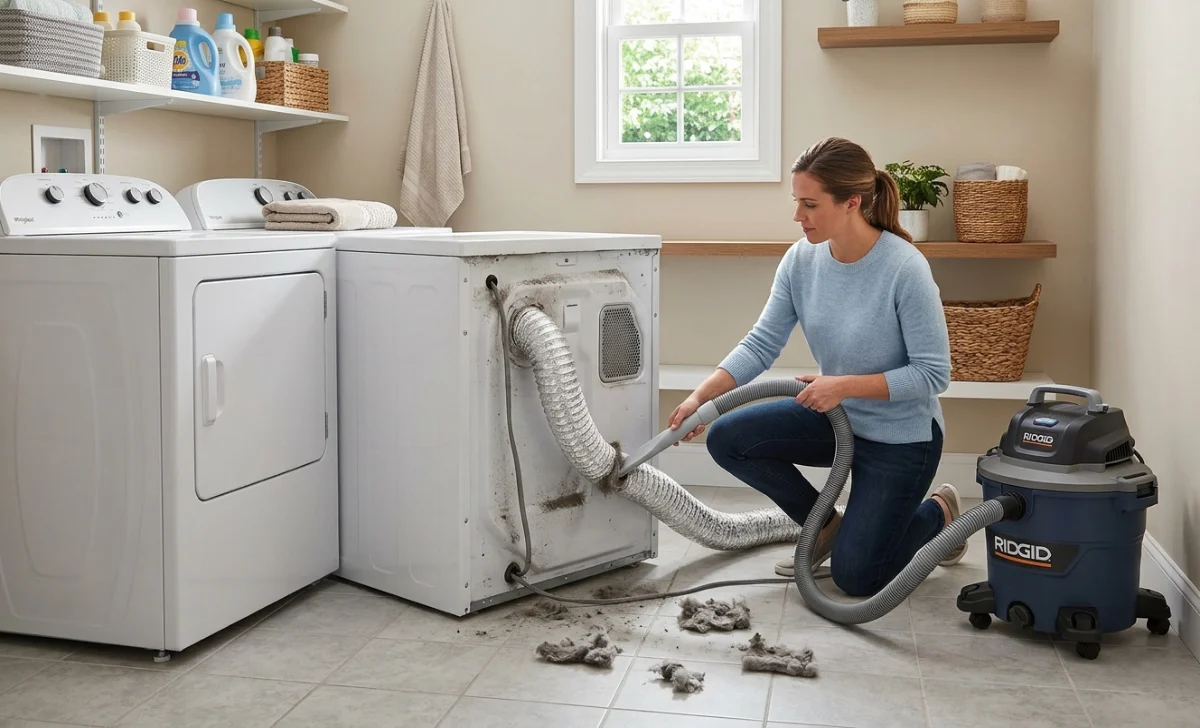
Your dryer works hard. But there’s one part of it that most homeowners completely ignore — the vent.
Every time you run a load of laundry, tiny fibres break off your clothes and get pulled into the exhaust system. Over time, that lint packs into your dryer vent like insulation in a wall. The result? Longer drying times, higher electricity bills, and — in the worst cases — a house fire.
The good news: you can vacuum your dryer vent yourself in about 30–45 minutes with the right tools and a little know-how. No technician required.
In this guide, you’ll learn exactly how to do it, what tools you need, how often to clean it, and the mistakes that could make things worse instead of better.
1. Why Vacuuming Your Dryer Vent Actually Matters
Most people clean the lint trap after every load. That’s great — but the lint trap only catches about 25% of the lint your dryer produces. The rest travels into the exhaust duct.
According to the U.S. Fire Administration, dryers cause roughly 2,900 residential fires every year, and failure to clean the dryer is the leading cause.
Beyond fire safety, a clogged vent forces your dryer to work harder. That means:
- Clothes take two or three cycles to dry fully
- Your dryer motor runs hotter than designed
- Monthly energy bills creep up without explanation
- Your dryer’s lifespan shortens significantly
Vacuuming your dryer vent is one of the simplest home maintenance tasks you can do — and one of the most overlooked.
2. Signs Your Dryer Vent Needs Cleaning Right Now
Don’t wait for an annual schedule if your dryer is already showing symptoms. Here are the warning signs that the vent is clogged:
- Clothes are still damp after a full drying cycle
- The outside of the dryer feels very hot to the touch during operation
- A burning smell is coming from the laundry room
- The laundry room feels humid or hotter than usual when the dryer runs
- The exterior vent flap barely opens (or doesn’t open at all) when the dryer is on
- Drying time has doubled compared to six months ago
If you’re seeing more than two of these, stop using the dryer until you’ve cleaned the vent. Seriously — it’s a fire waiting to happen.
3. Tools You’ll Need Before You Start
You don’t need expensive equipment. Most of this is available at any hardware store or online for under $40.
Essential tools:
- A vacuum cleaner with a hose attachment (shop vac works best)
- A dryer vent cleaning brush kit (flexible rods with a brush head — usually 24–30 feet total)
- Screwdriver (Phillips head, usually)
- Work gloves
- Flashlight or phone torch
Optional but helpful:
- Leaf blower (for blowing debris out from inside)
- Duct tape or foil tape for reconnecting the flex duct
- A drop cloth or an old towel to catch falling lint
A dryer vent brush kit is worth buying even if you hire a professional occasionally — it pays for itself after one use.
4. Step 1 – Locate and Disconnect the Dryer
Before anything else, unplug the dryer from the wall outlet. If you have a gas dryer, turn off the gas supply valve behind the unit — don’t skip this.
Pull the dryer away from the wall slowly. Most dryers have a flexible foil or metal duct connecting the back of the machine to the wall duct opening. It’s usually held on with a hose clamp or metal tape.
Loosen the clamp or peel back the tape carefully and disconnect the flex duct from the dryer’s exhaust port. Set it aside — you’ll want to vacuum that separately.
Pro tip: Take a photo of how everything is connected before you disconnect anything. You’ll thank yourself during reassembly.
5. Step 2 – Remove the Vent Cover Outside
Go outside and find where your dryer vents to the exterior of the house. It’s usually a louvred cover or a flap located on an exterior wall or sometimes on the roof.
Using a screwdriver, remove the cover. Some covers are held by screws; others just snap or clip into place. Gently pull the cover away and set it somewhere safe.
This opening is where most of the debris will exit when you clean from inside. You’ll also vacuum from this end later, so keep it accessible.
Check the flap mechanism — if it’s stuck open or completely clogged with lint and debris, that alone can cause major airflow problems.
6. Step 3 – Vacuum the Duct from the Dryer End
Now the actual cleaning begins.
Insert the hose of your vacuum (a shop vac is ideal here) into the wall duct opening where your dryer was connected. Turn on the vacuum and move the hose around slowly to pull out loose lint near the opening.
You won’t reach the full length of the duct with a standard hose, but this first pass removes the bulk of debris near the dryer connection point — which is where the heaviest buildup typically collects.
Use your flashlight to peer into the duct after this step. If it’s still visibly packed with lint further in, it’s time for the brush kit.
7. Step 4 – Use a Dryer Vent Brush Kit for Deeper Cleaning
This is the most important step for a thorough clean.
A dryer vent brush kit comes with multiple flexible rods that screw together, with a round brush head at the end. You insert the brush into the duct opening, spin it as you push forward, and the rotating bristles knock lint loose from the duct walls.
Here’s how to do it correctly:
- Attach the first rod to the brush head
- Insert into the duct and push while rotating clockwise
- Add more rods as you go deeper, screwing each one on before pushing further
- Work the brush back and forth in short strokes — don’t just shove it straight through
- As you pull the brush back, rotate it counter-clockwise to avoid unscrewing the rods inside the duct
Follow up with the vacuum hose again to pull out everything the brush knocked loose. Repeat until almost no lint is coming out.
8. Step 5 – Vacuum from the Exterior End
Now head back outside to the open vent cover.
Insert your vacuum hose into the exterior opening and run it for 2–3 minutes. Gravity helps here — lint that loosened from the brush but didn’t make it to the dryer end will fall toward this lower opening.
Some homeowners also use a leaf blower inserted into the exterior opening to blow debris back through the duct toward the dryer end — then vacuum from the inside again. This works well for very long duct runs.
After vacuuming, shine your flashlight into the exterior opening. If you can see a clear path and light coming through from the inside, you’ve done a thorough job.
9. Step 6 – Reassemble Everything Correctly
Don’t rush this part. A bad reconnection can cause exhaust to leak into your laundry room — which is a carbon monoxide risk for gas dryers and an efficiency problem for electric ones.
- Reconnect the flex duct to the dryer’s exhaust port securely using the original clamp or fresh foil tape
- Make sure the flex duct isn’t kinked, crushed, or bent at a sharp angle
- Replace the exterior vent cover and screw it back into place
- Check that the louvred flap moves freely
One important note: If your existing flex duct is made of thin, accordion-style plastic, consider replacing it with rigid metal duct or, at a minimum, semi-rigid aluminium flex duct. Plastic ducts are a fire hazard and are no longer up to code in many areas.
10. Step 7 – Run a Test Cycle
Push the dryer back into place — but don’t push it completely flush yet.
Run the dryer on a heat cycle for 15 minutes. Go outside and check the exterior vent flap. It should be opening fully, and you should feel strong, warm airflow coming out.
Come back inside and check around the connection point at the back of the dryer. Feel for any warm air escaping, which would indicate a leak at the connection.
If airflow outside is strong and no air is leaking inside, you’re done. Push the dryer back into its spot and enjoy faster drying times.
Expert Tips for Better Results
Clean twice a year if you do heavy laundry. Households with large families, pets, or anyone who does 7+ loads per week should clean the vent every six months instead of annually.
Always clean the lint trap before every load. This dramatically reduces how fast the duct clogs between cleanings.
Keep the exterior vent clear of obstructions. Overgrown shrubs, bird nests, and debris can block the exterior opening even when the duct itself is clean. Check it seasonally.
Measure your duct length. Most dryer vent brush kits handle up to 25 feet. If your vent run is longer (common in apartments or condos), you may need a professional with specialised equipment.
Avoid using 90-degree elbow bends where possible. Each hard turn in the duct adds resistance and collects more lint. If you’re renovating, plan the shortest, straightest route possible.
Consider a lint alarm. These inexpensive sensors attach inside the duct and alert you when airflow drops below a safe threshold — a worthwhile investment for peace of mind.
Common Mistakes to Avoid
Cleaning only the lint trap and calling it done. The lint trap is the first line of defence, not the only one. The duct itself needs regular attention.
Using the wrong type of duct. Flexible plastic accordion duct is cheap but dangerous. It sags, kinks, and is not fire-resistant. Replace it with rigid or semi-rigid metal.
Pushing the brush too forcefully. Jamming the brush through the duct can disconnect sections of duct inside the wall — a much bigger problem than lint buildup.
Forgetting the exterior vent cover. Many people clean the interior duct and forget that the outside cover itself can be packed with lint, spider webs, or even bird nesting material.
Reconnecting the flex duct with kinks. A kinked duct reduces airflow just as much as a lint clog. Take time to route it smoothly.
Cleaning during a dryer run. Always unplug (and for gas dryers, shut off the gas) before you touch anything. No exceptions.
Conclusion
Vacuuming your dryer vent isn’t glamorous — but it might be the most valuable 45 minutes you spend on home maintenance this year.
A clean dryer vent means faster drying cycles, lower energy bills, a longer-lasting appliance, and — most importantly — a dramatically reduced fire risk. You now have everything you need to do it right: the right tools, the correct steps, and the common pitfalls to avoid.
Set a reminder on your phone. Put it in your calendar. Whatever helps you actually follow through. Do it every six to twelve months, and your dryer will run better and safer for years to come.
Start with a visual check today. Go outside, find your dryer’s exterior vent, and see if that flap is moving freely. That five-second check might tell you everything you need to know.
Frequently Asked Questions
How often should I vacuum my dryer vent?
For most households, once a year is enough. If you do laundry daily or have pets that shed heavily, every six months is a better target. Signs like longer drying times are your cue to clean sooner.
Can I vacuum my dryer vent without a brush kit?
You can do a basic cleaning with just a vacuum, but the brush is what removes lint stuck to the duct walls. For a truly thorough clean, the brush kit is necessary — especially for ducts longer than a few feet.
Is it safe to vacuum a dryer vent myself?
Yes, for most homeowners. If your duct runs through the wall and up to a rooftop exit, or if it’s longer than 25 feet, calling a professional is a smarter call. Roof vents especially carry fall risk.
What happens if I never clean my dryer vent?
At minimum, your dryer will work harder, drying clothes less efficiently and wearing out faster. In serious cases, lint buildup can ignite — leading to a house fire. It’s genuinely one of the most preventable home hazards.
How long does it take to vacuum a dryer vent? Most homeowners complete the full process in 30–45 minutes. First-timers who haven’t cleaned in several years may spend up to 90 minutes dealing with heavy buildup.