
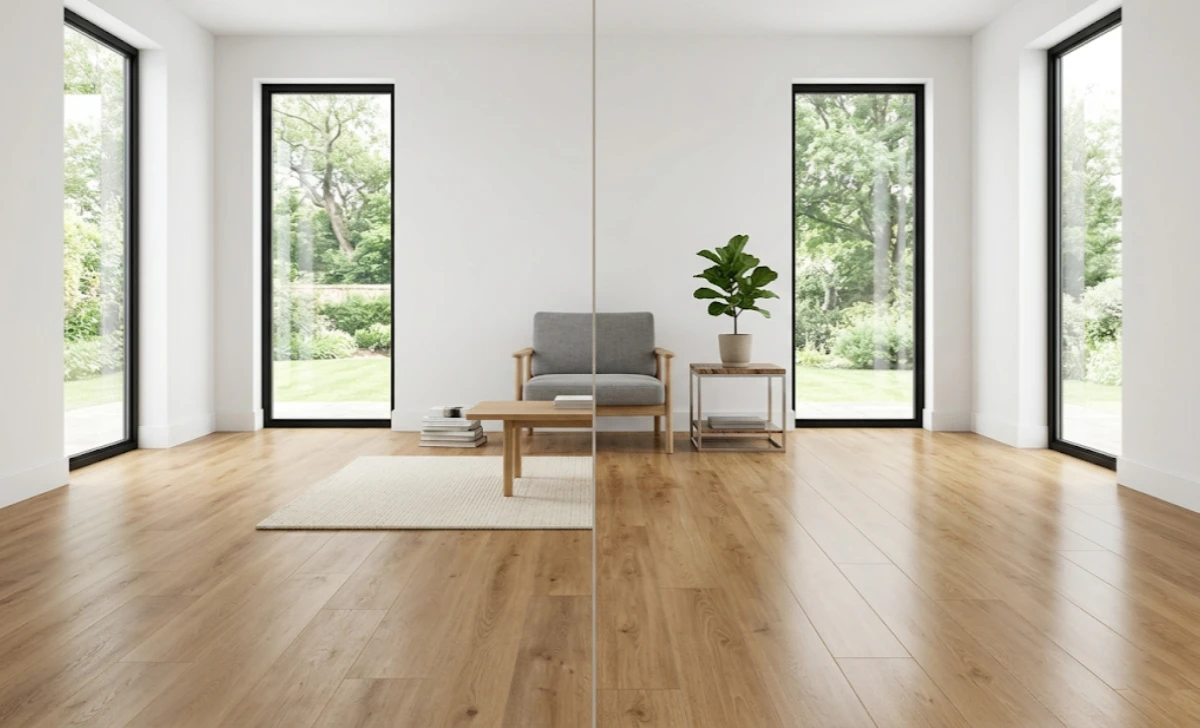
Luxury vinyl plank (LVP) is 100% waterproof and works in kitchens, bathrooms, and basements. Laminate is water-resistant but not waterproof — moisture can damage the HDF core. LVP suits high-moisture areas and homes with pets or children. Laminate offers better scratch resistance and a lower upfront cost in dry spaces.
You’ve narrowed it down to two options. LVP or laminate. Both look great in the showroom. Both cost less than hardwood. Both install without glue or nails.
So why does choosing between them feel so complicated?
Because the differences aren’t obvious until you’re living with your floor — dealing with a spilt glass of water, a dog that won’t stop scratching, or a basement that sweats in summer.
This guide cuts through the marketing and gives you a straight comparison across every factor that actually matters: cost, durability, water resistance, installation, and which option wins room by room. By the end, you’ll know exactly which floor belongs in your home.
Quick Comparison: LVP vs Laminate at a Glance
| Feature | Luxury Vinyl Plank (LVP) | Laminate |
|---|---|---|
| Water Resistance | 100% waterproof | Water-resistant (not waterproof) |
| Durability | 15–25 years | 15–25 years |
| Cost (materials) | $2–$7 per sq ft | $1–$5 per sq ft |
| Installation Cost | $3–$10 per sq ft installed | $3–$8 per sq ft installed |
| Scratch Resistance | Good | Very good |
| Comfort Underfoot | Softer, slightly warmer | Harder, slightly hollow feel |
| DIY Friendly | Yes | Yes |
| Best For | Wet/damp areas, pets, families | High-traffic dry areas, budgets |
| Resale Value | Good | Good |
What Is Luxury Vinyl Plank Flooring?
Luxury vinyl plank — commonly called LVP — is a multi-layer synthetic flooring product designed to mimic the look of hardwood. It’s made from PVC plastic, which is what makes it 100% waterproof from top to bottom.
A typical LVP plank has four layers:
- Wear layer: A clear protective coating measured in mils (thousandths of an inch). Thicker wear layers mean better scratch and scuff resistance. Residential LVP generally ranges from 6 to 20 mil; commercial-grade goes higher.
- Design layer: A high-resolution photographic film that creates realistic wood or stone textures.
- Core layer: Usually a rigid or flexible vinyl core. Rigid core (SPC or WPC) adds stability and handles subfloor imperfections better.
- Backing layer: Provides cushioning and sound absorption. Many LVP products come with pre-attached underlayment.
Because every layer is plastic, LVP handles water without swelling, warping, or growing mould beneath the surface. That’s the core difference — and for many homeowners, it’s the one that decides everything.
What Is Laminate Flooring?
Laminate is a wood-composite product. It’s made from a high-density fiberboard (HDF) core pressed together with a photographic image layer and a clear protective top coat.
The layers from bottom to top:
- Backing layer: Balances the plank and provides minimal moisture protection.
- HDF core: Dense and rigid, excellent for structural stability. Also, the product’s weakness — HDF swells and deteriorates when exposed to prolonged moisture.
- Design layer: Similar to LVP — a photographic print that can mimic wood, stone, or tile.
- Wear layer: Usually aluminium oxide, which gives the laminate its excellent scratch resistance.
Modern laminate has improved significantly. Many products now carry water-resistant ratings and are treated to repel surface moisture. But “water-resistant” and “waterproof” are not the same thing. Laminate can handle a spill you wipe up quickly. It cannot handle a flooded laundry room, a leaky pipe, or a damp basement.
Durability Comparison
Both flooring types are built to last. In normal residential conditions, you can expect 15–25 years from quality products in either category.
The differences show up in how they handle abuse.
Scratch resistance: Laminate generally wins here. Its aluminium oxide wear layer is harder than vinyl, which makes it better at resisting marks from moving furniture, gravel tracked in from outside, or pet claws on hard floors. If you have dogs, expect laminate to show fewer surface scratches over time.
Dent resistance: LVP, particularly flexible vinyl, can dent from heavy furniture left in one place for years. Rigid core LVP (SPC) is much better in this category and is the recommended option if you’re placing heavy items permanently.
Moisture durability: LVP wins clearly. Water is the primary cause of premature laminate failure. Even water-resistant laminate can swell at the seams if water sits for more than a few minutes. LVP is unaffected — it’s plastic all the way through.
Foot traffic: Both handle high-traffic areas well, but the wear layer thickness on LVP matters. Opt for 12 mil or higher for busy hallways and main living areas.
Winner: LVP for households with water exposure or heavy moisture risk. Laminate for dry environments where scratch resistance is the priority.
Waterproof and Moisture Resistance
This is the most important comparison for the majority of homeowners.
LVP is completely waterproof. You can mop it, flood it, and install it in a bathroom without any special precautions beyond standard installation. The planks themselves will not absorb water.
Laminate is not waterproof. The HDF core absorbs moisture, swells, and often cannot be saved once that happens. The joints between planks are the most vulnerable point — water seeps in through the gaps and works its way to the core underneath.
Some manufacturers now market “waterproof laminate,” but this typically refers to the surface treatment only, not the core material. Read the fine print before installing any laminate in a wet area.
For kitchens, bathrooms, laundry rooms, or any space prone to humidity fluctuations, LVP is the only sensible choice between these two options.
Cost Comparison
Budget plays a significant role in most flooring decisions. Here’s how the two compare:
Material costs:
- Laminate: $1–$5 per square foot for quality residential products
- LVP: $2–$7 per square foot, with rigid core options at the higher end
Installation costs (professional):
- Both floor types average $3–$10 per square foot installed, depending on your region and subfloor condition.
Underlayment:
- Laminate always requires a separate underlayment unless you purchase a product with it pre-attached.
- Many LVP products include attached underlayment, which reduces material costs and installation time.
Long-term cost: If a laminate floor is damaged by water, replacement is often the only option. LVP, because of its waterproof nature, tends to avoid those unexpected replacement costs in moisture-prone areas. Factor that in when comparing upfront prices.
One cost many homeowners overlook is preparing the subfloor before installation. If you’re replacing old carpet, that prep work matters. Removing old carpet before installing new flooring requires the right steps to ensure a clean, level surface — skipping this stage can cause problems for both LVP and laminate down the road.
Winner: Laminate on upfront material cost. LVP on total long-term value in high-moisture environments.
Installation Difficulty
Both LVP and laminate use a floating floor system — the planks click together and rest on top of the subfloor without being glued or nailed down. Neither is mechanically complicated.
That said, there are real differences in the installation experience:
Subfloor tolerance: Rigid core LVP (SPC) can handle minor subfloor imperfections better than laminate. Laminate requires a flatter surface — most manufacturers specify no more than 3/16 inch variation per 10 feet. LVP rigid core products generally allow slightly more variance.
Cutting: LVP can be scored and snapped with a utility knife or cut with a vinyl cutter — no power saw required for most cuts. Laminate typically requires a saw, which adds noise and dust to the process.
Weight and handling: LVP planks are lighter and more flexible (unless rigid core), making them easier to manoeuvre in tight spaces. Rigid core LVP and laminate are both fairly dense and stiff.
Acclimation: Laminate requires 48–72 hours of acclimation in the room before installation. LVP, particularly rigid core, requires less or no acclimation time.
Both are realistic DIY projects for someone with basic home improvement skills. If you’re tackling installation yourself, budget a full weekend for a standard room. This detailed breakdown of LVP vs laminate installation covers the full installation process, common mistakes, and what to do if your subfloor isn’t flat.
Appearance and Design
Laminate had a head start on realistic wood visuals, but LVP has caught up significantly. Both options now offer photographic print layers that convincingly replicate oak, walnut, pine, stone, and more.
Texture: Many LVP and laminate products offer embossed-in-register (EIR) texturing, where the surface texture aligns precisely with the printed grain pattern. This creates a more realistic wood feel underfoot.
Plank size: Both flooring types come in long, wide planks — formats like 7″ × 48″ are common — which help the floor look more like real hardwood.
Gloss level: Laminate tends to show light reflecting off its surface more noticeably, which can look slightly artificial in certain lighting. LVP matte finishes are common and often look more natural in well-lit rooms.
Colour and style range: Both offer extensive collections. High-end LVP products can be difficult to distinguish from real hardwood without touching them.
If visual authenticity is your top priority, shop both side by side and bring samples home before committing. How a floor looks under your home’s lighting with your specific furniture is different from how it looks under showroom lights.
Comfort and Noise Levels
Underfoot feel is something most buyers don’t think about until they’ve lived with their floor for a month.
LVP: Slightly softer and warmer underfoot than laminate, especially products with a foam backing or pre-attached underlayment. Still noticeably harder than carpet, but less cold on bare feet than tile.
Laminate: The HDF core creates a slightly hollow sound when walked on — a faint “clack” with each step that some people find off-putting. A quality underlayment significantly reduces this. Laminate feels slightly cooler underfoot than vinyl.
Sound transmission: Both floor types benefit from quality underlayment for sound absorption. If you’re installing on an upper floor over a living space, underlayment is not optional — it’s the difference between a floor that sounds solid and one that announces every footstep to the room below.
Best Flooring by Room
Kitchen
LVP wins. Water spills are constant. Even careful cooks deal with water near the sink and dishwasher. Laminate’s moisture vulnerability makes it a calculated risk in any kitchen.
Bathroom
LVP only. No laminate should be installed in a bathroom. The humidity alone — not just standing water — is enough to cause edge swelling and deterioration over time.
Basement
LVP wins. Basements present two challenges: moisture from below (concrete slab) and potential flooding. LVP handles both. Laminate in a basement is a gamble that many homeowners lose.
Living Room and Bedroom
Either works well. These dry areas with controlled climate are where laminate performs at its best. If scratch resistance matters (pets, kids), laminate has a slight edge. If you prefer a softer underfoot feel, LVP is the better pick.
Hallway and High-Traffic Areas
Laminate for scratch resistance; LVP with 12-mil+ wear layer for moisture exposure. Both handle foot traffic well over time.
Garage
Neither LVP nor laminate is ideally suited for garages. Both can be damaged by vehicle fluids, heavy equipment, and extreme temperature swings. For garages, a dedicated solution is worth considering — an epoxy garage floor coating kit provides a far more durable, chemical-resistant surface built specifically for garage conditions.
Pros and Cons
Luxury Vinyl Plank (LVP)
Pros:
- 100% waterproof
- Comfortable underfoot
- Installs over slightly uneven subfloors
- Wide style range
- Works in nearly every room
- Often includes an attached underlayment
Cons:
- Can dent from heavy stationary furniture (flexible core)
- Slightly less scratch-resistant than laminate
- Higher material cost than entry-level laminate
- Not biodegradable
Laminate
Pros:
- Excellent scratch resistance
- Lower upfront cost
- Highly realistic wood appearance
- Rigid structure resists denting
- Long lifespan in dry environments
Cons:
- Not waterproof; vulnerable to moisture damage
- Cannot be installed in bathrooms or below-grade spaces
- Hollow sound without quality underlayment
- Harder underfoot
- Cannot be refinished if damaged
Which Flooring Lasts Longer?
In dry, controlled conditions, laminate and LVP perform comparably over time — both lasting 15–25 years with normal residential use.
The gap opens when moisture enters the picture. A single water event that goes unnoticed for more than a few hours can end a laminate floor’s life prematurely. LVP is unaffected by the same event.
For long-term value in unpredictable environments — which describes most homes with children, pets, or basements — LVP lasts longer in practice, even if the spec sheets look similar.
Expert Recommendation
The right floor depends entirely on where it’s going and who’s living on it.
Choose LVP if:
- You’re installing in a kitchen, bathroom, laundry room, or basement
- You have young children or pets
- Your home experiences humidity fluctuations
- You want a floor that handles spills without stress
Choose laminate if:
- You’re installing in a dry bedroom, living room, or office
- Scratch resistance is your top priority
- You’re working with a tighter budget
- Moisture is not a concern in the space
When in doubt, go with LVP. The waterproof advantage removes a significant category of risk that most homeowners underestimate until they’re pulling up damaged boards.
Conclusion
LVP and laminate are the two best hardwood alternatives on the market — and both deserve their popularity. But they’re not interchangeable.
Laminate wins on scratch resistance and upfront cost in dry, controlled spaces. LVP wins on water resistance, versatility, and peace of mind everywhere else.
If you’re still deciding, let the room choose for you. Anywhere water lives — kitchens, bathrooms, basements — the answer is LVP. Everywhere else, compare samples in your actual space, factor in your budget, and choose whichever floor you’d be comfortable looking at every day for the next twenty years.
FAQs
Is luxury vinyl plank better than laminate?
For most modern homes, LVP offers more versatility because it’s waterproof and installs in virtually any room. Laminate is better suited for dry, high-traffic areas where scratch resistance matters most.
Which flooring is cheaper — LVP or laminate?
Laminate has a lower entry price, typically starting around $1 per square foot for materials. LVP generally starts around $2 per square foot. However, total installed cost and long-term replacement risk can make LVP more economical over the life of the floor.
Can you use LVP or laminate in a bathroom?
LVP can be installed in bathrooms without issue. Laminate should never be used in bathrooms — the ongoing humidity alone is enough to cause swelling and premature deterioration.
Which flooring is better for dogs?
Laminate has slightly better scratch resistance for dog nails, but LVP handles accidents better since it’s waterproof. For most pet owners, LVP is the more practical choice overall.
Does LVP or laminate add resale value?
Both are considered quality flooring upgrades over carpet and can positively affect resale value. LVP has gained significant appeal among buyers in recent years, particularly because of its waterproof properties. Neither option adds resale value to the same extent as genuine hardwood, but both are viewed favourably by buyers.
Is laminate flooring safe for indoor air quality?
Look for laminate certified to CARB Phase 2 standards, which limit formaldehyde emissions from the HDF core. Low-VOC LVP and laminate products are widely available. The EPA recommends adequate ventilation during and after installation of any new flooring product.
Ready to move forward? Compare top-rated LVP and laminate brands, or get free flooring installation quotes from local pros.