
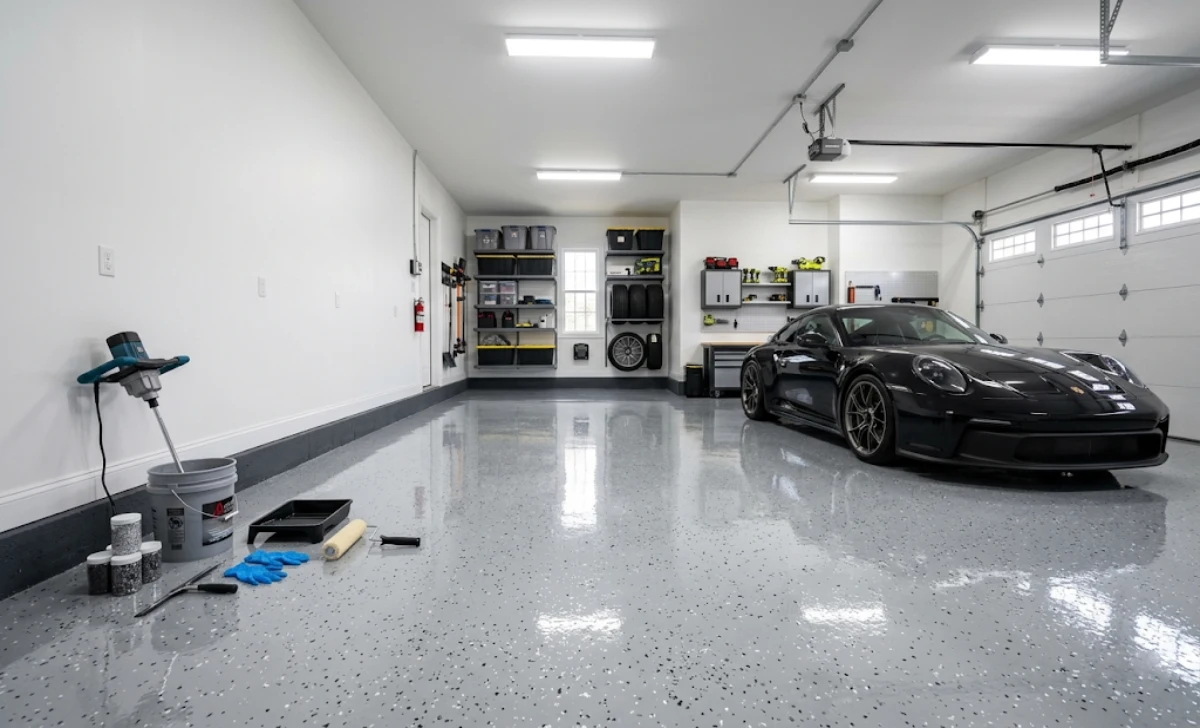
An epoxy garage floor coating kit is a two-part system — resin and hardener — that mixes together and bonds chemically with concrete. When properly applied over a clean, profiled surface, it forms a hard, glossy, chemical-resistant finish that protects against oil stains, abrasion, and moisture. Most kits cover a single-car garage with one to two coats.
Epoxy Garage Floor Coating Kit: The Complete Buying Guide for 2026
Your garage floor takes a beating. Hot tyres, oil drips, dropped tools, moisture seeping up from below — it’s one of the hardest-working surfaces in any home. If your concrete is looking stained, dull, or just plain rough, an epoxy garage floor coating kit can completely change how that space looks and performs.
But not every kit delivers. Some peel within a year. Others need contractor-level skills to apply. And the difference between a $60 big-box kit and a $300 professional system isn’t always obvious until it’s too late.
This guide breaks it all down — what to look for, what to avoid, how to prepare your floor, and which products are worth your time and money.
What Is an Epoxy Garage Floor Coating Kit?
An epoxy garage floor coating kit is a two-part system — typically a resin and a hardener — that you mix and apply directly to bare concrete. Once cured, it forms a hard, glossy, chemical-resistant surface that’s far more durable than plain concrete or a single-part floor paint.
Most kits include:
- Part A (epoxy resin) and Part B (hardener or catalyst)
- Decorative colour chips or flakes (optional, but popular)
- A topcoat or sealer for added protection
- Basic application instructions
The two-part chemistry is what separates real epoxy from “epoxy paint,” which is usually a single-part acrylic or latex product with minimal epoxy content. Two-part systems bond at a molecular level with concrete, which is why they last so much longer.
Solids content matters. A higher solids percentage means a thicker, harder final coat. Budget kits often run 40–50% solids. Professional-grade systems typically sit at 85–100% solids, which gives you noticeably better abrasion resistance and longevity.
Why Epoxy Garage Floors Are Worth It
Plain concrete is porous. It absorbs oil, holds moisture, and stains permanently. Epoxy seals the surface entirely, which makes cleaning easy and prevents long-term concrete degradation.
Here’s what a quality epoxy coating brings:
Chemical resistance. Motor oil, gasoline, brake fluid — epoxy shrugs them off. Wipe up, done.
Abrasion resistance. High-traffic areas hold up well under foot traffic, rolling tool chests, and vehicle weight.
Hot tyre resistance (if rated). Some coatings can’t handle the heat that builds up in car tyres after driving. Quality epoxy kits are specifically formulated to prevent the “hot tyre pickup” effect, where the coating bonds to tyres and peels off in strips.
Visual upgrade. A garage with a high-gloss, flake-finished floor looks far more professional than bare concrete. If you use the space as a workshop, gym, or car storage, the difference is significant.
Moisture protection. Sealed concrete resists water intrusion from above and reduces vapour transmission from below — as long as your slab passes a moisture test first (more on that shortly).
Top Epoxy Garage Floor Coating Kits to Consider
These are among the most widely used and consistently reviewed options on the market. Performance characteristics are based on published product specs and widely reported user experience.
1. Rust-Oleum EpoxyShield Professional Floor Coating Kit
Best for: Beginners and moderate-use garages
Rust-Oleum’s EpoxyShield line is the most recognisable name in DIY garage coatings. The professional-grade version is a two-part water-based epoxy with a solid reputation for ease of application and decent durability.
Coverage is typically around 250–500 sq ft per kit, depending on porosity. It’s available at most home improvement stores, which makes sourcing easy. Water cleanup and low VOC levels make it more beginner-friendly than solvent-based alternatives.
Where it falls short: it runs at around 50% solids, which means it won’t be as hard or long-lasting as higher-end systems. Under heavy vehicle traffic or UV exposure, expect 3–5 years before a refresh is needed.
2. ArmorPoxy ArmorFloor 325 Two-Part Epoxy System
Best for: High-traffic garages, workshops, and car storage
ArmorPoxy is a step up in performance. Their 325 system is a 100% solids, two-part epoxy designed for commercial and industrial use, but packaged for DIY application. The cure is harder, the finish is thicker, and it handles oil and chemical exposure without issue.
Application is more involved — surface prep requirements are strict, and the working time is shorter than water-based systems. But the payoff is a coating that realistically lasts 10+ years with basic maintenance.
3. Sherwin-Williams H&C Concrete Coating
Best for: Users who want professional-quality results and can handle more prep work
Sherwin-Williams offers industrial-grade coating systems through its stores. These skew toward professional contractors but are available to DIYers willing to do proper surface preparation. Their solvent-based formulas offer excellent adhesion and hot-tire resistance.
If you’re coating a large space or want something that holds up under daily vehicle traffic long-term, these systems are worth the extra complexity.
4. Quikrete Epoxy Garage Floor Coating
Best for: Budget-conscious homeowners with light-use garages
Quikrete’s kit is affordable and widely available. It’s a two-part system, but at the lower end of solids content. It’s adequate for garages used mainly for storage or low-traffic use — but it’s not the right choice for heavy vehicles or daily parking.
How to Choose the Right Epoxy Garage Floor Coating Kit
Consider Solids Percentage
This is the single most important spec. Higher solids = thicker film build = harder finish = longer life. Look for at least 85% solids for any garage that sees daily vehicle use.
Water-Based vs. Solvent-Based
Water-based kits are easier to apply, have lower odour, and clean up with water. Solvent-based kits are typically harder, more chemical-resistant, and better in damp conditions — but require more ventilation and stricter prep.
Coverage per Kit
Calculate your square footage before buying. An undersized kit means running out mid-floor. Most kits specify coverage for a single coat; many floors benefit from two coats, so plan accordingly.
Hot Tire Rating
If you park vehicles daily, check specifically for hot-tire resistance. Not all kits include this rating on the label, so check the product data sheet (usually available on the manufacturer’s website).
Climate and Humidity
Epoxy is temperature-sensitive during application. Most systems require between 50°F and 90°F ambient temperature. In humid climates, moisture vapour transmission from concrete can cause adhesion failure — a moisture barrier coat or vapour barrier primer may be necessary.
Epoxy vs. Polyaspartic vs. Polyurea: What’s the Difference?
This comparison confuses a lot of buyers.
Epoxy is the traditional standard. It requires 18–24 hours minimum cure time between coats, and full cure typically takes 72 hours before vehicle traffic. It offers excellent chemical resistance and a very hard surface. UV exposure can cause ambering over time with some formulas.
Polyaspartic coatings cure much faster — often walkable in 1–2 hours and ready for vehicles in 24 hours. They’re UV-stable, so they won’t yellow in bright garages. However, they’re harder to work with; the fast cure time gives you a narrow application window.
Polyurea is the most durable option, with excellent flexibility and impact resistance. Professional polyurea systems are extremely long-lasting but are typically contractor-applied and more expensive.
For most homeowners doing a DIY project, epoxy is the right balance of performance, workability, and cost. Polyaspartic makes sense if you want a fast turnaround or have a UV-exposed area.
If you’re still weighing your overall flooring options and haven’t committed to a surface type yet, it’s worth exploring how hard-surface flooring alternatives compare in terms of durability and installation requirements. This comparison of luxury vinyl plank vs laminate flooring offers useful context on what different surface materials actually deliver in real-world conditions.
Step-by-Step DIY Epoxy Application
Proper preparation is responsible for about 80% of your results. Rush it, and the coating will fail. Take your time here.
Step 1: Clear and Clean the Space
Remove everything from the garage. Sweep thoroughly, then degrease with a commercial concrete degreaser. Oil-stained concrete must be fully degreased before anything else — epoxy won’t bond through grease.
Step 2: Test for Moisture
This is the step most DIYers skip, and it causes most failures. Tape a 2-foot square of plastic sheeting to the floor and seal all four edges with tape. Leave it for 24 hours. If moisture appears under the plastic, your slab has a vapour transmission issue that needs to be addressed before coating.
Step 3: Etch or Grind the Surface
Concrete must be profiled so the epoxy has something to grab onto. Most DIY kits include an etching solution (muriatic acid or a safer alternative). Apply according to instructions, scrub, rinse thoroughly, and allow the floor to dry completely — usually 24 hours minimum.
For best results, especially with high-solids systems, concrete grinding with a rental machine creates a more consistent surface profile than acid etching alone.
Step 4: Repair Cracks and Holes
Fill cracks and spalls with a concrete repair product before coating. Thin surface cracks (hairline cracks) can be coated over. Structural cracks that move should be evaluated by a professional first.
Step 5: Mix and Apply the Epoxy
Follow the manufacturer’s mix ratio exactly — this is chemistry, not cooking. Incorrect ratios produce a coating that won’t cure fully. Most two-part systems require a specific mixing time as well.
Apply with a roller in long, even strokes. Work in sections, maintain a wet edge, and don’t go back over areas that have started to set. Apply broadcast flakes (if using) while the coat is still wet.
Step 6: Apply the Topcoat
Most quality kits include a clear topcoat or sealer. This layer adds UV resistance, additional hardness, and gloss. Apply it after the epoxy base coat has cured to the manufacturer’s recommended tack-free time.
Step 7: Allow Full Cure
Wait the full cure time before driving on the floor. Light foot traffic is usually safe after 24 hours. Vehicle traffic typically requires 72 hours minimum, and a full chemical cure can take 7 days.
Mistakes That Ruin Epoxy Floors
Skipping the moisture test. This is the number-one cause of peeling and bubbling. If vapour is coming up through the slab, the coating lifts from underneath.
Not degreasing oil stains. A surface that looks clean isn’t always ready. Use a concrete degreaser and check again. Epoxy over oil is a guaranteed bond failure.
Applying in the wrong temperature. Below 50°F, and the epoxy won’t cure properly. Above 90°F, and it may set before you’ve finished applying it.
Ignoring coverage rates. Spreading too thin reduces performance significantly. Apply at the recommended mil thickness — most manufacturers specify this in the product data sheet.
Driving on it too soon. Rushing the cure is a fast way to leave tyre marks embedded in your new floor.
Preparing Your Space: Start From Scratch If Needed
If your garage currently has old carpet, tile, or a previous coating that’s peeling, none of it can stay underneath your new epoxy. Every layer needs to go before you start. The adhesion of your new coating depends entirely on contact with clean, bare concrete.
This guide on how to remove old carpet before installing new flooring walks through the removal process in detail, including what tools you’ll need and how to deal with adhesive residue — useful context if you’re converting a carpeted garage or workshop space.
How Long Does Garage Floor Epoxy Last?
Longevity depends heavily on product quality, surface prep, and how the floor is used.
Budget kits with 40–50% solids: typically 2–5 years before visible wear, lifting, or peeling.
Mid-range kits (70–85% solids): expect 5–8 years with regular maintenance.
Professional-grade 100% solids systems: 10–15+ years is realistic in residential applications with proper care.
Annual maintenance — cleaning with a pH-neutral cleaner, promptly wiping chemical spills, and avoiding abrasive scrubbing — extends lifespan significantly.
Can You Apply Epoxy Over Cracked Concrete?
Hairline cracks and minor surface spalling are fine to coat over after repair. Fill them with a compatible concrete filler and allow it to cure.
Structural cracks — ones that are wider than 1/8 inch, run through the depth of the slab, or show signs of movement — are a different matter. Epoxy will bridge minor cracks but won’t stabilise a shifting slab. If your floor has serious structural issues, get an assessment before investing in a coating.
Maintenance Tips for a Long-Lasting Epoxy Floor
Clean regularly with a mild, pH-neutral floor cleaner. Avoid bleach and harsh solvents, which can dull the topcoat over time.
Place anti-fatigue mats where you stand frequently — not because epoxy is soft, but because the hard surface can be tiring underfoot in a workshop setting.
Wipe up oil and chemical spills immediately. While epoxy resists these substances, prolonged exposure can still cause surface dulling or staining.
If your floor was finished with a separate topcoat, that layer can be refreshed without stripping the entire floor down — useful if you want to restore gloss without a full recoat.
Final Recommendation
If you want a garage floor that looks sharp and holds up for the long term, skip the single-part “epoxy paint” products entirely. A genuine two-part epoxy kit — with at least 85% solids content, a matching topcoat, and proper surface preparation — is the foundation of a result you’ll actually be satisfied with five years from now.
Do the moisture test. Degrease thoroughly. Follow the cure schedule. Those three steps separate successful DIY epoxy floors from the ones that start peeling by the second summer.
For more guides covering flooring materials, prep techniques, and surface comparisons across every room in the home, the full flooring resource library covers a wide range of projects worth exploring before your next renovation decision.
FAQs
Do I need to grind the concrete before applying epoxy?
Grinding isn’t always required, but it produces better results than acid etching alone, especially for high-solids systems. If you’re using a professional-grade kit, rent a concrete grinder for a one-pass prep.
Can I apply epoxy over an existing epoxy coating?
Yes, if the existing coating is well-bonded, not peeling, and properly prepared. Lightly sand the surface, clean thoroughly, and apply a compatible product. Check with the manufacturer to confirm compatibility.
How do I know if my kit is a real two-part epoxy?
If your kit has two separate components that must be mixed before application, it’s a two-part system. Single-can “epoxy paint” products are not true epoxy — they’re typically acrylic floor paint with minimal epoxy content.
What causes epoxy to peel?
The most common causes are moisture under the slab, inadequate surface preparation (especially grease), incorrect mixing ratios, or applying in unsuitable temperature conditions.
Is epoxy safe to apply indoors?
Water-based epoxy kits are relatively low-odour and safe with standard ventilation (open the garage door). Solvent-based products require more ventilation. Always wear gloves, eye protection, and follow the product safety data sheet.
How much does an epoxy garage floor coating kit cost?
Entry-level kits run $60–$120 for a single-car garage. Mid-range two-part systems with a topcoat typically cost $150–$350. Professional-grade systems for a two-car garage can reach $400–$800, depending on the product and square footage.