
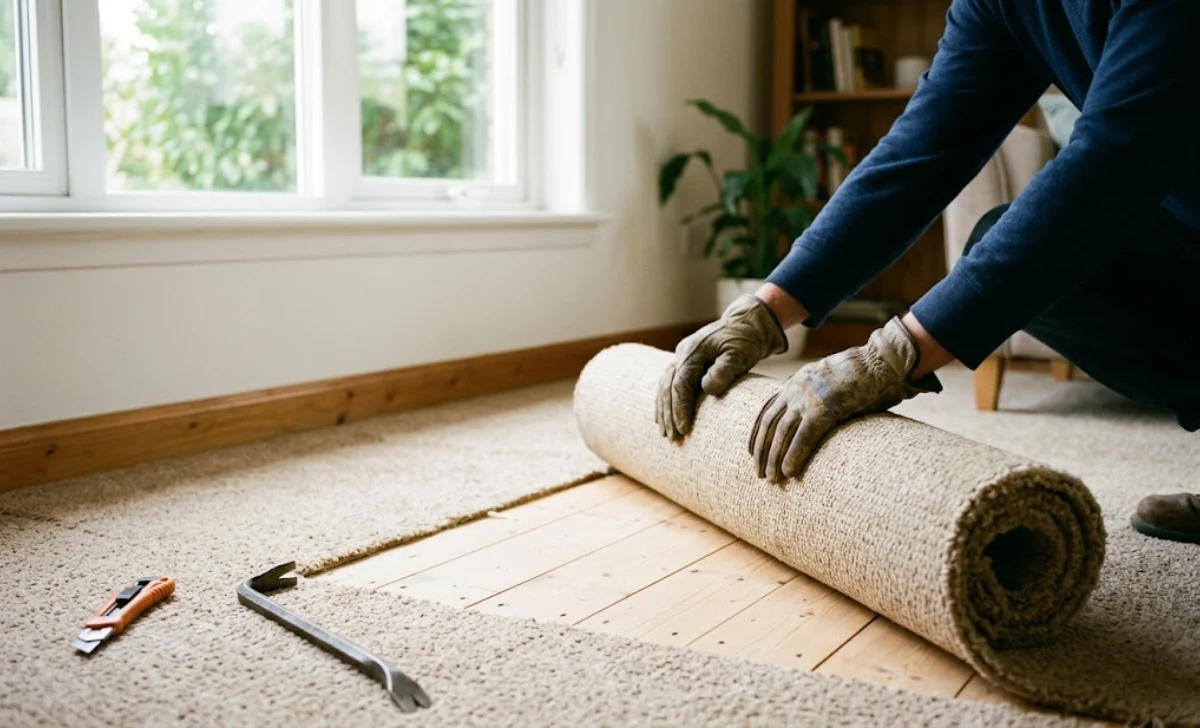
To remove old carpet for new flooring, cut the carpet into 2–3 foot strips with a utility knife, pull each strip free from the tack strips, remove the padding and staples from the subfloor, and clean the surface thoroughly before installation. Check for subfloor damage before laying any new floor.
Pulling up old carpet is one of the most satisfying parts of a home refresh — and one of the most underestimated.
What looks like a weekend job can quietly turn into a three-day project if you hit subfloor damage, stubborn adhesive, or staples that refuse to budge. The good news? With the right preparation, most homeowners can remove old carpet for new flooring without professional help.
This guide covers the full process: tools, technique, subfloor prep, hidden costs, and the mistakes that trip up even experienced DIYers. Whether you’re laying vinyl plank, laminate, or hardwood, getting the removal right makes everything that follows easier.
What You Need Before You Start
Tools for the Job
You won’t need much, but having the right tools saves hours of frustration.
Essential:
- Utility knife or carpet cutter
- Pry bar or flat bar
- Pliers (needle-nose work well for staples)
- Heavy-duty work gloves
- Safety glasses
- Dust mask or respirator
- Knee pads
- Heavy-duty bin bags or a rental dumpster
Helpful extras:
- Floor scraper (for adhesive residue)
- Staple remover or hammer
- Shop vacuum
- Plastic sheeting (to contain dust)
Most of these tools are available at hardware stores or online. If you’re only doing this once, renting rather than buying larger items like a floor scraper makes sense.
Safety First
Old carpet — especially in homes built before 1980 — can contain asbestos-backed materials. If your home was built during that era, have the flooring tested before removal. The U.S. Occupational Safety and Health Administration (OSHA) recommends taking precautions whenever asbestos presence is possible, including proper respiratory protection and professional removal if confirmed.
Even without asbestos concerns, wear gloves and a dust mask. Decades of dust, allergens, and debris are locked inside old carpet fibers. You’ll stir all of it up the moment you start cutting.
Step-by-Step: How to Remove Old Carpet
Step 1: Clear the Room
Move all furniture out completely. Partial clearance leads to working around obstacles, which leads to missed spots and awkward angles. Take everything out — this also gives you a chance to inspect what you’re working with before the job begins.
Step 2: Remove the Doors
If the new flooring will sit higher than the old carpet, door clearance becomes an issue later. Remove interior doors now and set them aside. It’s far easier to trim them before reinstalling than after.
Step 3: Cut the Carpet Into Strips
Don’t try to pull up carpet in one piece. Use a utility knife to cut it into manageable strips — roughly 2–3 feet wide. Score the back side if the face is too thick to cut cleanly. Smaller sections are easier to roll, carry, and dispose of.
Pro tip: Cut away from yourself and keep the blade sharp. Dull blades require more pressure and are more likely to slip.
Step 4: Pull Back the Carpet
Start in a corner. Use pliers to grip the carpet edge and pull it free from the tack strips along the perimeter. Once you’ve got a corner lifted, you can often pull the strip by hand. Roll each section as you go — rolling keeps the debris contained and makes hauling easier.
Step 5: Remove the Carpet Padding
Padding is usually stapled or glued directly to the subfloor. Pull it up in sections the same way. If it tears, that’s fine — just get it all up.
Padding staples are the unglamorous part of this job. There can be hundreds of them per room. A floor scraper or flat bar helps pop them free. Don’t skip this step — leftover staples will telegraph through thin flooring and can damage it from underneath.
Step 6: Remove the Tack Strips (If Needed)
Tack strips are thin wooden pieces with sharp nails, nailed around the room’s perimeter. Whether you remove them depends on your new flooring type.
- Vinyl plank and laminate: Remove the tack strips — they create uneven edges and can puncture underlayment.
- Hardwood: You may be able to reuse them if they’re in good condition.
- Tile: Always remove them.
Use a pry bar to lift them carefully. The exposed nails are sharp — handle them carefully and dispose of them safely.
Preparing the Subfloor After Carpet Removal
This is where the real work begins — and where most DIYers underestimate the time involved.
Check for Damage
Walk the entire subfloor before doing anything else. Press down with your foot at different points. Any bounce, flex, or soft spots indicate damage — potentially from moisture, rot, or inadequate support. Mark these areas with tape.
Minor issues like small gaps or popped screws are easy fixes. Larger sections of rot or structural damage need repair before any new flooring goes down. Skipping this step leads to problems that show up months later and cost more to fix than addressing them now.
Remove Adhesive Residue
If the carpet was glued directly to the subfloor — common in commercial-style installs and older homes — you’ll need to remove the adhesive before laying new flooring.
Options include:
- Floor scraper: Best for large areas with dried adhesive.
- Chemical adhesive remover: Effective on stubborn residue, but requires ventilation and drying time.
- Heat gun: Softens old adhesive for scraping, but use it carefully to avoid scorching the subfloor.
The goal is a surface that’s flat, clean, and free from anything that could interfere with your new installation.
Clean the Subfloor Thoroughly
Sweep, vacuum, and wipe down the entire surface. A shop vacuum is ideal here — standard vacuums struggle with the volume of debris. Pay attention to corners and edges where dust and debris accumulate.
Once clean, check for any remaining staples, protruding screws, or nail heads. Hammer down anything that sticks up. Sand down any high spots with a hand sander or belt sander if needed.
A flat, clean subfloor is non-negotiable. Most flooring manufacturers — including those who follow National Wood Flooring Association (NWFA) standards — specify a maximum variance of 3/16 inch over a 10-foot span. Exceeding that causes problems with floating floors.
Can You Install New Flooring Over Old Carpet?
The short answer: no. Not if you want it done properly.
Installing hard flooring over carpet creates an unstable base. Carpet compresses unevenly underfoot, causing floating floors to flex, click, and eventually separate at the joints. It also adds height that affects doors, transitions, and baseboards.
Some very thin, low-pile carpet has been used as a subfloor in certain niche cases, but this is not recommended practice for laminate, vinyl plank, or hardwood installation. The only way to guarantee a long-lasting result is to start with a clean, solid, flat subfloor.
If you’re weighing up your flooring options for what goes down next, Shine Xpert’s flooring guides cover a wide range of materials with practical installation advice.
The Real Cost of Carpet Removal
DIY Costs
Doing it yourself keeps costs low, but there are still expenses to account for:
| Item | Estimated Cost |
|---|---|
| Utility knife + blades | £10–£20 / $10–$25 |
| Pry bar + pliers | £15–£30 / $15–$35 |
| Gloves, mask, safety gear | £10–£20 / $10–$20 |
| Disposal (skip hire/dumpster rental) | £80–£200 / $100–$250 |
| Adhesive remover (if needed) | £15–£40 / $20–$50 |
Total DIY estimate: £130–£310 / $155–$380 depending on room size and what you already own.
Professional Removal Costs
According to data from HomeAdvisor, professional carpet removal in the US typically runs between $1 and $1.50 per square foot, not including disposal. For an average 200 sq ft room, that’s roughly $200–$300 before any subfloor work.
UK rates vary by region but generally fall between £2 and £4 per square metre for removal alone.
Hidden Costs to Watch For
These are the ones that catch people off guard:
- Subfloor repairs: Water-damaged or soft panels can cost £50–£200+ / $100–$300+ to replace.
- Adhesive removal: Adds time and labour, or specialist chemical costs if DIY.
- Waste disposal: Carpet is bulky. Disposal costs are often higher than expected.
- Door trimming: If your new floor raises the height, doors may need trimming — factor in a carpenter’s time or a door trimming kit.
Mistakes to Avoid When Removing Carpet
These are the errors that create bigger problems down the line:
1. Leaving staples in the subfloor
Even one staple missed can puncture the underlayment or cause a ridge underfoot. Be thorough.
2. Not checking for subfloor damage before installation
It’s tempting to clean up and move straight to laying the new floor. Don’t. Problems you ignore now become expensive repairs later.
3. Skipping moisture testing
Before laying vinyl plank or laminate, test subfloor moisture levels. High moisture causes flooring to warp and buckle. Simple moisture meters cost under £20 / $25 and are worth every penny.
4. Rushing the tack strip removal
The nails are sharp, and the strips can splinter. Work carefully to avoid injury and to keep the subfloor edge intact.
5. Underestimating disposal volume
Carpet takes up a lot of space once removed. Arrange disposal before you start, not after the room is full of rolled-up carpet.
When to Hire a Professional
DIY removal works well for:
- Single rooms with standard wall-to-wall carpet
- Homes with no known asbestos risk
- Confident DIYers comfortable with basic hand tools
Consider hiring a professional if:
- The home predates 1980 and hasn’t been tested for asbestos
- There’s visible subfloor damage or signs of water damage
- The carpet is glued down across a large area
- You’re working to a tight timeline before a flooring installation crew arrives
A professional removal crew will typically complete a standard room in 2–4 hours and leave the subfloor ready for the next stage.
What Comes Next: Choosing Your New Flooring
Once the subfloor is clean, flat, and structurally sound, the interesting part begins. Choosing the right flooring type depends on the room, your budget, and how much foot traffic it sees.
Vinyl plank and laminate are two of the most popular choices for DIY installation — both float over the subfloor without adhesive and are forgiving for beginners. If you’re still deciding between them, this detailed comparison of luxury vinyl plank vs. laminate flooring from Shine Xpert breaks down the key differences clearly, covering durability, water resistance, feel underfoot, and cost.
Conclusion
Removing old carpet for new flooring is a project most homeowners can handle with basic tools and a clear plan. The process itself isn’t complicated — but the details matter. Getting the subfloor properly cleaned, repaired, and flat is what separates a flooring installation that looks good for years from one that starts showing problems within months.
Take your time on the prep. Check for damage. Don’t skip the staples. And if anything about the subfloor doesn’t look right, address it before the new floor goes down.
The effort put in before installation is exactly what makes the finished result worth it.
FAQs
How long does it take to remove carpet from one room?
A single room (around 150–200 sq ft) typically takes 2–4 hours for an experienced DIYer, including padding and staple removal. First-timers should allow 4–6 hours. Subfloor prep adds additional time depending on the condition.
Do I need to remove tack strips before installing new flooring?
It depends on the flooring type. For vinyl plank and laminate, yes — tack strips create edge irregularities and can damage underlayment. For hardwood, reusable strips in good condition may be kept. When in doubt, remove them.
Can carpet be installed over old carpet?
New carpet can technically be laid over old carpet, though it’s not recommended — it affects feel, hygiene, and height. Hard flooring (vinyl, laminate, hardwood, tile) should never be installed over carpet.
What do I do with the old carpet after removal?
Options include hiring a skip, using a local tip (household waste site), scheduling a bulky waste collection through your local council (UK), or hiring a junk removal service. Some recycling centres accept carpet. Check locally — rules vary by area.
How do I know if my subfloor needs repair before new flooring goes down?
Walk the floor and press down in multiple spots. Soft areas, bouncing, squeaking, or visible cracks or water staining indicate damage. Any section that flexes or feels spongy should be repaired or replaced before installation.
Is carpet removal a DIY job or should I hire someone?
Most standard carpet removals are well within DIY range. If the property is older (pre-1980), if there’s suspected asbestos-backed material, or if the subfloor has significant damage, professional help is the safer choice.
For a broader look at flooring options — including hardwood, tile, and engineered options — Shine Xpert is a practical resource worth bookmarking before you commit to a material.