
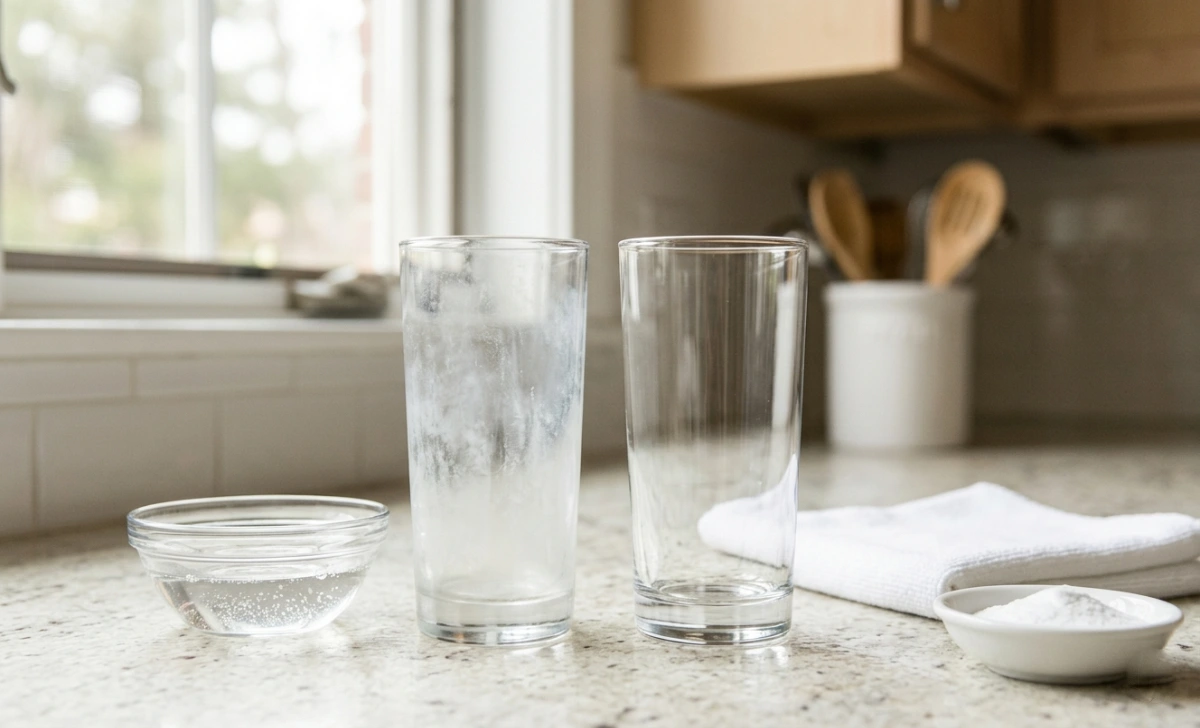
Cloudy glasses are almost always caused by one of two things: hard water mineral deposits or a process called glass etching. Mineral film can be removed at home using white vinegar, baking soda, or citric acid. Etching cannot be reversed. A simple 30-second spot test tells you which problem you are dealing with before you begin.
Pulling a glass out of the dishwasher only to find it looks milky and dull is one of those small domestic frustrations that feels disproportionately annoying. You ran the full cycle. You used detergent. The glass still looks like it was rinsed in fog.
The good news is that most cloudy glasses can be fixed with things already in your kitchen. The less good news is that some cannot — and knowing the difference before you start saves you time and effort.
This guide walks through the causes, the correct tests, and the methods that actually work in 2026.
What Makes Glasses Go Cloudy?
Not all cloudiness is the same. There are three distinct causes, and each behaves differently.
Hard Water Mineral Film
Hard water contains dissolved minerals — primarily calcium and magnesium. When water evaporates from the surface of a glass, those minerals stay behind. Over time, they build up into a white, chalky film that makes the glass look perpetually dirty even after washing.
This is the most common cause of cloudy glassware, and it is entirely fixable. The mineral deposits sit on the surface. An acidic solution dissolves them.
Glass Etching
Etching is different, and significantly more serious. It is a permanent chemical change to the glass surface itself.
Here is what actually happens: glass contains silica and metal ions (calcium, magnesium, sodium). When strong detergent reacts with heat and soft water — water that has been stripped of its natural minerals — it becomes chemically aggressive. With no minerals in the water to react with, the detergent goes after the metal ions in the glass instead. This strips them out, leaving exposed silica pits across the surface.
Those microscopic pits scatter light rather than transmit it, which is why etched glass looks hazy or frosted. Because the damage is structural, no cleaning agent can fix it.
The counterintuitive reality: soft water causes more etching than hard water. Many people install water softeners expecting better results — and instead find their glassware deteriorates faster.
Soap and Detergent Residue
A third, less-discussed cause is undissolved detergent or soap that dries onto the glass before being fully rinsed away. This usually happens when the dishwasher is overloaded, the spray arms are blocked, or too much detergent is used in a short cycle. It appears as a thin, streaky film rather than the chalky coating of mineral deposits.
The Vinegar Test — Find Out Before You Clean
Before reaching for any cleaning supplies, do this test. It takes 30 seconds and tells you exactly what you are dealing with.
Dip a cloth or paper towel in undiluted white vinegar. Rub a small area of the cloudy glass firmly for about 15 seconds. Rinse and look.
- If the haze lifts or lightens, you have mineral film. Your glasses can be cleaned.
- If nothing changes, the glass is etched. No cleaning method will help.
- If you see blue, purple, or iridescent colours when you hold the glass at an angle near a light source, that is another strong indicator of etching. The iridescence comes from light refracting through the rough silica surface.
Run this test on every cloudy glass before you start. It saves you from needing glasses that cannot be saved.
How to Clean Cloudy Glasses: 3 Methods That Work
All three methods target the same problem — mineral deposits — using different acids. Choose based on what you have available.
Method 1 — White Vinegar Soak
This is the most reliable method for moderate to heavy mineral film.
What you need: White distilled vinegar, warm water, a microfiber cloth, and mild dish soap.
Steps:
- Fill a bowl or sink with equal parts warm water and white vinegar.
- Place the cloudy glasses on their sides so the solution fully submerges them.
- Soak for 15–30 minutes. For heavy buildup, extend to 45 minutes.
- Remove each glass and scrub gently with a soft sponge or nylon cloth, focusing on the base and rim where deposits concentrate.
- Rinse thoroughly with warm water.
- Dry immediately with a lint-free microfiber cloth. Do not air dry — evaporating water leaves new spots.
Why it works: The acetic acid in white vinegar reacts with calcium carbonate (the mineral in hard water deposits) and dissolves it. You are not scrubbing grime — you are completing a chemical reaction.
Method 2 — Baking Soda Paste
Better for lighter cloudiness or when you want a mild abrasive to shift stubborn deposits without soaking.
Steps:
- Mix 3 parts baking soda with 1 part water to form a thick paste.
- Apply the paste to the cloudy areas using a soft cloth.
- Work in gentle circular motions — do not press hard.
- Leave the paste on for 10–15 minutes.
- Rinse thoroughly with warm water.
- Follow with a rinse of diluted white vinegar if deposits remain, then rinse again with clean water.
- Dry with a microfiber cloth.
Note: Baking soda is mildly abrasive. It works well on standard glassware but should not be used on fine crystal or coated glass.
Method 3 — Citric Acid Solution
Citric acid powder is widely available, inexpensive, and often more effective than vinegar for heavy mineral buildup. It is also odourless, which many people prefer.
Steps:
- Dissolve 2 tablespoons of citric acid powder into 500ml of warm water.
- Soak the glasses for 20–30 minutes.
- Rinse thoroughly and dry with a microfiber cloth.
As of 2026, citric acid has become increasingly popular in natural cleaning circles as a descaler for kettles and coffee machines — the same chemistry applies directly to mineral-filmed glassware.
Comparison at a glance:
| Method | Best For | Soak Time | Odour |
|---|---|---|---|
| White Vinegar | All-round mineral film | 15–45 min | Strong |
| Baking Soda Paste | Light cloudiness | 10–15 min | None |
| Citric Acid | Heavy mineral deposits | 20–30 min | None |
Can Etched Glasses Be Fixed?
No. This is the honest answer and worth stating clearly.
Once the glass surface has been physically eroded, no household method restores it. The silica structure has been altered. You cannot fill those microscopic pits with cleaning agents or polishing cloths.
Some sources suggest using a drill-mounted foam polishing pad and polishing compound on etched glass. This can marginally reduce the appearance of light etching on thick glassware, but it is a significant investment of time and equipment for uncertain results — and it can permanently alter the shape of the rim on thin glass. It is not recommended for standard drinking glasses or stemware.
The only genuine fix for etched glass is replacing it.
How to Prevent Cloudy Glasses Going Forward
Once your glasses are clear, a few consistent habits keep them that way.
Adjust your dishwasher temperature. Water above 60°C (140°F) accelerates detergent aggression against glass surfaces. Most modern dishwashers have an eco or gentle cycle that runs cooler — use it for glassware.
Use less detergent than you think you need. Detergent pods and pre-measured tablets are designed for heavily soiled loads. For a lightly loaded cycle with glasses, half a pod or a reduced detergent dose is usually sufficient, especially in soft water areas.
Always use rinse aid. Rinse aid causes water to sheet off surfaces rather than bead, which dramatically reduces mineral deposits as the glass dries. If you have run out, a small bowl of white vinegar placed in the top rack works as a short-term alternative.
Load glassware on the top rack only. The spray arm pressure is gentler in the upper rack, and the temperature is slightly lower at the top of the dishwasher.
Dry glasses by hand immediately. The single most effective prevention method is not letting water sit on glass and evaporate. Dry each glass immediately after washing with a clean, lint-free cloth.
Hand-wash delicate or expensive glassware. This is non-negotiable for fine stemware, lead crystal, or any glass with a printed or applied finish. The dishwasher is too harsh an environment for anything you care about.
A Note on Lead Crystal and Delicate Glassware
Lead crystal — the heavy, highly refractive glassware that rings when you flick it — is more vulnerable to etching than standard soda-lime glass. The lead compounds in the glass react more readily with dishwasher detergent. Lead crystal should always be hand-washed in warm (never hot) water with a small amount of mild dish soap, then dried immediately.
If your crystal has already developed a cloudy film, the vinegar soak method is safe to use. But keep the soak short (15 minutes maximum) and check frequently.
FAQs
Is it safe to drink from etched glasses?
Yes. Etching is a cosmetic issue — the glass is microscopically rougher on the surface, but it is not chemically altered in a way that affects your health. The glass remains safe to use; it just does not look as clear.
Why do my glasses come out of the dishwasher cloudy, even though I use rinse aid?
Rinse aid helps, but it does not eliminate the problem if you are in a hard water area. Mineral deposits build up gradually with each cycle. If cloudiness keeps returning despite rinse aid, try reducing your detergent quantity, lowering the wash temperature, or switching to hand washing for glassware.
How do I know if I live in a hard water area?
Your water supplier’s website will usually show a water hardness map or let you check by postcode or zip code. In the US, the USGS publishes a national hard water map. As a general rule, if your kettle or shower screen develops scale regularly, you are in a hard water area.