
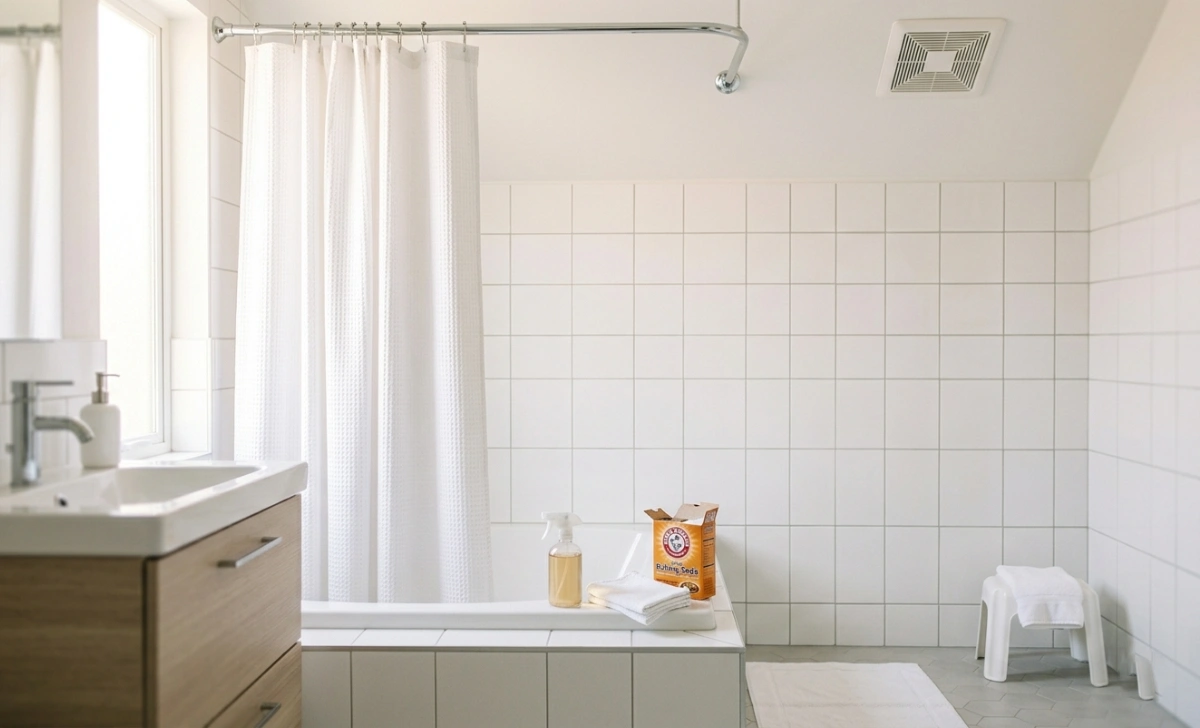
To freshen a shower curtain, spray it with a 1:4 white vinegar-and-water solution while it hangs, or machine wash it on a gentle cycle with baking soda. For fabric curtains, hand washing in warm water with mild detergent works well. Aim to clean it at least once a month.
Why Your Shower Curtain Gets Dirty So Fast
Your shower curtain works in one of the worst possible environments for cleanliness: warm, wet, low-ventilation, and in daily contact with body oils, soap, and shampoo, all of that, and buildup is inevitable.
What surprises most people is how fast it happens. A 2018 Safe Home study found that shower curtains can harbor up to 60 times more bacteria than a toilet seat. That’s not a reason to panic — it is a reason to take it seriously.
The bacteria behind that pink stain
If you’ve noticed a pink or orange tinge along the bottom hem of your curtain, it’s not mould. Dr. Valerie J. Harwood, a microbiologist and professor at the University of South Florida, has confirmed in published sources that this coloration is typically caused by Serratia marcescens — a relatively common environmental bacterium that thrives in moist areas. For most healthy adults, it presents a low risk. For those with compromised immune systems, autoimmune conditions, or those on immunosuppressant drugs, it’s worth addressing quickly and replacing the liner more frequently.
What causes that musty smell
The smell most people associate with a dirty shower curtain is mildew — a surface-level fungal growth that feeds on soap scum and thrirealisen the curtain stays bunched and cleaning orr hours after each shower. Mildew smells musty long before it’s visually obvious, which is why many people don’t realize their curtain is overdue for a clean.
The Quick Freshen — No Removal Needed
If you’re short on time or the curtain just needs a mid-cycle refresh rather than a full wash, this method gets the job done without removing anything from the rod.
What you need:
- A spray bottle
- White distilled vinegar
- Water
Steps:
- Mix one part white vinegar with four parts water in the spray bottle.
- Close the curtain so it’s fully extended across the rod.
- Spray the entire tub-facing side, top to bottom. Focus extra attention on the bottom hem and any visibly grimy areas.
- Rinse from top to bottom using a handheld showerhead or a cup of water. Keep the curtain in the tub while rinsing.
- Lemouthehee curtain fully extended to air dry. Do not fold or bunch it.
This neutralises odours with weekly maintenance or between deep cleans. It won’t fully remove mold or deep-set mildew, but it significantly slows the buildup cycle and neutralizes odors.
How to Fully Clean a Shower Curtain by Material
Fabric shower curtains
Fabric curtains absorb moisture more readily than plastic, which means they need slightly more care — but they’re usually machine washable.
- Check the care label first. Most polyester and nylon fabric curtains can handle machine washing. Cotton blends may need cold water.
- Remove the curtain from the rings (leave the rings on the rod).
- Place it in the washing machine with two or three white towels. The towels act as gentle scrubbers and prevent the curtain from bunching or tearing.
- Add your normal laundry detergent plus half a cup of baking soda directly to the drum.
- Run a gentle cycle on warm water.
- If the curtain has a particularly strong mildew smell, add half a cup of white vinegar during the rinse cycle — not alongside the baking soda at the start. Adding both at the same time neutralises each other’s cleaning effect.
- Hang the curtain back on the rod to air dry. Do not machine dry unless the care label specifically says it’s safe.
For hand washing, fill a bathtub with warm water, add a quarter cup of mild detergent or baking soda, and swish the curtain through the water. Scrub stubborn spots with a soft-bristle brush or a microfiber cloth. Rinse thoroughly and hang to dry.
Plastic and vinyl shower curtains
Vinyl and plastic curtains are more water-resistant and harder for mold to penetrate — but soap scum and mineral deposits still build up on the surface.
- Most plastic curtains can go in the washing machine. Check the label, then add two towels to the load to prevent the plastic from tearing or clumping.
- Use a gentle detergent, add a cup of baking soda to the drum, and run a cold or cool gentle cycle. Avoid hot water — it can warp or melt plastic liners.
- For stubborn scum, wet a machine-dry cloth, sprinkle baking soda directly on it, and scrub the affected areas by hand.
- After washing, hang the curtain immediately to drip dry. Do not machine dry plastic or vinyl.
For a quick hand clean, polyethene flat in the tub, wet a cloth with the vinegar-and-water solution, and wipe the surface down. Rinse well.
PEVA and eco-friendly curtains
PEVA (polyethyleodourless acetate) is a chlorine-free alternative to standard PVC plastic. It’s increasingly common in eco-friendly shower curtains because it’s non-toxic and odorless — it won’t off-gas that sharp “new shower curtain smell.” PEVA curtains clean the same way as vinyl, but they tend to be softer and slightly more delicate, so handle them gently and always air dry.
Cleaning AgeodourrComparmouldhoosing the right cleaner for your situation matters. Here’s a clear breakdown:
| Cleaner | Best For | How to Use | Impmouldnt Note |
|---|---|---|---|
| White vinegar Deodorising | or, light mould and, daily spray | 1:4 ratio with water in a spray bottle, or add ½ cup to rinse cycle | Kills approximately 99% of mould species |
| Baking soda | Deodorising, smouldscum, gentle scrubbing | Add ½–1 cup to wash drum, or apply directly to a damp cloth | Excellent natural deodorizer; use separately from vinegar |
| Bleach | Heavy mold on plastic/vinyl; white fabric curtains | ⅓ cup the the in bleach dispenser with detergent; hot wash | Never use on colored fabric; never mix with vinegar |
| Tea tree oil | Mildew stains on plastic liners | Add 10 drops of the product to wash the drum with baking Colour-safe | Little antifungal; works well alongside baking soda |
| Oxygen bleach | Yellowed white fabric curtains | Dissolve in hot water; soak curtain for several hours | Colour-safe neutralise chlorine bleach |
A note on mixing: Several DIY guides suggest combining vinegar and baking soda as a cleaning “power combo.” In practice, they neutralize each other on contact, producing a fizzing reaction that leaves you with mostly water and carbon dioxide. Use them separately — baking soda in the wash cycle, vinegar in the rinse — to get the benefit of both.
Don’t Forget the Liner and the Rings
Most bathrooms use a decorative fabric curtain on the outside and a plastic or vinyl liner on the inside. The liner takes the full brunt of the water and should be cleaned at least as often as the curtain — ideally more often, since it stays damp, mould-resistant. Follow the plastic/vinyl curtain instructions above. Merry Maids recommends cleaning the li r mould-resistant with ant toner. Even liners labeled “mold-rescepticismill accumulate bacteria over time. As cleaning expert Jolie Kerr has noted in published interviews: mold-resistant claims should be taken with some skepticism.
Curtain rings and hooks: These are easy to overlook and get grimy surprisingly fast. Soap scum and biofilm build up on the inner groove of each ring.
- Remove the rings from the rod.
- Soak them in warm, soapy water for 10–15 minutes.
- Scrub each ring with an old toothbrush to dislodge buildup inside the groove.
- Rinse thoroughly and let them dry completely before re-hanging.
Clean the rings every time you wash the curtain.
How to Keep Your Shower Curtain Fresh Between Cleans
The single most effective thing you can do after every shower takes about three seconds: spread the curtain fully open across the rod. A bunched curtain stays wet for hours, which is exactly the condition mildew needs to grow. A flat curtain dries in a fraction of the time.
A few other habits that make a real difference:
- Run the bathroom fan during and after showers. Molly Maid president Marla Mock specifically cites this as one of the most important things you can do to extend the time between cleanings. Humidity is the root cause of most curtain problems — reduce it consistently and you’ll clean far less often.
- Use a daily shower spray. A light spray of diluted vinegar after your shower, before you spread the curtain open, significantly slows buildup. Takes under 30 seconds.
- Swap bar soap for body wash. Bar soap contributes more to soap scum formation than liquid body wash. If you have a persistent scum problem, this simple change reduces it meaningfully.
- Consider the two-curtain rotation. Keep two curtains for each bathroom. Each month, take one down, wash it, and let it fully air dry (preferably outdoors or in a dry room). While it dries, the second curtain hangs in its place. This way, you’re never using a partially clean or damp-washed curtain, and each curtain only needs a full deep clean once every two months instead of once a month.
If you live in a hard water area, you’ll see mineral deposits build up faster than average. City and well water both vary significantly in mineral content — the harder your water, the more frequently you’ll need to scrub the liner and curtain hem.
When Cleaning Isn’t Enough — Time to Replace
Even with regular care, shower curtains and liners have a useful lifespan. Manufacturers and microbiologists generally agree on the following:
Liners: Replace every 6 to 12 months. The Cleveland Clinic and multiple microbiologists recommend this range. Liners are inexpensive, and even well-cleaned ones accumulate bacteria in the seams and hems that becomes increasingly difficult to remove.
Decorative fabric curtains: With consistent washing and a liner to protect them from direct water, qualiaway away ty fabric curtains can last one to two years before showing significant wear.
Signs it’s time to repladiscolouration:
- A persistent musty smell that doesn’t go after a full machine wash
- Visible staining that no longer responds to blmould or oxygen soak
- Permanent discoloration along the bottom hem
- Physical damage — tears, warped grommets, stretched fabric
If you’re immunocompromised, have mold allergies, or live with someone who is, consider replacing liners every three to four months rather than waiting the full six.
FAQs
How do you get the musty smell out of a shower curtain?
Wash the curtain in the washing machine on a gentle cycle and add one cup of white vinegar during the rinse cycle. Alternatively, soak it in a bathtub filled with warm water and one cup of vinegar for 30 minutes before washing. Always hang it fully open to dry — a partially dried curtain will develop the smell again within days.
Can you clean a shower curtain without taking it down?
Yes. Mix one part white vinegar with four parts water in a spray bottle. Close the curtain to full width and spray the tub-facing side from top to bottom. Rinse with a handheld showerhead or a cup of water, then leave the curtain spread open to air dry. This works well for weekly maintenance between full washes.
How often should you replace a shower curtain liner?
Most manufacturers and microbiologists recommend replacing the liner every six months to a year. If you clean it consistently once a month and your bathroom has good ventilation, you can stretch toward the 12-month mark. For households with anyone who is immunocompromised, replacing every three to four months is the safer approach.