
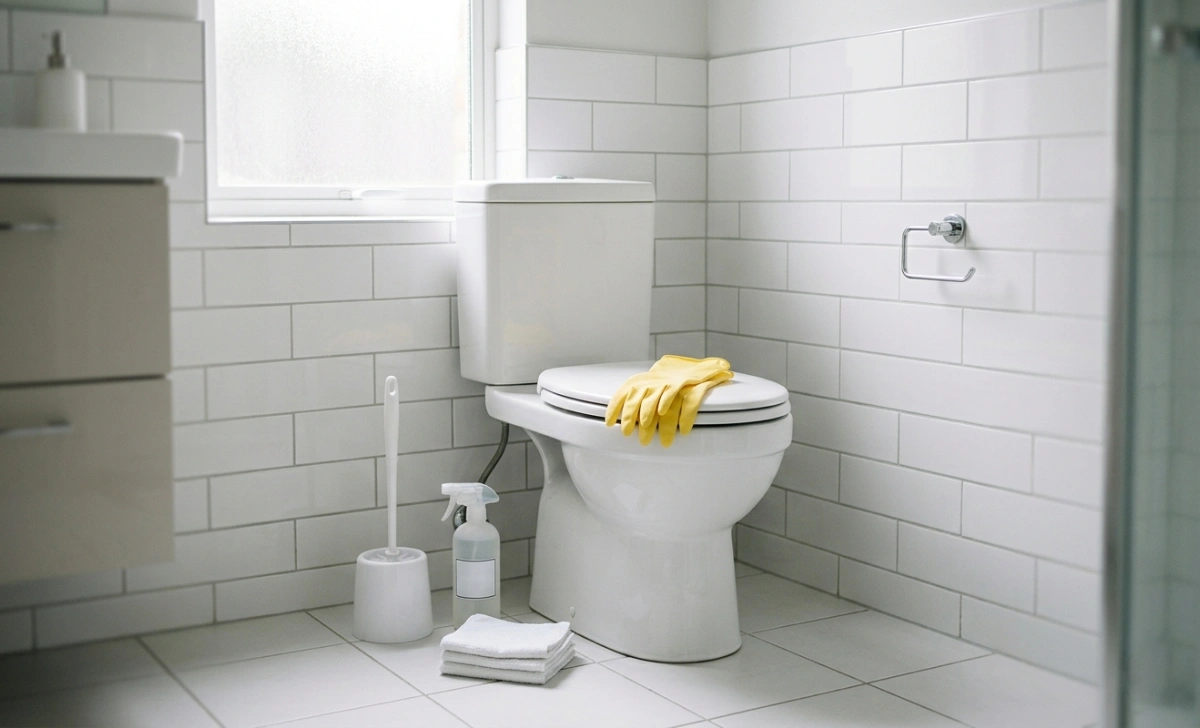
To clean and disinfect a toilet, apply bowl cleaner under the rim and let it sit for at least 5–10 minutes before scrubbing. Wipe all external surfaces — lid, seat, handle, tank, and base — top to bottom with a disinfectant. Clean weekly, and disinfect more often during illness.
Most people clean their toilets regularly. Fewer actually disinfect them. And a surprising number unknowingly make things worse with a dirty brush or a product that never gets enough time to work. This guide walks through the full process — bowl, tank, seat, and every surface in between — with practical steps, a few things most guides skip, and the science behind what actually protects your household.
Cleaning vs Sanitising vs Disinfecting — Why the Difference Matters
These three words are used interchangeably in most cleaning articles. They are not the same thing, and the distinction matters for your health.
Cleaning removes visible dirt, debris, and surface grime. It makes a toilet look cleaner but does not reliably kill bacteria or viruses.
Sanitising reduces the number of microorganisms to a safer level — typically by 99.9%. It’s a middle ground, useful for general upkeep.
Disinfecting uses EPA-registered chemicals to kill bacteria and viruses on a surface. It requires a specific contact time — the product must stay wet on the surface long enough to work.
The practical takeaway: scrubbing with soap and water cleans your toilet. Using a bleach-based product or an EPA-registered disinfectant and leaving it to sit before wiping or flushing is effective in disinfecting it. Both matter, and neither fully replaces the other.
What You Need Before You Start
Keep these within reach before you begin:
- Toilet bowl cleaner (bleach-based like Clorox or Lysol Power, or acid-based for hard water/limescale)
- Disinfecting wipes or disinfectant spray (for external surfaces)
- Toilet brush — firm-bristled; replace every 6 months
- Rubber gloves — non-negotiable
- Microfiber cloths or paper towels
- Optional: White vinegar, baking soda, citric acid (for natural or hard water approaches)
A note on mixing products: Never mix bleach-based cleaners with acid-based ones (such as vinegar or limescale removers). The reaction produces chlorine gas, which is toxic. Use one or the other, never both in the same session, without thoroughly rinsing in between.
How to Clean and Disinfect the Toilet Bowl
Step 1 — Apply Cleaner Under the Rim First
Put on your gloves. Squeeze toilet bowl cleaner up under the rim, working all the way around the inside of the bowl. The under-rim area is where bacteria, mould spores, and mineral deposits accumulate most heavily — and where most people clean least thoroughly.
If you’re using a natural method, add ½ cup of white vinegar or a baking soda and vinegar combination directly to the bowl of water.
Step 2 — Let It Dwell (Contact Time Is Not Optional)
This is the step most people skip. Allow the cleaner to sit for a minimum of 5–10 minutes. For a heavily stained bowl, 15 minutes is better. This dwell time — sometimes called contact time — is when the active ingredients are actually killing bacteria and breaking down buildup. Applying a product and immediately scrubbing it away is little more than a rinse with extra steps.
While the bowl cleaner is working, move on to the external surfaces (covered in the next section). You’ll come back to the bowl.
Step 3 — Scrub and Flush
Using a firm-bristle toilet brush, scrub the inside of the bowl thoroughly. Work under the rim — push the brush into every angle. Scrub down the sides of the bowl and into the drain opening. Flush to rinse. If you can still see residue, scrub once more and flush again.
How to Disinfect the Outside of the Toilet — In the Right Order
Work top to bottom every time. This keeps you from dripping onto surfaces you’ve already cleaned.
- Tank lid and top of tank — wipe with a disinfecting wipe or cloth sprayed with disinfectant.
- Flush handle or button — one of the most-touched surfaces in the bathroom; disinfect it every time.
- Toilet lid (top, then underside)
- Toilet seat (top, then underside) — the underside is frequently missed and accumulates splatter.
- The rim of the bowl exterior
- The base and floor around the toilet — urine often splashes here, and dried urine is a persistent source of bathroom odour.
For each surface, spray or wipe with a disinfectant product and allow it to air dry or sit for the time indicated on the label before wiping away. Disinfecting wipes are fast and practical here. Reusable microfiber cloths work well, but wash them on a hot cycle after every use.
Remove the toilet seat entirely every few weeks (most seats pop off with a simple turn of the hinge nuts) to clean the hinge area, where grime and bacteria build up unseen.
How to Clean Inside the Toilet Tank
Most households never clean the tank. Mineral deposits, mould, and rust can build up inside over time, affecting water quality in the bowl and causing persistent odours.
How to do it:
- Turn off the water supply valve at the wall behind the toilet.
- Flush to drain most of the water from the tank.
- Inspect the interior. If you see pink or black slime, mineral scale, or rust, it needs cleaning.
- Add 1–2 cups of white vinegar directly to the empty tank. Let it sit for 10–15 minutes.
- Gently scrub the interior walls with a soft brush or sponge. Avoid spraying bleach directly onto the rubber flapper or float — bleach degrades rubber components over time.
- Turn the water back on, allow the tank to refill, then flush two or three times to clear out the vinegar.
For limescale buildup in the tank, mix 2 tablespoons of citric acid with 1 cup of hot (not boiling) water and pour it in. Let it sit for 10 minutes, then flush twice. Citric acid is highly effective against mineral deposits and safer for rubber tank parts than prolonged bleach exposure.
How to Remove Stubborn Toilet Stains
Hard Water and Limescale Stains
Hard water leaves chalky, white-to-grey mineral deposits on the bowl. Standard bleach-based cleaners will not remove these — bleach has a high pH and is ineffective against mineral scale. You need an acidic cleaner, such as a product specifically labelled for lime and rust removal (like Clorox Toilet Bowl Cleaner Lime & Rust Destroyer), white vinegar, or citric acid solution.
Apply the acidic cleaner, allow it to soak for 10–15 minutes (or longer for heavy buildup), then scrub firmly and flush.
Rust Stains
Rust stains are orange-brown and typically appear where water drips continuously or where minerals are particularly high. Treat them with the same acidic approach. Do not use bleach on rust — it can set the stain permanently.
BlacMould and Mildew Rings
Black rings at the waterline are caused by mould and mildew feeding on mineral deposits. For mild cases, a baking soda and vinegar paste scrubbed firmly will work. For heavy mould, use a bleach-based bowl cleaner with adequate ventilation — open the window and run the bathroom fan. Flush first to lower the water level, apply the cleaner directly to the stain, allow it to sit, then scrub.
If mould is present in the toilet tank or appears to be spreading significantly, consult a professional — black mould can indicate a deeper moisture problem.
The Toilet Brush Problem Nobody Talks About
Here is something most cleaning guides completely skip: a dirty toilet brush is a contamination source, not a cleaning tool.
A 2024 peer-reviewed study published in the American Journal of Infection Control (Gerba et al., University of Arizona) found that scrubbing a toilet bowl with a brush without using a disinfectant product resulted in contamination spreading to surrounding surfaces. Using a disinfectant during bowl cleaning, by contrast, produced a greater than 99.99% reduction in contamination in the bowl water.
What this means practically:
- Always use a product — not just water — when scrubbing the bowl.
- After each use, spray the brush head with a disinfectant (hydrogen peroxide spray works well) before returning it to the holder.
- Allow the brush to air dry before closing it in the holder — wet, enclosed brushes grow bacteria rapidly.
- Replace your toilet brush every six months, or sooner if the bristles are splayed or visibly discoloured.
- Rinse the brush holder itself with disinfectant periodically — it accumulates contaminated water.
The Truth About Toilet Plume — and What Actually Protects You
You may have heard the advice to close the toilet lid before flushing. It sounds reasonable. The problem is that a 2024 study from the University of Arizona — one of the most rigorous examinations of toilet aerosol spread to date — found that closing the lid has no meaningful effect on viral particle spread.
Researchers found that while bacterial spread is reduced by a closed lid, viral particles are small enough to spread to surrounding surfaces regardless, contaminating the floor, the toilet lid itself, and adjacent walls.
The same research team found that adding a disinfectant to the toilet bowl before flushing, or using disinfectant dispensers in the tank, were both effective ways to reduce contamination from flushing, a finding that closing the lid could not match.
Brushing the bowl without a disinfectant product was found to result in contamination of surfaces, while using a disinfectant during cleaning produced a greater than 4 log reduction — more than 99.99% — in bowl water contamination.
The practical takeaway: Closing the lid is still a reasonable habit for reducing large droplet splash. But the single most effective protective measure is regular disinfection of the bowl itself, using a product and allowing it proper contact time. That one step does far more than lid position alone.
How Often Should You Clean and Disinfect Your Toilet?
| Task | Frequency |
|---|---|
| Wipe the seat and handle with a disinfectant wipe | Daily (optional but helpful in busy households) |
| Full bowl clean and disinfect | Weekly |
| Disinfect all external surfaces (seat, lid, tank, handle, base) | Weekly |
| Deep clean under the rim | Weekly |
| Clean inside the toilet tank | Every 3–6 months |
| Replace the toilet brush | Every 6 months |
| Remove and clean seat hinges | Every 2–4 weeks |
Adjust upward during illness. During cold and flu season, more frequent cleaning can help keep germs at bay. If someone in your household has a gastrointestinal illness, disinfect the toilet after every use — and pay particular attention to the flush handle, as it is touched with unwashed hands.
Larger households with more users will need more frequent cleaning. A shared bathroom used by four or more people generally benefits from a mid-week wipe-down in addition to the weekly full clean.
Natural Alternatives That Actually Work
If you prefer to avoid bleach or harsh chemicals, several natural agents provide genuine cleaning and antimicrobial action:
White vinegar is mildly acidic (pH around 2.5) and effective at dissolving mineral deposits, limescale, and mild soap scum. It has some antimicrobial properties, but does not meet the EPA definition of a disinfectant and will not eliminate all pathogens. Best used for maintenance cleaning and stain removal.
Baking soda is a mild abrasive and deodoriser. It works well combined with vinegar for scrubbing and stain lifting. Note: the combination fizzes dramatically, but the reaction also reduces the effectiveness of both ingredients — for cleaning power, use them sequentially rather than simultaneously.
Citric acid is excellent for hard water stains and mineral buildup, and gentler on rubber tank components than vinegar or bleach. Mix 2 tablespoons in 1 cup of hot water for a working solution.
Hydrogen peroxide (3%) is a genuine antimicrobial. It kills bacteria, mould, and some viruses, and is safer around children and pets than bleach. Spray it on the toilet brush before storage and on external surfaces as a disinfectant. Allow it to sit for at least 1 minute before wiping.
Hypochlorous acid (HOCl) is a newer option gaining attention as of 2025–2026. It is the same compound your own immune system produces to fight infection. It kills bacteria and viruses effectively, is non-irritating to skin, requires no rinsing, and is safe around children and pets. It is available in spray bottles from several brands. Store it in a cool, dark place and do not mix it with other cleaners.
Safety Rules to Follow Every Time
- Wear rubber gloves. Every time.
- Ventilate the room. Open the window or run the fan when using any chemical cleaner, especially bleach.
- Never mix bleach and acid-based products. This produces toxic chlorine gas. If you use a limescale remover, rinse the bowl thoroughly before applying any bleach-based product.
- Bleach and septic systems. Frequent, heavy bleach use can disrupt the bacterial balance in a septic tank. If your home uses a septic system, limit bleach use or choose septic-safe alternatives such as enzymatic cleaners or hydrogen peroxide.
- Protect your eyes. When scrubbing a bowl loaded with bleach cleaner, a splash is a real risk. Keep your face away from the bowl.
- Wash your hands thoroughly after removing gloves. Gloves can carry contamination on their outer surface.
FAQs
Can you use bleach to clean a toilet?
Yes, bleach-based cleaners are safe and effective for disinfecting the toilet bowl and external surfaces. Never mix bleach with other toilet bowl cleaners — particularly acid-based products like vinegar or limescale removers — as this creates toxic fumes. If your home has a septic system, use bleach sparingly and consider alternatives such as hydrogen peroxide or enzymatic cleaners.
How long should toilet bowl cleaner sit before you flush?
At a minimum, 5 minutes a day. For a thorough disinfection, 10 minutes is better. For heavy stains or mould, allow up to 15 minutes.tes The dwell time — the period the product stays wet and active on the surface — is when killing actually happens. Flushing too soon makes the product far less effective.
Is it safe to mix toilet bowl cleaner with bleach?
No. Most commercial toilet bowl cleaners already contain bleach or strong acids. Adding extra bleach to an acid-based cleaner (or mixing any two cleaning products) risks a chemical reaction that produces harmful gases. Always use one product as directed, and read the label before combining anything.