
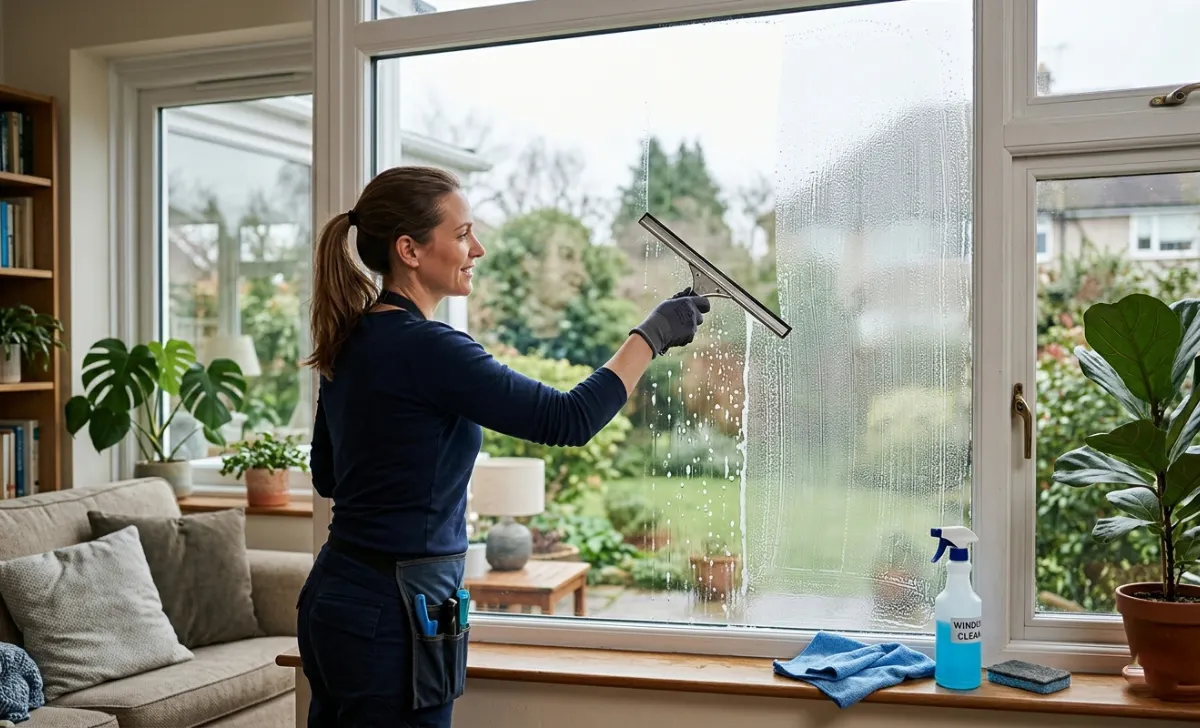
Most people have washed their windows only to step back and find a smear-covered mess staring right back at them. It’s one of those jobs that looks simple but goes wrong surprisingly often — and usually for the same reasons.
Whether you’re tackling grimy exterior windows or foggy interior glass, the right window cleaning tips can mean the difference between a streaky frustration and a genuinely clear view. This guide covers everything: the tools that actually work, the techniques professionals use, and the common habits that quietly ruin your results.
By the end, you’ll know exactly how to clean windows without streaks, what products hold up in the real world, and when it’s worth calling in extra help.
1. Choose the Right Cleaning Solution
The cleaner you use matters more than most people realise. Store-bought glass sprays are fine for light dust, but they often leave a soapy residue that builds up after repeated use — and that residue is usually what causes streaks.
A simple mix that professionals trust: two cups of water, half a cup of white vinegar, and a quarter teaspoon of dish soap. That’s it. The vinegar cuts through grease and mineral deposits, while the tiny amount of soap helps the solution cling to the glass long enough to work.
If you prefer something commercial, look for an alcohol-based glass cleaner rather than one that relies heavily on ammonia. Ammonia can damage window tinting and leave a foggy haze on double-pane glass over time.
Quick tip: Avoid any cleaner with wax additives. They might add short-term shine, but they attract dust faster and leave a film that’s stubborn to remove.
2. Use a Squeegee Instead of Paper Towels
Paper towels are one of the most common causes of streaky windows. They shed lint, push water around rather than removing it, and often break apart on larger panes. A squeegee solves all of this in one pass.
A quality rubber-bladed squeegee in the 10–14 inch range works well for most home windows. Professional window cleaners almost always use one — and for good reason.
How to use it properly:
- Start at the top corner of the glass
- Pull the squeegee across in a horizontal stroke
- Wipe the blade with a clean, damp cloth after each pass
- Overlap each stroke slightly to prevent missed strips
The overlapping is key. Even experienced cleaners forget this step and end up with a thin, dry line of residue across the middle of the glass.
3. Clean on a Cloudy Day
Direct sunlight is the enemy of streak-free windows. When the sun hits your glass while you’re cleaning, the solution dries too fast — before you have a chance to wipe or squeegee it away. What you’re left with is a dried soap residue that looks worse than what you started with.
Pick an overcast day, or at a minimum, work in the shade. Early morning also works well because temperatures are lower and humidity hasn’t peaked yet. If you have no choice but to clean in the sun, work in very small sections and squeegee immediately after applying your solution.
This one change alone will cut your streak problem significantly.
4. Start With the Frame and Sill
Before you touch the glass, clean the frame and window sill first. Dirt and debris sitting in the corners will wash onto your freshly cleaned glass the moment water hits the frame — and then you’re starting over.
Use a dry brush or vacuum to loosen dust, dead insects, and buildup from the sill. Then wipe the frame down with a damp cloth. For painted wood frames, avoid soaking them with your cleaning solution — just a wrung-out cloth is enough.
This step takes maybe two minutes per window, but it saves you from having to re-clean glass that gets splashed with dirty frame water halfway through the job.
5. Work from Top to Bottom
Gravity does the work when you clean top to bottom. Dirty water, cleaning solution, and loosened grime naturally drip downward — which means if you start at the bottom, anything above it will eventually drip back onto your clean section.
This applies to everything: wipe the top of the frame first, squeegee from the top edge of the glass down, and finish with the sill last. If you’re cleaning multiple windows in a room, do the highest windows before the lower ones for the same reason.
It sounds obvious, but in practice, many people start wherever they can reach comfortably and end up doubling their work.
6. Use Microfiber Cloths for Interior Glass
For inside windows, a high-quality microfiber cloth is often better than a squeegee — especially near walls and in tight corners where you can’t get a full stroke. Microfiber is designed to grab particles rather than just spread them around, which is why it outperforms regular cotton cloths or paper towels.
Use one slightly damp cloth to apply and spread your cleaning solution, then a second dry microfiber cloth to buff the glass dry. The two-cloth method prevents you from just moving moisture around in circles.
Wash your microfiber cloths without fabric softener — softener coats the fibres and destroys their ability to pick up particles and moisture.
7. Tackle Hard Water Stains Separately
Hard water stains — those white, crusty mineral deposits that appear around sprinkler splash zones or in bathrooms — don’t respond to regular glass cleaner. They’re calcium and magnesium deposits, and they need an acid-based treatment to break down.
Options that work:
- White vinegar applied undiluted — soak a cloth and hold it against the stain for several minutes
- Lemon juice — works similarly and smells better
- Commercial calcium remover (like CLR) — for stubborn buildup that vinegar can’t shift
After treating the deposit, scrub gently with a non-scratch pad, rinse with clean water, and dry immediately. Never use abrasive scrubbers on glass — they create fine scratches that trap future deposits even faster.
8. Clean Window Screens Properly
Dirty screens are often overlooked, but they can push grime back onto clean glass every time the wind blows. Removing and cleaning them properly is worth the extra effort, especially once or twice a year.
Steps for screen cleaning:
- Remove the screen from the window
- Lay it flat on a clean surface or lean it against a wall
- Spray with a diluted dish soap solution
- Scrub gently with a soft brush on both sides
- Rinse with a garden hose (low pressure)
- Let it air dry completely before reinstalling
Never put a wet screen back on a window. It will immediately smear your freshly cleaned glass and create watermarks along the frame.
9. Use the Two-Bucket Method
Professional window cleaners use two buckets — one for clean soapy water, one for rinsing their tools. It’s a straightforward habit that makes a real difference.
When you dip a dirty applicator back into your only bucket of cleaning solution, you’re contaminating the water and spreading grime back onto the next window. The two-bucket method keeps your solution clean throughout the job.
Setup:
- Bucket 1: Your cleaning solution
- Bucket 2: Clean plain water for rinsing your squeegee blade and applicator
Change the rinse water whenever it looks visibly dirty. For a typical home with 15–20 windows, you’ll probably change it two or three times.
10. Know When to Use a Ladder Safely
Upper-story windows require extra care. Falls from ladders are one of the most common home-improvement injuries, and they’re almost always preventable.
Ladder safety basics for window cleaning:
- Use a ladder rated for your weight plus the weight of your tools
- Set it on firm, level ground — never on grass that could shift
- Maintain three points of contact at all times (two feet and one hand)
- Don’t overreach — move the ladder instead
- Have someone stabilise the base if the surface is uneven
If a window is genuinely too high or awkward to reach safely, a telescoping window cleaning wand (some extend up to 20 feet) lets you work from the ground. For very tall or complex windows, hiring a professional is the right call — not a defeat.
11. Deal With Interior Haze and Film
Interior glass often develops a thin, hazy film that builds up from cooking grease, tobacco smoke, dust, and off-gassing from plastics and furniture. It’s not as obvious as outdoor dirt, but it significantly reduces clarity and can make rooms feel darker.
Alcohol-based cleaners cut through this film better than vinegar-based ones. Rubbing alcohol diluted with water (about 70/30) works well. Apply with a microfiber cloth, let it sit for 30 seconds, then buff dry with a clean cloth.
For car interior glass — which tends to get this film badly from dashboard plastics — the same approach applies. Work in circular motions first to break the film, then finish with straight strokes to avoid a smeared appearance.
12. Maintain a Cleaning Schedule
Windows don’t need to be cleaned every week, but irregular or infrequent cleaning lets grime build up to the point where a quick wipe won’t cut it. A light, regular clean is always easier than a heavy restoration clean.
Suggested frequency:
- Interior windows: Every 3–4 months, or whenever haze is noticeable
- Exterior windows: Every 2–3 months, or after heavy storms and high pollen seasons
- Hard water-prone areas: Monthly spot treatment for deposits near sprinklers
- Screens: Once or twice per year
Keeping a basic cleaning kit stocked and accessible — a spray bottle with solution, two microfiber cloths, and a squeegee — makes it much easier to follow through.
Expert Tips
A few additional insights from professional window cleaners are worth keeping in mind:
- The amount matters. Too much creates excessive suds that are hard to remove. A tiny drop in a full bucket is enough.
- Temperature affects drying time. Cold water dries slower than warm water, giving you more time to squeegee — useful on warm days.
- Straight strokes beat circular ones. Circular scrubbing on glass can create micro-swirl marks visible in direct sunlight.
- A razor blade scraper (used at a flat angle on wet glass) safely removes paint splatter, tape residue, and stubborn deposits without scratching.
- Check your rubber blade regularly. A nicked or dried-out squeegee blade is the number one cause of streaks in otherwise good technique.
Common Mistakes to Avoid
Even careful cleaners fall into these traps:
- Using too much cleaning solution. More product doesn’t mean cleaner glass — it means more residue.
- Wiping dry windows. Always wet the glass before wiping. Dragging a cloth across dry glass scratches the surface and smears dust.
- Skipping the drying step. Letting windows air dry almost always leaves watermarks. Always finish with a dry cloth or squeegee pass.
- Cleaning in direct sunlight. As covered earlier, this is probably the single biggest cause of bad results.
- Ignoring the edges. Moisture that sits in the corner edges of glass panels can create mould or staining on frames over time. Always dry the edges.
- Using the same cloth indoors and out. Cross-contaminating exterior grime onto interior glass defeats the purpose entirely.
Conclusion
Good window cleaning doesn’t require expensive products or professional experience. It requires the right technique applied consistently — starting with the frame, using a proper squeegee, picking the right day, and keeping your tools clean.
The difference between a streaky window and a crystal-clear one usually comes down to habits, not effort. Apply even two or three of these tips on your next clean, and you’ll notice the difference right away.
Pick a cloudy morning, mix up a simple vinegar solution, grab a squeegee, and work your way from top to bottom. Your windows — and your view — will thank you.
FAQs
What is the best homemade window cleaning solution?
A mixture of two cups of water, half a cup of white vinegar, and a quarter teaspoon of dish soap is one of the most effective and affordable options. It cuts grease, removes mineral deposits, and leaves very little residue.
How do I clean windows without leaving streaks?
The key factors are using a clean squeegee with a good rubber blade, working on a cloudy day (or out of direct sunlight), and buffing edges with a dry microfiber cloth after each pass. Also, make sure your cleaning solution isn’t too soapy.
How often should you clean your windows?
Interior windows every 3–4 months and exterior windows every 2–3 months is a reasonable baseline. Windows near busy roads, sprinkler systems, or in areas with high pollen may need attention more often.
Can I use a newspaper to clean windows?
Newspaper was a popular old-school tip, and it does work reasonably well — the ink acts as a mild abrasive, and the paper doesn’t leave lint. That said, modern newspapers use different inks that can smear, and microfiber cloths are more consistent and reusable.
Why do my windows look worse after cleaning?
Usually, this comes down to one of three things: cleaning in direct sunlight (solution dries too fast), using too much soap (leaves residue), or using a worn squeegee blade (drags rather than cuts water). Address any of these, and results improve dramatically.