
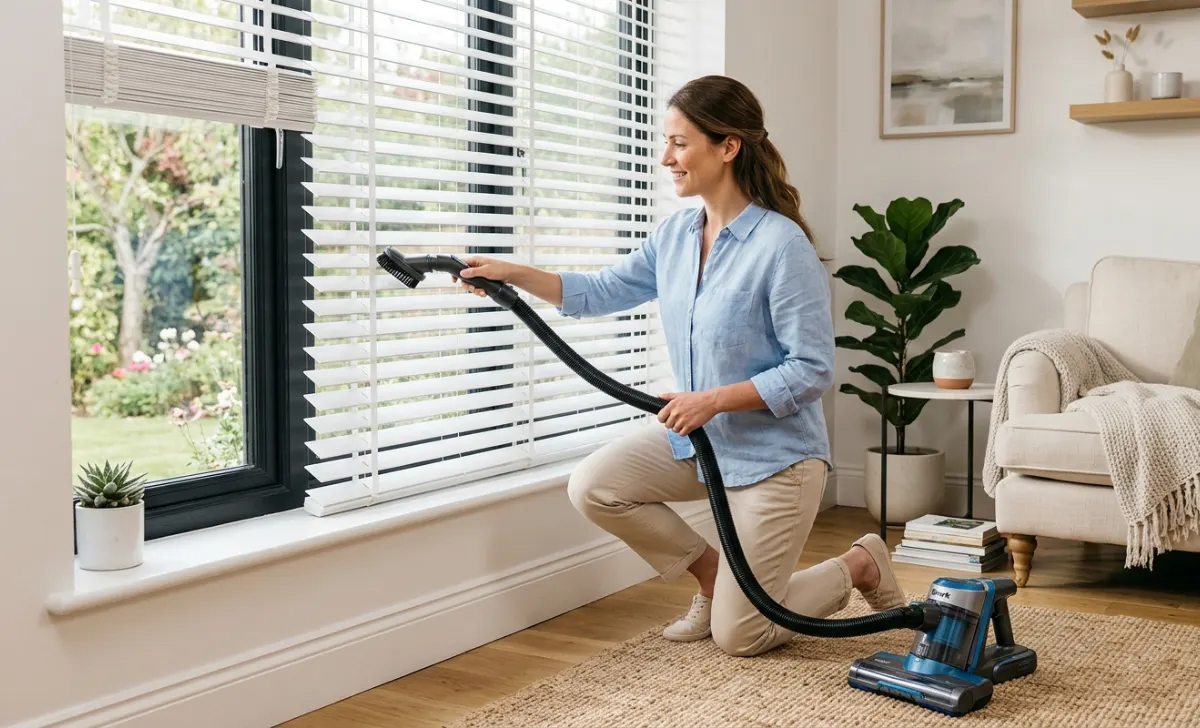
]If you’ve ever run a finger across your window blinds and pulled back a thick stripe of dust, you already know the problem. Blinds are one of the most neglected surfaces in any home — and they’re surprisingly good at collecting dust, pet hair, and allergens.
The good news? You don’t need fancy products or a full afternoon to vacuum window blinds properly. With the right approach, you can keep them clean in just a few minutes per window. This guide walks you through every step — from choosing the right vacuum attachment to tackling stubborn slat buildup — so your blinds stay dust-free for longer between deep cleans.
1. Why Vacuuming Is the Best First Step for Blind Cleaning
Before you reach for a damp cloth or cleaning spray, vacuuming should always come first. Why? Because wiping dusty blinds without vacuuming first just smears the dust around — and if you add moisture to heavy dust, you can end up with a muddy, sticky mess that’s harder to clean.
Vacuuming lifts and removes loose dust, pollen, pet dander, and debris before anything else touches the surface. This is especially important for households with allergy sufferers. According to the American Lung Association, dust and indoor allergens can significantly affect air quality, and blinds are a major collector.
Starting dry also protects delicate materials. Fabric blinds, in particular, can warp or stain if you wet-clean them without removing surface dust first.
Think of vacuuming as your baseline maintenance step — something you do every week or two — and deep cleaning as the occasional reset you do every few months.
2. What You Need Before You Start
You don’t need a specialised vacuum to clean blinds well. Most standard vacuums will work, as long as you have the right attachment.
The most useful tools:
- Brush attachment — The flat dusting brush is the go-to for most blinds. The soft bristles grab dust without scratching slats.
- Upholstery attachment — Works well for fabric shades and wider slats.
- Crevice tool — Helpful for getting dust out of the headrail (the top housing where the mechanism sits) and corner edges.
- Low suction setting — Critical for delicate materials like fabric, thin aluminium, or wood.
If your vacuum doesn’t have adjustable suction, consider using a handheld vacuum or a dustbuster for lighter jobs. For households with a lot of blinds, an extended hose with a flexible brush head saves a lot of awkward reaching.
Optional extras: a microfiber cloth for quick wiping after vacuuming, and a step stool if your blinds are large or high up.
3. How to Vacuum Horizontal Blinds
Horizontal blinds — the classic aluminium or plastic Venetian style — are the most common type, and thankfully, one of the easiest to vacuum.
Step-by-step:
- Close the blinds so all the slats are flat and facing the same direction.
- Attach the brush tool to your vacuum hose.
- Set suction to low or medium.
- Starting at the top, run the brush slowly across each slat, moving from one side to the other.
- Work your way down to the bottom rail.
- Rotate the tilt rod to flip the slats the other way, then repeat on the back side.
- Finish by vacuuming the headrail and bottom rail.
Pro tip: Always vacuum top to bottom. Dust falls, so cleaning downward means you’re not re-dirtying slats you’ve already done.
If your blinds are particularly dusty, do a first pass with the blinds fully open (slats angled down) and a second pass with them angled up. You’ll pick up significantly more dust.
4. How to Vacuum Vertical Blinds
Vertical blinds have long, hanging slats — usually made from fabric, vinyl, or PVC — and they collect dust differently than horizontal types. Dust tends to settle on the top edge of each slat and in the folds if they’re fabric.
Step-by-step:
- Slide the vanes to one side so they’re bunched together (not spread across the window).
- Attach the upholstery or brush tool.
- Run the vacuum gently along the top edge of the vanes first — this is where most dust gathers.
- Then vacuum each vane from top to bottom, using light pressure.
- Slide the vanes to the other side and repeat.
For fabric vertical blinds, use the lowest suction setting and keep the brush moving — sitting in one spot too long can create suction marks or distort the material.
The headrail track on vertical blinds is a notorious dust trap. Use the crevice tool to run along the track at the top at least once a month.
5. How to Vacuum Fabric or Roman Shades
Fabric shades — including Roman, cellular (honeycomb), and roller styles — need more care than hard-slat blinds. The material holds onto dust and allergens in a way that aluminium and vinyl don’t.
Step-by-step:
- Lower the shade fully and let it hang flat.
- Use the upholstery attachment on the lowest suction setting.
- Work in long, overlapping strokes from top to bottom.
- Pay extra attention to the folds on Roman shades — dust collects in the creases.
- For cellular shades, hold the fabric lightly with one hand and vacuum across the cells with the other to prevent the material from being pulled into the nozzle.
Important: Never use high suction on fabric blinds. You risk pulling at the stitching, warping the shape, or snagging loose threads.
If your fabric shades smell musty even after vacuuming, they likely need a deeper clean — usually a gentle hand wash or professional cleaning, depending on the material.
6. How to Vacuum Wood and Faux-Wood Blinds
Wood and faux-wood blinds look great but need a little extra care. Real wood can warp when exposed to moisture, so keeping up with regular vacuuming is especially important — it reduces how often you need wet cleaning.
Step-by-step:
- Close the slats flat in one direction.
- Use the brush attachment on low or medium suction.
- Wipe across the grain (side to side on horizontal wood blinds) to avoid scratching the finish.
- Work from top to bottom.
- Flip the slats and repeat.
- Use a dry microfiber cloth to do a final wipe along each slat if needed.
Avoid the crevice tool directly on wood surfaces — the hard plastic edge can leave marks. Stick to the soft brush attachment throughout.
For faux-wood (PVC), you have a little more flexibility. These are moisture-resistant, so if vacuuming doesn’t get everything, a slightly damp microfiber cloth after vacuuming is usually safe.
7. How to Vacuum Mini Blinds Without Bending Them
Mini blinds have very narrow, thin aluminium slats — typically just 1 inch wide — which makes them easy to bend out of shape if you’re not careful.
Step-by-step:
- Close the slats flat.
- Use the softest brush attachment you have.
- Set the suction to the lowest possible setting.
- Use very light pressure — let the brush do the work, not the suction.
- Move slowly and evenly across each slat.
The biggest mistake people make with mini blinds is using too much suction or pressing too hard with a rigid attachment. Even slight over-pressure can create permanent bends or kinks in the thin metal.
If you notice a slat has bent during cleaning, you can gently straighten it between two fingers. It’s not always perfect, but it’s usually a big improvement.
One practical shortcut: some people use a microfiber blind-cleaning tool that slides over multiple slats at once. These aren’t vacuums, but pairing one with a light vacuum pass saves real time on mini blinds.
8. How to Deal with Heavy Dust Buildup
If your blinds haven’t been cleaned in months (no judgment), a single vacuum pass probably won’t cut it. Heavy buildup needs a two-stage approach.
Stage 1 — Dry vacuum:
Do a full vacuum pass as described for your blind type. This removes the loose, top-layer dust. Expect it to look a little better, but not great yet.
Stage 2 — Damp wipe after vacuuming:
Mix a few drops of dish soap in warm water. Dampen a microfiber cloth — wrung out well so it’s barely damp, not wet. Wipe each slat individually, supporting it with your other hand so it doesn’t bend. Rinse the cloth frequently.
For aluminium and vinyl blinds that are extremely dirty, some people remove them entirely and soak them in a bathtub with warm soapy water, then rinse and hang them to air dry. This works well but is time-consuming and only needed for severe cases.
Always vacuum first. Wiping without vacuuming pushes dusty grime into a muddy layer that’s harder to remove.
9. How Often Should You Vacuum Window Blinds?
This depends on your home environment, but here’s a solid general guide:
- Weekly or every two weeks: Homes with pets, high foot traffic, or allergy sufferers.
- Monthly: Average households without pets.
- Every 2–3 months: Rooms that aren’t used daily (guest rooms, offices).
- Deep clean: 2–4 times per year, or whenever they look visibly dirty after vacuuming.
Blinds near kitchens collect grease particles along with dust, which makes them stickier and harder to clean over time. These should be wiped down more frequently — about once a month — to prevent buildup that vacuuming alone can’t fix.
Setting a recurring reminder on your phone takes 10 seconds and can save you from a much longer cleaning session down the road.
10. Expert Tips for Cleaner Blinds, Longer
Tip 1: Close blinds before vacuuming. Flat, closed slats are easier to vacuum evenly than open or partially open ones.
Tip 2: Always work top to bottom. Dust falls — so cleaning downward ensures you’re not re-contaminating already-cleaned surfaces.
Tip 3: Don’t ignore the headrail. The top housing is a major dust collector and often gets skipped. Use the crevice tool here every time.
Tip 4: Vacuum both sides. One side is never enough, especially for horizontal blinds that collect dust on both faces of each slat.
Tip 5: Use an air purifier nearby. Running a HEPA air purifier in rooms with blinds reduces how fast dust builds back up.
Tip 6: Don’t over-handle the slats. Each time you bend or stress a slat, you make it more likely to warp or break. Let the vacuum do the work.
Tip 7: Consider a dedicated handheld vacuum for blinds. A lightweight cordless model makes the job feel much less like a chore — especially if you do it frequently.
11. Common Mistakes to Avoid
Using too much suction. This is the number one cause of bent mini blinds and damaged fabric shades. Always start at the lowest setting and go up only if needed.
Skipping the flip. Many people vacuum only one side of horizontal blinds. The back side gets just as dusty — sometimes more.
Using the wrong attachment. The crevice tool is not for slat surfaces — it’s too rigid and can scratch or dent. Use the brush attachment on the slats.
Vacuuming without closing the blinds. Open or partially tilted slats flex under suction. Closed and flat is always easier and safer.
Waiting too long between cleanings. Light dust is easy to vacuum off. Compacted, greasy buildup is not. Regular maintenance — even a quick once-over — prevents the big jobs.
Getting blinds wet before vacuuming. Wet dust doesn’t vacuum well. Always do the dry pass first.
Conclusion
Learning how to properly vacuum window blinds is one of the easiest ways to improve your home’s air quality and keep your rooms looking sharp with minimal effort. The key takeaways: always work top to bottom, vacuum both sides of the slats, use the right attachment on a low setting, and do it regularly so dust never gets a chance to build up.
Whether you have classic aluminium Venetians, wide wood slats, or delicate fabric shades, the approach is always the same — start dry, go slow, and be consistent.
12. Frequently Asked Questions
Can I vacuum all types of window blinds?
Yes, with the right settings and attachment. Hard blinds (aluminium, vinyl, wood) handle vacuuming well. Fabric and cellular shades need low suction and a soft upholstery attachment to avoid damage.
What vacuum attachment is best for blinds?
The soft dusting brush attachment is the best all-around choice. Use the upholstery tool for fabric shades and the crevice tool only for the headrail and edges — not on the slats themselves.
How do I stop my blinds from bending when I vacuum?
Use low suction, keep the brush moving at a steady pace, and don’t press down. Supporting the slat gently with your other hand also helps when working on thin aluminium mini blinds.
Is it better to vacuum blinds or use a duster?
Vacuuming is generally more effective because it removes dust rather than spreading it into the air. A microfiber duster is a good secondary tool for a quick pass between vacuum sessions, but it shouldn’t replace regular vacuuming.
Why do my blinds get dusty again so fast?
Static charge on vinyl and aluminium blinds attracts dust quickly. After cleaning, some people apply a very light coat of anti-static spray (designed for blinds or electronics). An air purifier with a HEPA filter also slows down how fast dust resettles.