
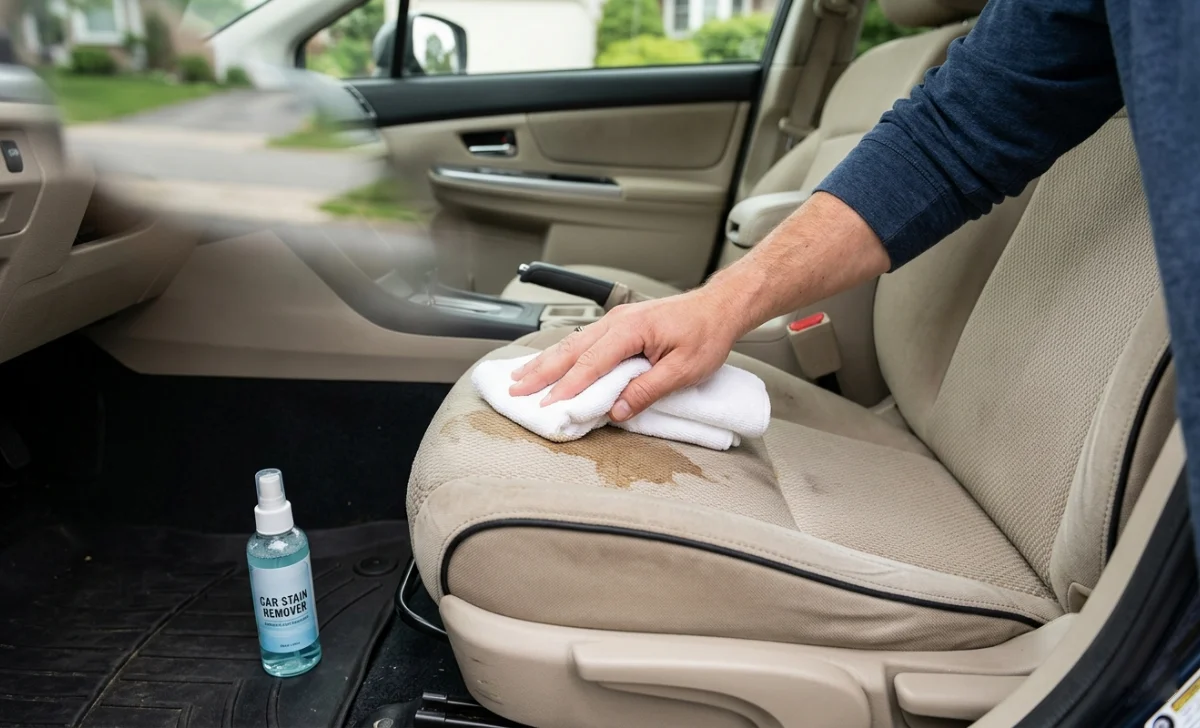
It happens to everyone. You’re driving home, someone spills coffee, a kid drops ketchup, or a muddy dog jumps in the back seat. Suddenly, you’re staring at a stain that looks like it’s there to stay.
The good news? Most car seat stains — even the ones that have been sitting for days — can be removed with the right approach. Whether you have cloth seats, leather, or vinyl, this guide covers exactly what you need to do.
In the next few minutes, you’ll learn 12 practical methods to Remove Stains From Car Seats, what products actually work, and a few expert tips that most people overlook entirely.
Let’s get into it.
1. Club Soda for Fresh Spills
If you catch a spill early, club soda is one of the fastest fixes you’ll find. The carbonation helps lift the liquid out of the fabric before it has a chance to set into the fibres.
Pour a small amount directly onto the stain. Let it fizz for about 30 seconds, then blot — never rub — with a clean white cloth. Repeat until the stain lightens.
Works best for: Coffee, juice, soda, wine.
Tip: Keep a small bottle in your glove compartment. Acting within the first 5 minutes makes a massive difference in how cleanly the stain comes out.
2. Dish Soap and Warm Water
This is the go-to method for everyday stains on cloth car seats. Regular dish soap breaks down oils and food residue without damaging the upholstery.
Mix one teaspoon of dish soap into two cups of warm water. Dip a microfiber cloth into the solution and gently work it into the stain using circular motions. Follow up with a damp cloth to rinse, then blot dry.
Works best for: Food, grease, mud, and general grime.
Pro tip: Use cold water for blood stains. Hot water can set proteins into the fabric, making the stain much harder to remove.
3. Baking Soda Paste
Baking soda is a quiet hero in car seat cleaning. It absorbs odours along with the stain itself, which makes it especially useful when dealing with spills that have been sitting for a while.
Mix three tablespoons of baking soda with one tablespoon of warm water to form a thick paste. Apply it directly to the stain, let it sit for 30 minutes, then scrub gently with a soft brush and wipe away.
Works best for: Old stains, sweat, urine, food spills with lingering odours.
- Non-toxic and safe for kids and pets
- Can leave a white residue if not rinsed properly — always wipe thoroughly after use
4. White Vinegar Solution
White vinegar is mildly acidic, which helps break down mineral deposits, dried food residue, and certain dyes. It also naturally neutralises odours rather than just covering them up.
Mix equal parts white vinegar and water in a spray bottle. Spray lightly onto the stained area, wait two to three minutes, then blot with a clean cloth. Air out your car afterwards — the vinegar smell fades completely once dry.
Works best for: Water stains, mineral buildup, mould and mildew spots, and light food stains.
5. Commercial Upholstery Cleaner
When DIY methods aren’t cutting it, a purpose-made upholstery cleaner is worth the investment. Products like Turtle Wax Upholstery Cleaner, Chemical Guys Fabric Clean, or Meguiar’s Carpet & Upholstery Cleaner are specifically designed for car interiors.
Follow the instructions on the bottle — most require you to spray, agitate with a brush, and wipe or vacuum away. These cleaners are tested on automotive fabrics, so they’re less likely to cause discolouration.
Works best for: Stubborn or set-in stains, general deep cleaning.
Note: Always test on a hidden area first, especially on colored or dark upholstery.
6. Hydrogen Peroxide for Tough Stains
A 3% hydrogen peroxide solution — the kind you find in any pharmacy — is strong enough to tackle blood, red wine, and certain food dyes. It works by releasing oxygen that breaks apart the compounds causing the stain.
Apply a small amount to the stained area, let it fizz for a few minutes, then blot away. Rinse with cold water and dry.
Works best for: Blood, red wine, berry-based stains.
Important: Hydrogen peroxide can lighten dark fabrics. Only use it on light-colored or grey upholstery, and always test first.
7. Enzyme-Based Cleaner for Organic Stains
Pet accidents, vomit, and spilt milk need more than soap and water. These stains contain proteins and bacteria that standard cleaners can’t fully break down. Enzyme-based cleaners — like Nature’s Miracle or Rocco & Roxie — contain biological agents that digest organic material at a molecular level.
Saturate the stained area, cover it with a damp cloth, and let the cleaner work for 10 to 15 minutes. Blot dry and repeat if needed.
Works best for: Pet urine, vomit, milk, and blood.
This type of cleaner also completely removes the odour rather than masking it, which is critical if you have pets that might re-mark the same spot.
8. Rubbing Alcohol for Ink and Dye
Ink stains are notoriously difficult, but rubbing alcohol (isopropyl alcohol at 70% or higher) dissolves most ink-based stains effectively. The same goes for makeup, certain dyes, and marker stains.
Apply rubbing alcohol to a cotton ball and dab — don’t rub — at the stain from the outside in. This stops the ink from spreading. Rinse with a damp cloth once the stain lifts.
Works best for: Ballpoint ink, marker, lipstick, eyeliner.
- Works fast and dries quickly
- Can dry out leather if used without following up with a conditioner
9. Cornstarch for Grease Stains
Oil and grease stains require a completely different approach. Applying liquid to a grease stain often spreads it further into the fabric. The trick is to first absorb the oil before you attempt to clean it.
Cover the stain generously with cornstarch (or baby powder). Let it sit for at least 15 minutes — longer is better. The powder draws the grease out of the fibres. Vacuum or brush it away, then clean the remaining residue with dish soap and water.
Works best for: French fry grease, motor oil, sunscreen, and lotion.
10. Steam Cleaning
Steam cleaning is one of the most thorough methods for deep-cleaning car seats. The high-temperature steam penetrates deep into the fabric, loosening ground-in dirt, killing bacteria, and lifting stains without chemicals.
You can rent a handheld steam cleaner or hire a professional detailer. Hold the steam nozzle about an inch from the surface and work in sections. Follow up by blotting with a clean towel to absorb the released moisture.
Works best for: Ground-in dirt, general deep cleaning, mould removal, and large surface areas.
This method works on fabric seats but is not suitable for untreated leather.
11. Leather Cleaner for Leather Seats
Leather seats need their own dedicated products. Using dish soap or vinegar regularly on leather strips away its natural oils and can cause cracking over time.
Use a pH-balanced leather cleaner like Lexol, Chemical Guys Leather Cleaner, or Furniture Clinic. Apply with a soft cloth, work in circular motions, then wipe away. Always follow up with a leather conditioner to restore moisture.
Works best for: All stains on genuine or synthetic leather.
- Gentle and designed for long-term leather care
- Requires regular conditioning to maintain the finish
- More expensive than general-purpose cleaners
12. WD-40 for Sticky Residue
Chewing gum, adhesive stickers, and sticky candy residue are a different kind of problem. WD-40 works surprisingly well at dissolving the adhesive bonds that make these substances stick to fabric.
Spray a small amount directly onto the sticky residue, wait a minute, then use a plastic scraper or old credit card to lift it off. Follow with dish soap and water to remove the WD-40 itself.
Works best for: Gum, sticker residue, tar, and tree sap.
Expert Tips for Removing Stains From Car Seats
A few things professionals do that most people skip:
- Blot, never scrub. Scrubbing spreads the stain and pushes it deeper into the fibres. Always blot from the outside of the stain inward.
- Work in sections. Don’t soak your entire seat. Target the stained area and keep moisture controlled.
- Dry thoroughly after cleaning. Trapped moisture leads to mildew and musty smells. Leave windows cracked or use a fan to speed up drying.
- Vacuum before you clean. Removing loose dirt and debris first prevents it from turning into mud once liquids are applied.
- Use white cloths only. Colored cloths can transfer dye onto your car seats, especially on lighter upholstery.
Common Mistakes to Avoid
These are the errors that turn a small stain into a permanent problem:
- Using too much water. Over-saturating fabric seats can lead to mould growth beneath the surface.
- Cleaning leather with generic cleaners. Harsh chemicals dry out and crack leather over time.
- Waiting too long. The longer a stain sits, the deeper it sets. Always treat spills as soon as possible.
- Skipping a patch test. A new cleaner on a visible spot can permanently discolour your upholstery. Test on a hidden area first.
- Using hot water on protein stains. Blood, egg, and dairy stains will bond to fabric with heat. Always use cold water.
Conclusion
Removing stains from your car seat isn’t as complicated as it seems — it just takes the right method for the right type of stain. Whether you’re dealing with a fresh coffee spill or a stain that’s been there for weeks, one of the 12 methods in this guide will get you there.
Start with the gentlest option first and work up from there. Act fast when spills happen, use the right cleaner for your seat material, and always dry thoroughly when you’re done.
Your car’s interior is easier to maintain than most people think. A little know-how and a few basic products are all you really need.
FAQs
What is the best way to remove old stains from car seats?
For dried or set-in stains, a baking soda paste or enzyme-based cleaner works best. Apply, let it sit for 15 to 30 minutes, then scrub with a soft brush and rinse. You may need two or three applications for very stubborn stains.
Can I use bleach to clean car seat stains?
No. Bleach will discolour fabric seats and destroy leather. Even diluted bleach is too harsh for automotive upholstery. Hydrogen peroxide is a safer alternative for white or very light seats.
How do I remove coffee stains from car seats?
Blot up as much liquid as possible immediately. Then apply a solution of one teaspoon of dish soap, one tablespoon of white vinegar, and two cups of warm water. Blot the stain repeatedly until it lifts, then rinse with a damp cloth.
Q4: How do I get the urine smell out of car seats?
An enzyme-based cleaner is the most effective option. It breaks down the uric acid crystals that cause the odour. After cleaning, sprinkle baking soda over the area, let it sit overnight, then vacuum it up.
Is it safe to use a steam cleaner on leather car seats?
Not recommended on untreated or natural leather. Steam can dry out leather and cause cracking. For leather seats, stick to a dedicated leather cleaner and conditioner.